

A call for national cohesion
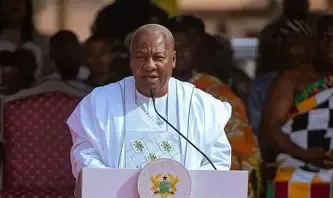
Under the bright sun at Accra’s iconic Black Star Square, thousands of worshippers gathered this Wednesday, May 27, to celebrate Eid al-Adha. President John Dramani Mahama used the grand occasion to issue a stern reminder about the fragility of peace. As the world watches various nations struggle with violence and internal conflict, the President insisted that Ghana’s unique model of harmony must be protected at all costs. He described the nation as a rare space where ethnic and religious diversity hasn't sparked the kind of breakdown seen elsewhere.
"I urge all Ghanaians, irrespective of religion or ethnicity, to continue promoting peace, tolerance, understanding, and mutual respect. We must reject extremism, political intolerance, tribal divisions, and all acts that threaten our national unity."
The legacy of coexistence
For many living in places like Nima or Kumasi, this isn't just theory; it’s life. The President highlighted that for generations, the boundaries between the country’s Christian and Muslim populations have been blurred. They share businesses and attend the same local schools. They're often bound by deep family ties that cross religious lines. This social fabric, he argued, is the country’s strongest defense against any ideology that seeks to push intolerance or tribal sentiment into the mainstream conversation.
Drawing on the teachings of the Holy Prophet Muhammad, President John Dramani Mahama framed his message around humility, honesty, and justice. He suggested that these personal virtues are the building blocks of a stable state. He pointedly warned against the rise of political intolerance, which has become a sharp edge in recent election cycles. The message was clear: if individual citizens don't guard their tongues and their hearts, the structural peace of the state becomes hard to maintain.
The stakes of national unity
The event serves as a high-profile platform for political leaders to engage with the Muslim community during one of their most sacred festivals. Eid al-Adha, often called the 'Festival of Sacrifice,' commemorates the willingness of Prophet Ibrahim to obey God’s command. Beyond the religious rituals, it has increasingly become a venue for national dialogue. By hosting these festivities in such a public space, the government reinforces its commitment to secular governance while acknowledging the massive demographic importance of the Muslim population in the country’s development.
This call for unity also resonates across the sub-region. With neighboring countries frequently dealing with security threats stemming from extremist groups infiltrating borders, Ghana’s internal stability remains a top priority for security agencies. The President’s speech indicates that the administration is keenly aware that any spark of ethnic or religious division could provide an opening for wider insecurity. By emphasizing the common identity of 'Ghanaians' over specific sectarian labels, the leadership hopes to insulate the public from external influences that thrive on creating 'us versus them' narratives.