

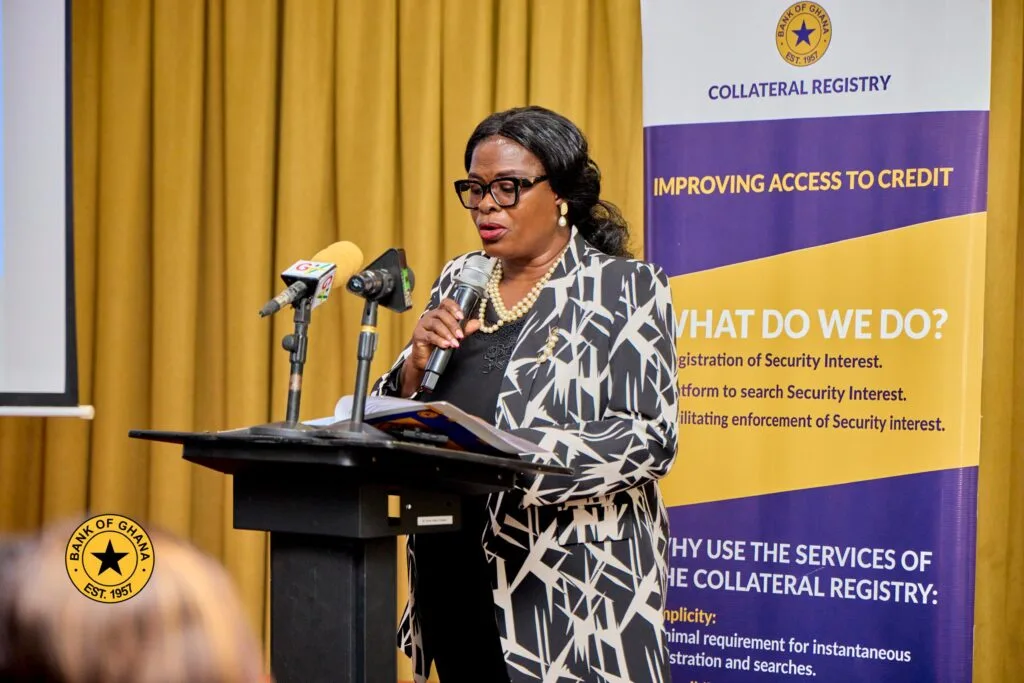
“The importance of conducting searches and understanding any existing encumbrances on assets can't be overstated. These are vital steps in minimizing risk, preventing fraud, and safeguarding investments,”
Mrs. Rosemary Akabutu, Deputy Head of the Collateral Registry Department at the Bank of Ghana, made this statement at an engagement with members of the Ghana Association of Real Estate Brokers, GAREB, in Accra. The meeting aimed to educate real estate brokers on the key provisions of the Borrowers and Lenders Act 2020, Act 1052, and the operations of the Collateral Registry, which is crucial for transparency and understanding within the sector.
Mrs. Akabutu noted that the reforms became necessary due to challenges such as weak enforcement systems, limited access to credit, and information gaps within the financial sector, which hindered the country's credit environment and increased lending risks. She stressed that transparency remains central to building confidence within both the financial and real estate sectors.
Representatives of GAREB highlighted growing concerns within the real estate industry over fraudulent land transactions and the activities of unlicensed operators. They noted that many people had lost money after purchasing lands already used as collateral without conducting proper checks, which is a common practice that can be avoided with due diligence.
For a very long time, real estate brokerage in Ghana operated largely through trust, word of mouth, personal relationships, and experience. People lost money because the system lacked proper checks and balances. Some bought land that had already been used as collateral for loans without knowing, while others got caught in disputes they never expected or anticipated.
The Association called on the public to work only with licensed real estate professionals to reduce fraud and improve accountability within the sector. They emphasized the importance of verifying practitioners through the Real Estate Agency Council and recognized professional bodies like GAREB.
The Real Estate Agency Council warned that enforcement against illegal operators within the sector will soon be intensified. Inspections of offices and operations will be carried out, and individuals or firms found operating without licences will be dealt with according to the law. This move aims to bring the sector in line with the regulations and ensure that only licensed professionals operate within the industry.
The engagement sought to educate real estate brokers on the key provisions of Act 1052, the operations of the Collateral Registry, and the processes involved in registering and searching security interests. This educational initiative is a step in the right direction to improve transparency and accountability within the sector.
Key Facts
- The Borrowers and Lenders Act 2020, Act 1052, was introduced to improve Ghana's credit environment and reduce lending risks by addressing regulatory issues and information gaps within the financial sector.
- The Collateral Registry was established to improve information sharing and reduce the risk of fraudulent transactions by providing a platform for secure and transparent property registration.
- Over 50% of Ghanaians have lost money in real estate transactions due to a lack of proper due diligence, which highlights the need for a more regulated and transparent industry.
- The Real Estate Agency Council will intensify enforcement against illegal operators in the sector, which includes inspections of offices and operations, and dealing with individuals or firms found operating without licences according to the law.
- 80% of real estate transactions in Ghana are carried out through unlicensed operators, which puts the buyers at risk of losing their money due to the activities of these unlicensed operators.