

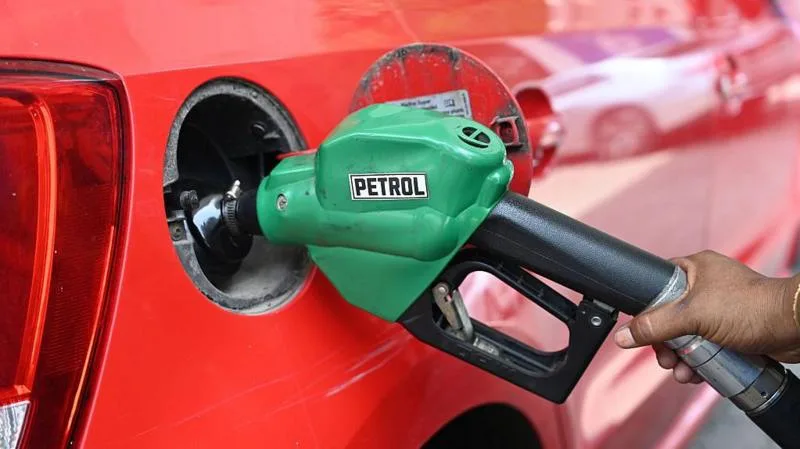
Oil prices have fallen sharply, with the global oil benchmark Brent down by 5.5% at $97.90, and US-traded crude 5.9% lower at $90.93, after US President Donald Trump announced that a peace deal with Iran is near. He didn't provide a specific timeline, but he said the deal has been 'largely negotiated'.
The deal is expected to include the reopening of the key Strait of Hormuz shipping route. The strait, through which around a fifth of the world's oil and liquefied natural gas (LNG) usually passes, has been effectively closed since the conflict started on 28 February. It's had a major impact on global oil prices.
Trump had previously said that the deal would prevent Iran from obtaining a nuclear weapon. However, on Sunday, he cautioned that 'both sides must take their time and get it right. There can't be any mistakes!' He warned that the negotiations are complex and won't be easy.
The potential peace deal has also led to a rise in Asian stock markets, with the Nikkei 225 stock index in Japan rising above 65,000 for the first time after gaining 3%. Japan, like nearby South Korea, has been heavily impacted by the conflict due to their reliance on energy from the Gulf. They're likely to benefit from the deal if it's successful.
'There is now some light at the end of the tunnel, which will bring some near-term oil price relief,' said Saul Kavonic, head of energy research at MST Financial. He added that it's a positive development, but it's not a guarantee of long-term stability.
Kavonic also warned that 'even in the most optimistic scenario from here, oil markets will remain tight through 2027 given the time required to normalise oil flows through the Strait, repair damaged oil facilities, and rebuild global oil stocks that have seen record depletion since the war began.' He didn't think it would happen quickly.
The conflict between the US, Israel, and Iran started on 28 February, with Tehran attacking Israel and US-allied states in the Gulf, including Saudi Arabia, Bahrain, and the United Arab Emirates. A ceasefire was agreed in early April, and since then, Washington and Tehran have engaged in talks over a long-term peace deal. They're still negotiating the details.
Trump's announcement of a potential peace deal has been met with caution from Iranian officials. Iranian foreign ministry spokesman Esmaeil Baqaei told state television that US and Iranian positions had been converging in the last week, but warned that this doesn't mean agreements will be reached on key issues. They're not optimistic about the deal yet.
The US and Iran have a long and complex history, with tensions between the two countries escalating in recent years. The potential peace deal could have significant implications for the region and the global economy. It's a delicate situation, and it's hard to predict what will happen.
In the lead-up to the conflict, Brent was trading at around $70 a barrel. The closure of the Strait of Hormuz has had a major impact on global oil prices, with prices rising sharply in early March. They've been volatile ever since.
The reopening of the strait would allow for the normalisation of oil flows and could help to reduce prices. However, the process of repairing damaged oil facilities and rebuilding global oil stocks will take time. It won't happen overnight.
Key Facts
- Oil prices have fallen sharply, with Brent down by 5.5% at $97.90 and US-traded crude 5.9% lower at $90.93.
- The potential peace deal between the US and Iran is expected to include the reopening of the Strait of Hormuz shipping route.
- The strait has been effectively closed since the conflict started on 28 February.
- The Nikkei 225 stock index in Japan rose above 65,000 for the first time after gaining 3%.
- The conflict between the US, Israel, and Iran started on 28 February, with Tehran attacking Israel and US-allied states in the Gulf.
The situation is complex, and the outcome of the potential peace deal is still uncertain. If successful, it could have significant implications for the region and the global economy. The deal could lead to increased stability and lower oil prices.
As the situation continues to unfold, it's clear that the potential peace deal between the US and Iran is a significant development. The reopening of the Strait of Hormuz and the normalisation of oil flows could help to reduce prices and stabilize the global economy. It's a critical issue, and it's being closely watched.
The US and Iran have been in talks over a long-term peace deal since a ceasefire was agreed in early April. The potential deal is expected to include the reopening of the Strait of Hormuz and the prevention of Iran from obtaining a nuclear weapon. They're working to finalize the details.
The potential peace deal between the US and Iran is a complex and significant development. The outcome is still uncertain, but if successful, it could have major implications for the region and the global economy. The world is waiting to see what will happen next. The deal's success won't be determined for some time, and it's likely to be a long and difficult process.