

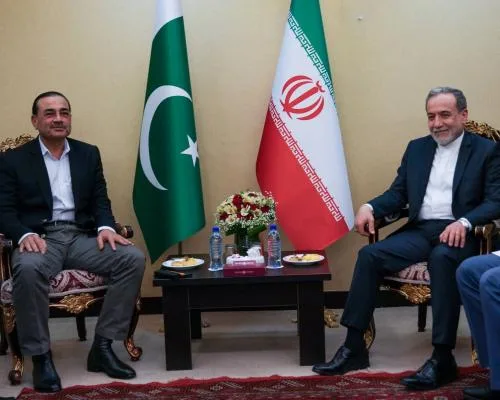
The US and Iran have reached a tentative agreement on a ceasefire deal, with a 60-day extension, according to a US official. This development could potentially bring an end to the war between the two countries.
The deal is significant because it involves the reopening of the Strait of Hormuz, a crucial waterway for international trade. The strait would be reopened, allowing Iran to freely sell oil. Talks on limiting Iran's nuclear programme would be held.
The US secretary of state, Marco Rubio, said on Sunday the deal could achieve a completely open strait of Hormuz without tolls if successful. Iranian media reported that the strait of Hormuz would remain under Iranian control.
The deal would reportedly unfreeze some Iranian assets being held in banks outside Iran. Hostilities would reportedly be halted on all fronts, including Israel and Lebanon.
The deal could achieve a completely open strait of Hormuz without tolls if successful, said Marco Rubio, the US secretary of state.
Iran won't hand over its highly enriched uranium stockpile, according to reports. A senior Iranian source told Reuters on Sunday that Tehran hadn't agreed to hand over its stockpile.
The source said Iran's nuclear issue wasn't part of the preliminary agreement with the US. The NY Times, citing two US officials, had reported that Tehran had expressed a willingness to give up its stockpile.
Even if Tehran does agree to give up some of its highly enriched uranium stockpile, there's been no mention of how this would happen in practice. There's also been little mention of Iran's ballistic missile programme or the curbing of support for its regional allies, such as Hezbollah in Lebanon or the Houthis in Yemen.
Marco Rubio is an American politician who's been serving as the US secretary of state. He was appointed by Donald Trump, the former US president. Rubio's been a key figure in the US administration, playing a crucial role in shaping the country's foreign policy.
The Strait of Hormuz is a crucial waterway for international trade, with nearly a third of the world's oil passing through it. The strait has been a point of contention between the US and Iran, with the US imposing sanctions on Iran's oil exports.
If the deal is successful, it could have significant implications for the global economy. The reopening of the Strait of Hormuz could lead to an increase in oil supplies, which could help to lower fuel prices.
The deal could also have significant implications for regional security. The halting of hostilities on all fronts, including Israel and Lebanon, could help to reduce tensions in the region.
Key Facts
- 60-day ceasefire extension
- Reopening of the Strait of Hormuz
- Iran can freely sell oil
- Talks on limiting Iran's nuclear programme
- Unfreezing of some Iranian assets
- Halting of hostilities on all fronts
The deal is still tentative, and it's unclear if it will be successful. But if it is, it could mark a significant shift in the relationship between the US and Iran.
Donald Trump's role in this deal is noteworthy. Trump's been a key figure in the US administration, and his involvement in the deal could be crucial to its success.
The deal could also have implications for other countries in the region. The reopening of the Strait of Hormuz could lead to an increase in trade, which could benefit countries such as China and India.
The ceasefire deal between the US and Iran is a significant development that could have far-reaching implications for the global economy and regional security.
For now, it's a waiting game. The deal is still tentative, and it's unclear if it will be successful. The outcome won't be known until the deal's been finalized and implemented.
This deal doesn't have a direct connection to Nigeria. The deal is primarily between the US and Iran, with no mention of Nigeria or any other African country.
The US and Iran will likely continue to negotiate the details of the deal. The US secretary of state, Marco Rubio, will likely play a key role in the negotiations.
The international community will be watching closely. The deal has the potential to be a significant step forward in reducing tensions between the US and Iran.
It's not just about the US and Iran. The deal could have implications for other countries in the region, including Israel and Lebanon.
The deal could also have implications for the global economy. The reopening of the Strait of Hormuz could lead to an increase in oil supplies, which could help to lower fuel prices.
This is a developing story, and we will continue to follow it closely.
The deal is still tentative, but it has the potential to be a significant step forward in reducing tensions between the US and Iran.
The story of the ceasefire deal between the US and Iran is complex, with many different players and interests involved.
At its core, it's a story about the potential for peace and cooperation.
The US and Iran have a long and complex history, with many different conflicts and tensions over the years.
But the ceasefire deal is a potential step forward, a chance for the two countries to put their differences aside and work towards a more peaceful and cooperative relationship.
The deal is not just about the US and Iran, but about the entire region.
The reopening of the Strait of Hormuz could lead to an increase in trade, which could benefit countries such as China and India.
The halting of hostilities on all fronts, including Israel and Lebanon, could help to reduce tensions in the region.
We will continue to follow this story closely, as it has the potential to be a significant step forward in reducing tensions and promoting peace and cooperation in the region.
We'll keep you updated as more information becomes available.
For now, it's a story of hope and optimism, a chance for the US and Iran to put their differences aside and work towards a more peaceful and cooperative relationship.
The deal's success is uncertain, but it's a step in the right direction. The US and Iran are taking a chance on peace, and that's a story worth telling.
The story will continue to unfold, and we'll be here to provide updates and analysis. The outcome may be uncertain, but one thing's clear: the ceasefire deal has the potential to be a game-changer for the region.