

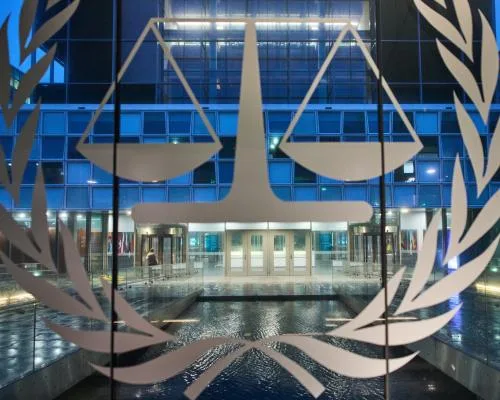
The former prosecutor at the International Criminal Court, Fatou Bensouda, has called for an EU-wide statute to block what she describes as 'thuggish' and 'bullying' US sanctions imposed on members of the court. These sanctions, which include travel bans and asset freezes, have been in place since February 2025.
The US imposed these sanctions on 11 ICC officials, including nine judges and the chief prosecutor, as well as three Palestinian organisations. This move was in response to the ICC's decision in 2024 to issue arrest warrants for members of the Israeli cabinet, including Prime Minister Benjamin Netanyahu.
Fatou Bensouda, who served as the ICC prosecutor from 2012 to 2021, made these comments during a meeting in The Hague of the Rights Forum, a prominent Dutch non-governmental organisation. She stated that these sanctions are coercive attempts to interfere with the independent exercise of judicial and prosecutorial functions established under international law. Bensouda didn't mince words, saying they're a clear attempt to undermine the court's authority.
Bensouda also accused ICC-affiliated states of having largely slow and timid reactions, inactions, and empty gestures of support, without tangible backing and pushback against coercive measures. She specifically pointed out that the Dutch government, which hosts the ICC in The Hague, hasn't done much to protect ICC judges facing crippling sanctions or individual intimidation. It's clear that Bensouda thinks they can't just stand by and do nothing.
'These are coercive attempts to interfere with the independent exercise of judicial and prosecutorial functions established under international law. If the international community doesn't respond with seriousness, institutional resolve, and practical solidarity, the consequences will extend far beyond The Hague.'
Bensouda warned that preparations need to be made now for sanctions being imposed on the court itself as an institution. She asked, 'If highly qualified professionals conclude that service at the ICC carries unacceptable personal and financial risk, what happens to the future capacity of the institution?' This is a critical question, and it's one that Bensouda doesn't think the international community can afford to ignore.
She called for structural resistance, saying that state parties should establish coordinated legal, defence, and indemnification mechanisms for sanctions. Bensouda also suggested that the EU should move to trigger the EU blocking statute, which would prevent the enforcement of US sanctions within the EU. This move wouldn't be without precedent, and it's something that Bensouda thinks is necessary to protect the court.
The Dutch government has signed an agreement with the ICC that commits the government to ensuring the security, safety, and protection of people indispensable to the court. However, progressive Dutch MPs claim that the coalition government hasn't done much in practice to defend the ICC, leaving the task to other countries, notably Spain. They're critical of the government's lack of action, and they don't think it's enough.
The US says it has sanctioned the ICC officials for directly engaging in efforts by the ICC to investigate, arrest, detain, or prosecute Israeli nationals without Israel's consent. Bensouda argued that the US has distorted sanctions, turning them from a legitimate instrument into a tool for wholly inappropriate political signalling. She doesn't think this is a legitimate use of sanctions, and she's not afraid to say so.
- 11 ICC officials were sanctioned by the US in February 2025
- The sanctions include travel bans and asset freezes
- The ICC issued arrest warrants for members of the Israeli cabinet in 2024
- The EU blocking statute could prevent the enforcement of US sanctions within the EU
- The Dutch government hasn't done much to protect ICC judges facing crippling sanctions or individual intimidation
The situation highlights the challenges faced by the ICC in its pursuit of accountability for international crimes. The ICC's ability to function independently and effectively is crucial for upholding international law. It's also essential for ensuring justice for victims of atrocities.
As the international community continues to grapple with the implications of these sanctions, it's unclear how the EU and other states will respond to Bensouda's call for action. The future of the ICC and its ability to hold perpetrators of international crimes accountable hangs in the balance. Bensouda's comments won't be ignored, and they'll likely spark a needed conversation about the role of the ICC and the challenges it faces. The international community can't afford to wait and see what happens - they need to take action now to protect the court and ensure its continued independence.