

Inside the Orange House Tensions
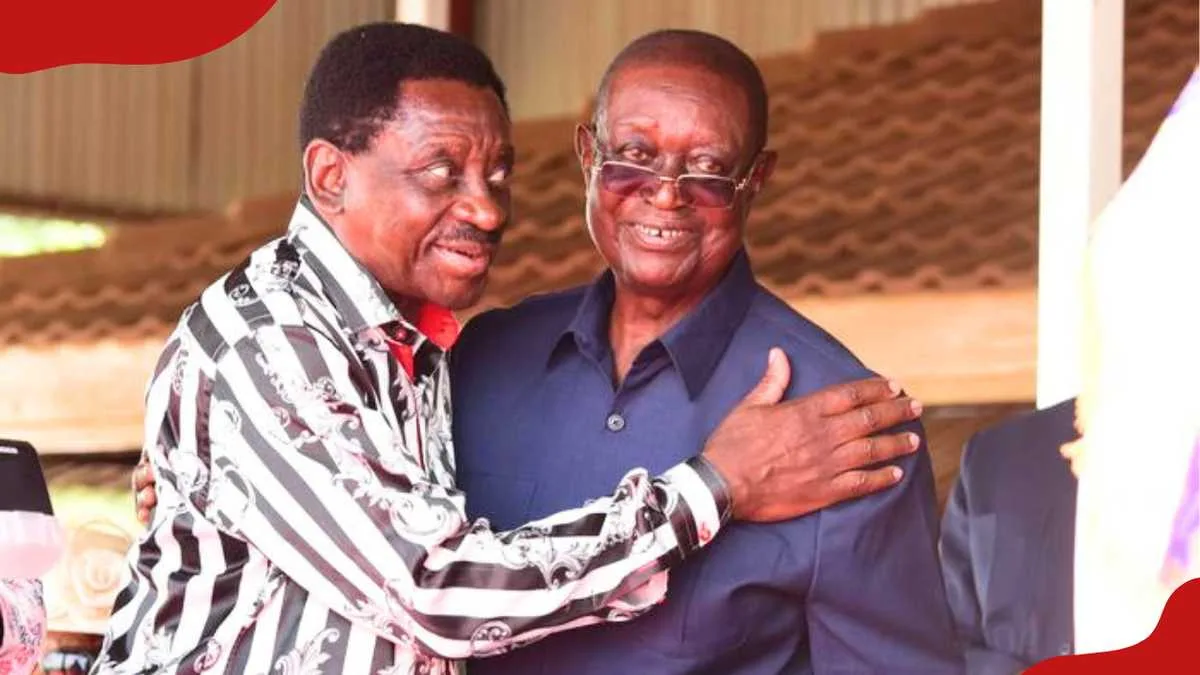
Nairobi is different when it comes to the theatrics of political parties. Today, the Orange Democratic Movement (ODM) is trying to remind everyone that they aren't falling apart, even if the boardroom drama suggests otherwise. Oburu Oginga, the party leader who has been a constant presence in the political scene for decades, dropped the news during a morning interview on Ramogi FM. He admitted that the party is currently in the middle of a delicate charm offensive to bring Governor James Orengo back into the fold.
Since the passing of the party's patriarch, Raila Odinga, the dynamic within ODM has shifted like sand in a storm. James Orengo, a firebrand known for his sharp legal mind and his long-standing role as the defender of party ideals, hasn't been shy about his frustration. He has consistently taken shots at the party’s decision to build bridges with President William Ruto’s United Democratic Alliance (UDA) government. For James Orengo, this isn't just politics; it's about keeping the party’s soul intact when it feels like the current leadership is straying too far from the promises made to their base.
"I have always maintained that Orengo is a long-time friend, and these political differences are just that—differences in opinion that don't need to break our brotherhood."
The Mediators and the Strategy
This isn't just two men shouting at each other over the radio. Behind the scenes, the church is stepping in to ensure that the party doesn't tear itself apart. Catholic Archbishop Emeritus Zacchaeus Okoth has been identified as the lead mediator, tasked with cooling the temperaments of the two political heavyweights. It's a classic move in Kenyan politics. When the brothers are at each other's throats, you bring in the elders to ensure the family doesn't lose the inheritance.
Oburu Oginga is also keeping his eyes on the prize, which is the 2027 ballot. He has been actively touring and holding reconciliation meetings to consolidate the party’s strength. Earlier this month, he brokered meetings between the faction aligned with Kakamega Governor Fernandes Barasa and the group led by Cabinet Secretary Wycliffe Oparanya and Lugari MP Nabii Nabwera. He’s essentially acting as the party’s shock absorber. He's trying to ensure that internal squabbles don't give their opponents an easy path to victory in the next election cycle.
The Rebels and the Reality Check
James Orengo isn't the only one making noise. He is part of a growing group of vocal dissenters within ODM who are feeling restless. Embakasi East MP Babu Owino, the ever-combative Senator Godfrey Osotsi, and the party’s own Secretary General Edwin Sifuna are all part of this unofficial choir of concern. Their beef is simple. They feel the party leadership is losing its teeth by playing nice with the government of the day.
It’s a classic case of the old guard trying to maintain order while the younger, louder generation wants to stir the pot.
Oburu Oginga addressed these concerns with the cool head of a veteran. He noted that he had to pull Babu Owino aside to give him some fatherly advice about his future ambitions for the Nairobi gubernatorial seat. He knows that if he can manage the ego and the energy of the younger leaders, he might just keep the party together. He’s also preparing a major rally at Kirembe Grounds in Kisumu, scheduled for May 31, 2026. This isn't just another rally; it’s a show of force.
It serves to tell the Luo community, and the nation at large, that the party is still the force it has been for nearly 20 years.
The Path to 2027
Oburu Oginga has firmly rejected the claims that he has been acting as the de facto leader of the party or that he is competing with James Orengo for power. He maintains that his position is grounded in the party’s constitution and that he is only interested in building a structure that can survive the upcoming election cycles. He knows that the 2027 election is going to be a different kind of war. He wants his house in order before the first shots are fired. The party faces uncertainty regarding whether this unity drive will actually stick or if it’s just a temporary plaster on a deep wound.
For now, the focus shifts to Kisumu. The Kirembe gathering is meant to bring the warring factions together, creating a sense of solidarity that has been missing for months. If the strategy works, the party might just find the unity it desperately needs to avoid a complete meltdown. If it fails, the cracks that are already visible could widen into a total split. This would leave the once-dominant party searching for its identity in a very crowded political field.