

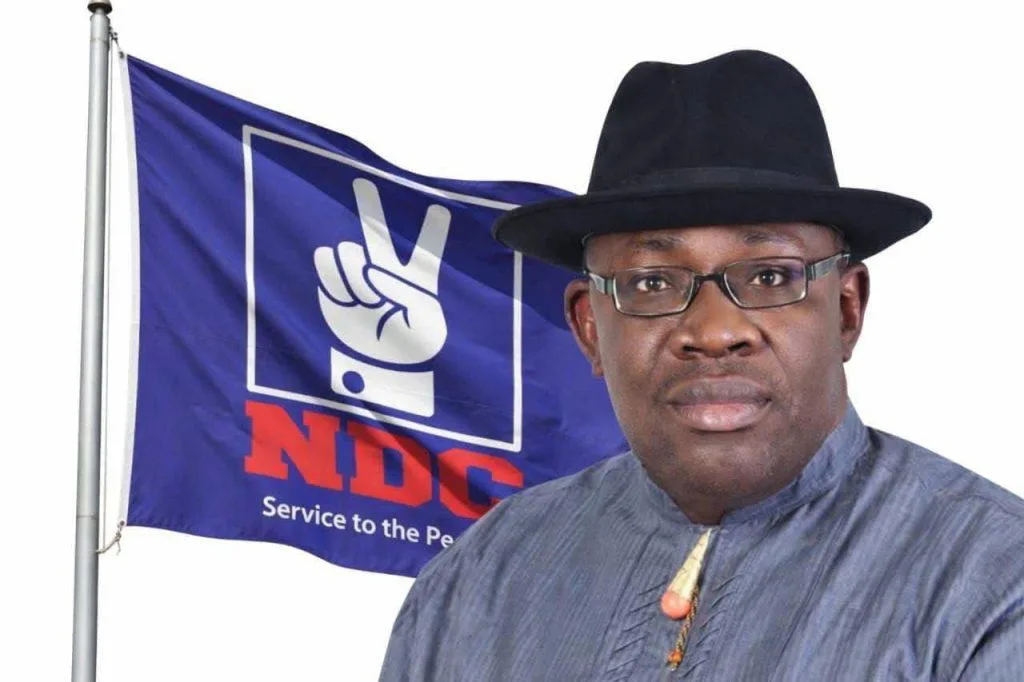
Senator Seriake Dickson has a reason to smile, or so the reports from Abuja suggest. The national leader of the National Democratic Congress (NDC) was spotted recently in high spirits, reportedly relishing the messy fallout within the All Progressives Congress (APC) in Bayelsa State. For those who follow the chess match of Nigerian politics, this isn't just about a local disagreement. It's about the NDC finding a golden ticket in the APC’s own backyard.
The drama is centred on the Sagbama/Ekeremor federal constituency, a place that should be a straightforward battleground but has instead become a circus of accusations. At the heart of the storm is the emergence of Hon. Bernard Kenibai as the APC candidate. To the outside observer, it looks like a typical win, but the internal machinery of the ruling party is creaking under the weight of screening disputes and the controversial sidelining of other hopefuls.
Comrade Felix Osuobene, who serves as the National Coordinator of the Sagbama/Ekeremor Grassroots Agenda, didn't mince words when he broke his silence on the matter this Thursday. He laid out a picture of a party that's busy shooting itself in the foot. The situation is striking because it involves Prof. Princewill Woyinbrakemi Igbagara, an academic and technocrat. Many observers expected him to walk away with the ticket before his sudden and questionable disqualification from the ballot.
"Our sources confirmed that the national leader of NDC, Senator Seriake Dickson was seen celebrating the emergence of Hon. Bernard Kenibai as the APC candidate; viewed in political circles as an easier adversary."
The NDC's game plan is taking shape with a three-pronged attack designed to exploit these cracks. They're betting on voter apathy. The theory is simple: when supporters feel the party process was rigged or unfair, they don't show up to the polling stations. In a system where every single vote counts toward the final tally, a silent protest from loyalists is often as damaging as an outright loss.
Then there is the matter of silent defections. Nigeria’s political history is filled with stories of party members who wear the party colours by day but work for the opposition by night. The NDC is positioning itself as a safe harbour for those APC stalwarts who feel pushed out or ignored by the current leadership. If these frustrated actors decide to move their structures, the APC could find its influence in the South-South region crumbling faster than expected.
There is the raw power of propaganda. Nothing boosts an opposition party’s morale like seeing their rival tearing itself apart in public. The NDC is already crafting a narrative that paints them as the cleaner, fairer choice for the upcoming 2027 general elections. Every internal squabble in Sagbama/Ekeremor is being transformed into a talking point about whether the ruling party has the discipline or internal democracy required to keep the country running.
This situation takes place against the backdrop of President Bola Tinubu’s explicit directive for the party to field its strongest possible candidates nationwide. If local leaders in Bayelsa have ignored this by sidelining a popular figure like Prof. Princewill Woyinbrakemi Igbagara, they've created a political debt they might not be able to pay. The APC has historically struggled to build a lasting and unified structure in the South-South. This current chaos reinforces the idea that the party remains a fragile collection of competing interests rather than a monolithic bloc.
- Voter Apathy: Disenchanted APC foot soldiers are likely to stay home, stripping the party of its local mobilization muscle.
- Silent Defection: Frustrated APC members are looking for a new home, and the NDC is ready to open its doors to these aggrieved political actors.
- Narrative Warfare: The NDC is using the Bayelsa turmoil to frame the APC as a party that is unfit, undemocratic, and internally divided.
- South-South Weakness: The APC’s historic difficulty in establishing a firm grip on the region is being exacerbated by these internal disqualification disputes.
- 2027 Election Prep: The NDC is working to turn these isolated local issues into a national conversation about the ruling party’s fitness for continued governance.
As the clock ticks toward the next election cycle, the NDC is determined to ensure that no crack in the APC’s armor goes unnoticed. The opposition has been handed a powerful tool to challenge the status quo. The APC leadership may believe they followed the rules, but in the rough-and-tumble of Nigerian grassroots politics, the perception of unfairness often carries more weight than the technicalities of the rulebook. Local grievances have been successfully turned into a national headache for the ruling party.