

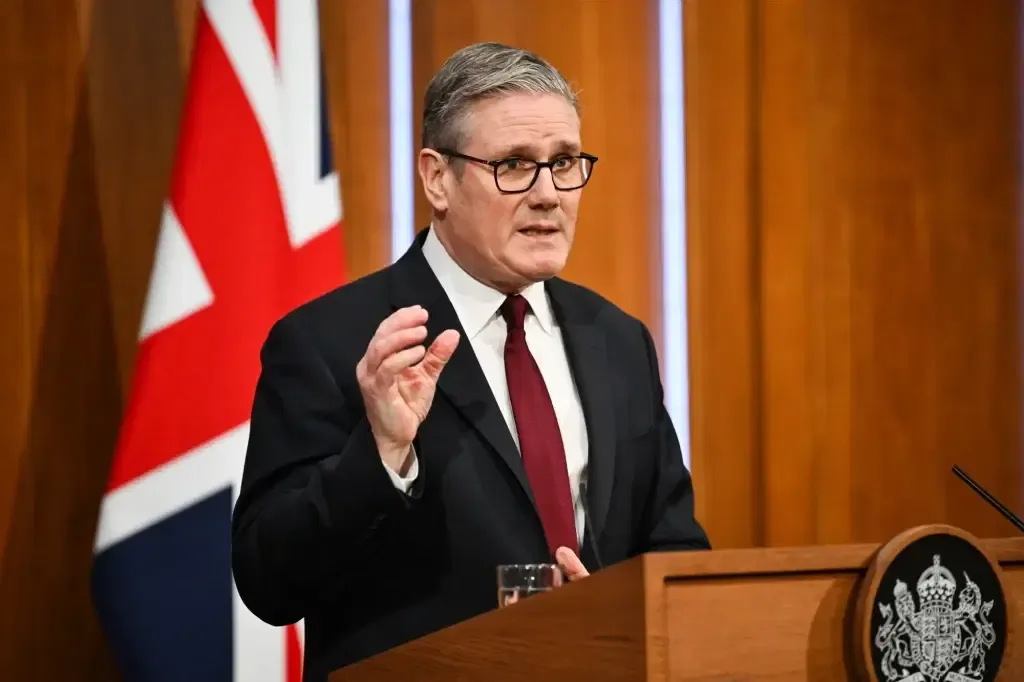
The UK is in a state of political turmoil as Prime Minister Keir Starmer faces growing calls to resign. The pressure on Starmer has been building for weeks, with ministers and MPs from his own party calling for him to step down. Despite this, Starmer has defiantly stated that he is getting on with governing the country, refusing to back down. The situation is becoming increasingly tense, with many wondering how long Starmer can hold on to power.
The calls for Starmer's resignation are not just coming from opposition parties, but also from within his own party. Many MPs are unhappy with his leadership style and feel that he is out of touch with the public. The criticism of Starmer has been mounting for months, with many feeling that he is not doing enough to address the country's problems. The latest polls show that the public is losing confidence in Starmer, with many calling for him to resign.
The situation is not just about Starmer's leadership, but also about the future of the country. The UK is facing many challenges, from Brexit to economic uncertainty, and many feel that Starmer is not equipped to deal with them. The opposition parties are sensing an opportunity to capitalize on Starmer's weakness, with many calling for a general election. The next few weeks will be crucial in determining the future of the UK and its government.
The UK's political system is designed to allow for the peaceful transfer of power, but the current situation is testing this system to its limits. The country is in a state of flux, with many wondering what the future holds. One thing is certain, however: the UK will not be the same after this crisis is over.
Key Facts
- Keir Starmer is the current Prime Minister of the UK
- He is facing growing calls to resign from ministers and MPs
- The calls for his resignation are coming from within his own party and from opposition parties
- The criticism of Starmer has been mounting for months
- The latest polls show that the public is losing confidence in Starmer
- The UK is facing many challenges, including Brexit and economic uncertainty
The Rise of Keir Starmer
Keir Starmer has been a prominent figure in UK politics for many years. He rose to prominence as a lawyer and later became the Director of Public Prosecutions. He was elected as the leader of the Labour Party in 2020, and later became Prime Minister. Starmer's leadership style has been criticized by many, with some feeling that he is too cautious and not willing to take risks.
Starmer's background is in law, and he has a reputation for being a skilled lawyer. However, his lack of experience in politics has been criticized by some. Despite this, Starmer has managed to build a reputation as a competent and capable leader. His commitment to social justice and his desire to address the country's problems have earned him many admirers.
The Labour Party has a long history of producing strong leaders, and Starmer is no exception. He has a strong sense of social justice and is committed to addressing the country's problems. However, his leadership style has been criticized by many, with some feeling that he is too focused on detail and not enough on the big picture.
The Criticism of Starmer
The criticism of Starmer has been mounting for months. Many feel that he is out of touch with the public and that he is not doing enough to address the country's problems. The latest polls show that the public is losing confidence in Starmer, with many calling for him to resign. The criticism of Starmer is not just coming from opposition parties, but also from within his own party.
The public is losing confidence in Starmer, and it's not hard to see why. He has failed to deliver on his promises, and his leadership style has been criticized by many. It's time for him to go, and for a new leader to take the reins.
The criticism of Starmer is not just about his leadership style, but also about his policies. Many feel that he is not doing enough to address the country's problems, and that his policies are not effective. The opposition parties are sensing an opportunity to capitalize on Starmer's weakness, with many calling for a general election.
The Future of the UK
The future of the UK is uncertain, with many wondering what the future holds. The country is facing many challenges, from Brexit to economic uncertainty, and many feel that Starmer is not equipped to deal with them. The opposition parties are sensing an opportunity to capitalize on Starmer's weakness, with many calling for a general election. The next few weeks will be crucial in determining the future of the UK and its government.
The UK's political system is designed to allow for the peaceful transfer of power, but the current situation is testing this system to its limits. The country is in a state of flux, with many wondering what the future holds. One thing is certain, however: the UK will not be the same after this crisis is over. The country will emerge from this crisis stronger and more resilient, but it will also be different.
The Role of the Opposition
The opposition parties are playing a crucial role in the current crisis. They are sensing an opportunity to capitalize on Starmer's weakness, with many calling for a general election. The opposition parties are united in their criticism of Starmer, with many feeling that he is not equipped to deal with the country's problems. The opposition parties are also offering alternative solutions to the country's problems, with many calling for a change in leadership.
The opposition parties are not just criticizing Starmer, but also offering a vision for the future of the UK. They are calling for a general election, and are promising to address the country's problems if they are elected. The opposition parties are also calling for a change in leadership, with many feeling that Starmer is not the right person to lead the country.
The International Implications
The current crisis in the UK has international implications. The UK is a major player on the world stage, and its political stability is crucial to global stability. The current crisis is being watched closely by other countries, with many wondering what the future holds. The UK's relationships with other countries will be affected by the current crisis, with many feeling that the country's political instability will have a negative impact on its relationships.
The UK's membership in international organizations, such as the European Union and the United Nations, will also be affected by the current crisis. The country's ability to participate in international affairs will be limited by its political instability, with many feeling that the country will not be able to play a major role in international affairs until the crisis is resolved. The UK's international reputation will also be affected by the current crisis, with many feeling that the country's political instability will damage its reputation as a stable and reliable partner.
Conclusion
The current crisis in the UK is a complex and multifaceted issue. The country is facing many challenges, from Brexit to economic uncertainty, and many feel that Starmer is not equipped to deal with them. The opposition parties are sensing an opportunity to capitalize on Starmer's weakness, with many calling for a general election. The next few weeks will be crucial in determining the future of the UK and its government. One thing is certain, however: the UK will not be the same after this crisis is over.
The country will emerge from this crisis stronger and more resilient, but it will also be different.