

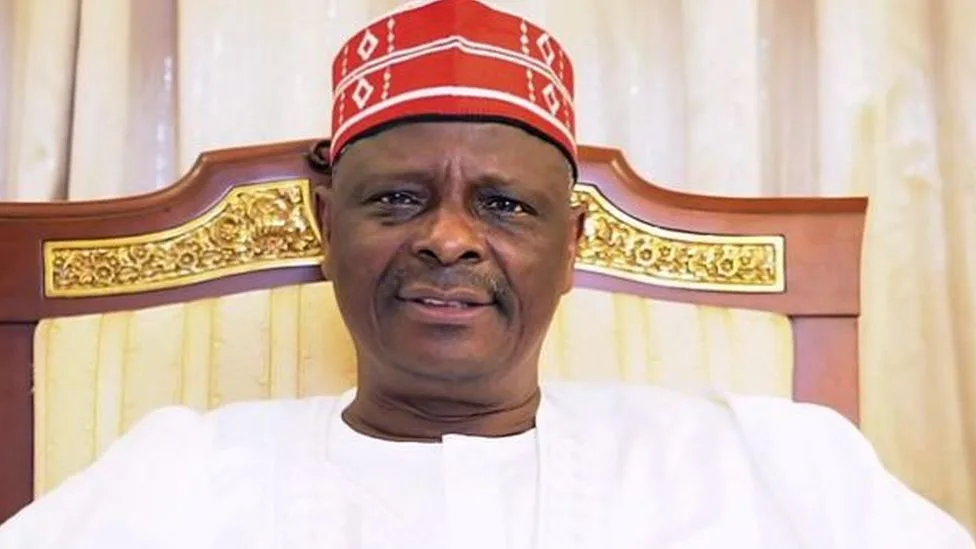
Rabiu Kwankwaso, a prominent Nigerian politician, has made a startling claim that he and his supporters received no benefits for their role in helping former President Muhammadu Buhari win the 2015 presidential election. Kwankwaso, who was a key figure in Buhari's campaign, delivered nearly 2 million votes from his stronghold in Kano State. This significant contribution was expected to yield substantial rewards, but according to Kwankwaso, it didn't.
The 2015 presidential election was a pivotal moment in Nigerian history, marking the first time an incumbent president would lose an election. Buhari, a former military dictator, campaigned on a platform of change, promising to tackle corruption and insecurity. Kwankwaso, who was then the governor of Kano State, threw his weight behind Buhari, mobilizing his supporters to vote for the All Progressives Congress (APC) candidate.
Kwankwaso's claim has sparked a heated debate in Nigerian politics, with many questioning the motivations behind his statement. Some have accused him of seeking attention, while others see it as a genuine expression of frustration. The APC, which has been in power since 2015, has faced criticism for its handling of various issues, including the economy, security, and corruption.
The relationship between Kwankwaso and Buhari has been complex, with both men having a long history of political alliances and rivalries. Kwankwaso was a key figure in the formation of the APC, but he has since fallen out with the party's leadership. His claim of not receiving any rewards for his support in 2015 is likely to further strain his relationship with the APC.
The implications of Kwankwaso's claim are significant, as they highlight the challenges of Nigerian politics, where loyalty and support are often expected to be rewarded with patronage and favors. The lack of transparency and accountability in the country's political system has led to widespread corruption and abuse of power.
Key Facts
- Rabiu Kwankwaso claims he and his supporters got nothing in return for delivering nearly 2 million votes to help former President Buhari win in 2015.
- The 2015 presidential election was a pivotal moment in Nigerian history, marking the first time an incumbent president would lose an election.
- Kwankwaso was the governor of Kano State at the time and threw his weight behind Buhari, mobilizing his supporters to vote for the APC candidate.
- The APC has been in power since 2015 and has faced criticism for its handling of various issues, including the economy, security, and corruption.
- Kwankwaso has fallen out with the APC leadership and his claim is likely to further strain his relationship with the party.
Background to the 2015 Election
The 2015 presidential election was a significant event in Nigerian history, marking a turning point in the country's democratic journey. The election saw the defeat of incumbent President Goodluck Jonathan, who had been in power since 2010. Buhari, who had previously contested for the presidency three times, finally emerged victorious, thanks in part to the support of Kwankwaso and other key figures.
The election campaign was marked by intense rivalry between the APC and the ruling People's Democratic Party (PDP). The APC, which was formed in 2013, brought together several opposition parties and individuals who were dissatisfied with the PDP's leadership. Kwankwaso, who was then a member of the PDP, defected to the APC in 2014, bringing with him a significant following in Kano State.
The APC's victory in the 2015 election was seen as a testament to the power of opposition politics in Nigeria. However, the party's performance in office has been mixed, with many critics arguing that it has failed to deliver on its campaign promises.
The Role of Kwankwaso in
the 2015 Election Kwankwaso played a crucial role in the 2015 presidential election, delivering nearly 2 million votes from his stronghold in Kano State. His support for Buhari was seen as a significant factor in the APC's victory, as it helped to swing the election in the party's favor. Kwankwaso's influence in Kano State is considerable, and his endorsement of Buhari was expected to yield substantial rewards.
However, according to Kwankwaso, he and his supporters got nothing in return for their support. This claim has sparked controversy, with many questioning the motivations behind his statement. Some have accused him of seeking attention, while others see it as a genuine expression of frustration.
The Implications of Kwankwaso's Claim
The implications of Kwankwaso's claim are significant, as they highlight the challenges of Nigerian politics, where loyalty and support are often expected to be rewarded with patronage and favors. The lack of transparency and accountability in the country's political system has led to widespread corruption and abuse of power.
The fact that Kwankwaso is speaking out now, more than a decade after the election, suggests that he is seeking to reposition himself in Nigerian politics. His claim of not receiving any rewards for his support in 2015 is likely to further strain his relationship with the APC, and may even lead to a realignment of forces in the country's political landscape.
The Future of Nigerian Politics
The future of Nigerian politics is uncertain, with many factors contributing to the country's instability. The APC, which has been in power since 2015, has faced criticism for its handling of various issues, including the economy, security, and corruption. The party's performance in office has been mixed, with many critics arguing that it has failed to deliver on its campaign promises.
The opposition PDP, which has been out of power since 2015, is seeking to regain control of the government. The party has been working to rebrand itself and attract new supporters, but it faces significant challenges, including internal divisions and a lack of cohesion.
Conclusion
Kwankwaso's claim of not receiving any rewards for his support in 2015 is a significant development in Nigerian politics. The implications of his statement are far-reaching, highlighting the challenges of the country's political system and the need for greater transparency and accountability. As the country looks to the future, it is clear that the APC and the PDP will continue to play important roles in shaping the country's political landscape.