

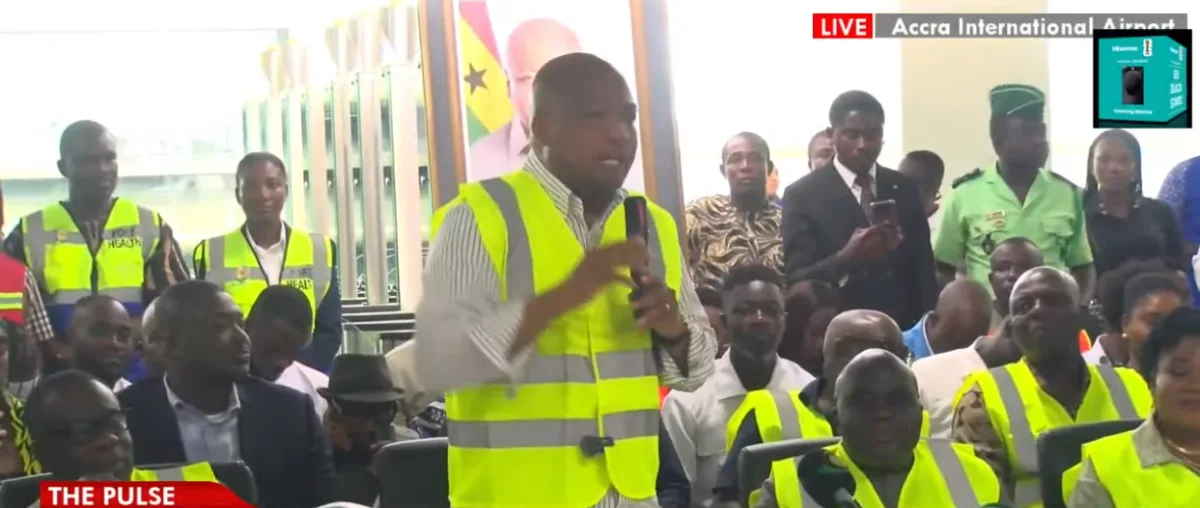
The first wave of 300 Ghanaians fleeing South Africa has finally touched down in Accra. It’s the start of a massive state-led effort to rescue citizens trapped in a wave of xenophobic attacks. These returnees stepped off the plane directly into a reception organized by the Ministry of Foreign Affairs, trading the tension of foreign streets for the safety of their home soil.
Foreign Affairs Minister Samuel Okudzeto Ablakwa met the flight personally to greet the returnees. He emphasized that the state isn't leaving anyone behind. Mr. Ablakwa, who serves under the administration of President John Dramani Mahama, stressed that the protection of Ghanaian nationals is a non-negotiable priority for the government.
"Indeed, the Mahama administration is demonstrating that wherever Ghanaians are, we will make sure you're protected, your dignity is respected, and we will go to the length of this world to bring you back home safely."
Beyond the handshakes, the government has set up a triage system at the airport to handle the immediate human cost of this sudden displacement. Medical doctors, nurses, and psychologists are working in shifts to provide trauma counseling to those who spent their final days in South Africa watching their livelihoods go up in smoke. They aim to address the shock of the experience before these individuals even leave the airport perimeter.
Financial support is also being rolled out in two specific tiers to ensure the returnees aren't left stranded in Accra. The first is a transport allowance designed to get people from the capital back to their hometowns in regions like Ashanti, Northern, or Western. This bridges the distance between the airport and their actual family support networks. Second, there's a dedicated reintegration allowance created to act as a buffer while the returnees look for new jobs or try to restart their businesses.
The government is also working to plug these citizens into broader national social schemes. Officials are registering each arrival to grant them immediate access to upcoming initiatives like the 24-hour economy project and the newly proposed Women’s Development Bank. By folding these returnees into these programs, the state aims to turn a traumatic exit from South Africa into a chance for a fresh economic start.
These attacks in South Africa often target immigrants who operate small-scale retail shops, a sector where many Ghanaians, Nigerians, and other West Africans work. The violence frequently centers on the belief that foreign nationals are taking jobs or dominating local markets, despite many of these traders operating legally with valid permits. For many of the 300 people who just arrived in Accra, the loss of their physical inventory—shops, goods, and homes—represented years of savings suddenly wiped out overnight.
This isn't just about security; it's about the diplomatic headache of managing regional relations within the African Union. South Africa has historically struggled with periodic bouts of anti-immigrant sentiment that flare up during economic downturns, often leaving the broader African diaspora in the crosshairs. The decision by the Ghanaian government to actively sponsor the return of its people reflects a firm shift toward prioritizing citizen safety over traditional "quiet diplomacy" in regional disputes.
While the government is focused on settling this first batch of 300, the Ministry of Foreign Affairs is keeping communication channels open for any other Ghanaians still feeling the heat in various South African provinces. The registration process happening now is intended to create a long-term database for these returnees. This allows the Ministry of Finance and the Ministry of Employment to track their progress. It’s a massive logistical undertaking as the country balances this relief effort with other national priorities ahead of the next fiscal quarter.
For the average Ghanaian, the sight of a government flight bringing citizens home serves as a reminder of the rising stakes for those living in the diaspora. If the state manages to successfully integrate these returnees into the 24-hour economy, it could provide a blueprint for how to handle future crises involving citizens abroad. The government's immediate focus remains on settling them, feeding them, and helping them rebuild.