

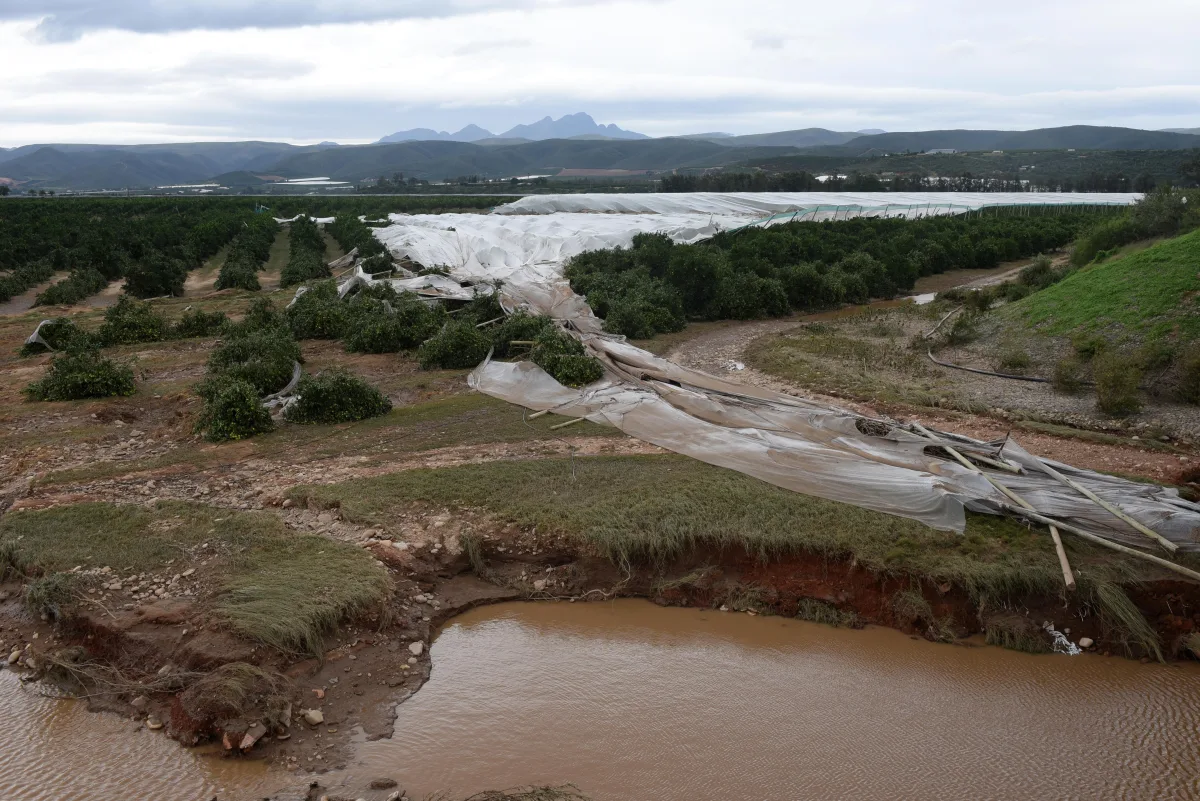
Between 10 and 12 May, the quiet town of Ceres experienced something out of a disaster movie. A storm of unprecedented intensity hammered the region, marking the heaviest 24-hour rainfall since the South African Weather Service began tracking data back in 1955. By the time the skies finally cleared, the impact on the landscape was nothing short of traumatic.
On 11 May alone, the Ceres Automatic Weather Station logged a mind-boggling 333.2mm of rain. To put that in perspective, the local average for the entire month of May is only 80.4mm. That is more than four times the normal monthly rain falling in just one day. By 22 May, the total for the month had already climbed to 507.0mm, shattering all previous monthly records.
"While the substantial rainfall contributed positively to dam levels, groundwater recharge, river flows and agricultural water availability, the excessive rainfall over this short period led to adverse impacts on communities."
As the Breede River catchment system transformed into a violent, muddy torrent, it didn't just stay in its banks. The surge swept through iconic winemaking towns like Worcester, Robertson, and Swellendam, turning prosperous orchards into watery graveyards. The force of the water didn't care about balance sheets; it tore through irrigation infrastructure that farmers rely on to keep their businesses alive.
The financial hit to
the fruit industry
Hortgro, the body representing the pome and stone fruit sectors, estimates that the damage to apple and pear production alone sits at a staggering R6.3-billion. This isn't just about fruit; it’s about the 6,700 people whose livelihoods are now effectively hanging in the balance. When you factor in the ripple effect on transport, packaging, and retail, the economic shadow cast by this storm grows much larger.
With the industry valued at approximately R24.6-billion, the damage accounts for a massive 25% of its total worth. Despite the chaos, the Citrus Growers Association (CGA) remains surprisingly optimistic in their latest CEO newsletter. They haven't adjusted their target of shipping 209.5 million cartons for the 2026 season, suggesting that despite the mud, the export machine is trying to keep moving.
A brewing drought after
the flood
It sounds like a cruel irony, but the very place that was just drowned might soon be gasping for air. Long-range forecasts for the southwestern coastal regions suggest that the remainder of the winter season could be drier than normal. To make matters worse, meteorologists are watching the development of a potentially strong El Niño climate pattern, which is known for bringing heat and dry spells to the region.
If the rain taps run dry, the only safety net the province currently has is its dams. The Department of Water and Sanitation reported that dam levels across the Western Cape had jumped to 71.8% by mid-May, up from 56.2% at the same time last year. It’s a bitter silver lining: the same deluge that destroyed crops and infrastructure has at least left a buffer of water in the tanks.
- Record rainfall: 333.2mm in 24 hours in Ceres on 11 May.
- Monthly total: 507.0mm reached by 22 May.
- Economic damage: R6.3-billion loss estimated by Hortgro.
- Jobs at risk: 6,700 direct agricultural positions.
- Dam levels: 71.8% capacity as of late May 2026.
While the industry counts its losses, the human element remains the most urgent. From the small-scale farmer whose equipment is buried in silt to the seasonal worker wondering if they’ll have a job in the coming weeks, the effects of this storm will be felt for a long time. Climate change is becoming the new normal, ensuring that these 'once in a lifetime' storms show up with much more frequency than anyone wants.