

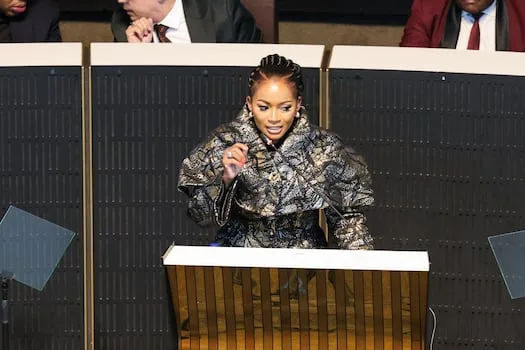
If you live in Joburg, you might want to double-check your bank balance before the new financial year kicks off. Loyiso Masuku, the deputy mayor and finance MMC, has just tabled a whopping R97.1bn budget for 2026/27. It’s a bitter pill to swallow because the city is practically begging for cash to keep basic services from collapsing entirely.
Everything is getting pricier. City Power is pushing for a 9.01% tariff hike, and since Rand Water slapped an 11% increase on bulk purchases, your water bill is set to follow suit. Even taking out the trash costs more now, with Pikitup tariffs climbing by 6.2%. It’s a classic case of the city struggling to keep its head above water while passing the costs onto the residents.
“Every rand lost through illegal connections, meter tampering, billing weaknesses, non-payment and water losses is a rand that can't repair Johannesburg.”
Masuku isn't hiding the fact that the metro is under immense pressure. They've adjusted their revenue collection forecast down to 86%, admitting that the old system was just too optimistic. The infrastructure backlog alone is a staggering R185bn. With 40% of water lost to leaks and 27% of electricity lost to distribution issues, the city is effectively bleeding money.
The national government is stepping in to micromanage the till because the situation is dire. Electricity and energy minister Kgosientsho Ramokgopa confirmed that from July 1, the money the city collects from electricity will be ringfenced. This means that cash is going straight to Eskom to chip away at the metro's R5.3bn debt, rather than getting lost in the city's general pot.
Eskom has already threatened to cut the power to bulk supply points, which would leave entire neighbourhoods in the dark. On top of that, finance minister Enoch Godongwana has been breathing down Mayor Dada Morero’s neck. He has even threatened to freeze the city's R8bn equitable share grant unless the city ditches a controversial R10.3bn wage hike offer that was made to council workers during a tense strike standoff last year.
To stop the ship from sinking, the city is launching a six-pillar recovery plan. This framework focuses on financial recovery, revenue enhancement, expenditure containment, creditor and liquidity reform, governance and compliance, and ensuring labour stability. It’s an ambitious list, but it requires actual discipline, something the city’s recent financial reports have sorely lacked.
The National Treasury is also dangling a R54bn carrot, known as the Metro Trading Services Reform initiative. This performance-based incentive is meant to help fix water, electricity, and waste services. The metros must run these services as professional, ringfenced utilities rather than letting them continue as extensions of local politics.
Capital investment for the coming year sits at R8.8bn, with plans to grow that to R25.3bn over the medium term. This money is earmarked for the boring but vital stuff: road resurfacing, bridge repairs, and fixing traffic signals. There is also R7.2bn going to the Joburg Metro Police Department, hoping to see more visibility and bylaw enforcement on the streets.
Despite the doom and gloom, there are some protections for the most vulnerable. Households on the expanded social package—which now supports 145,000 families—get 15 kilolitres of free water and 50 units of electricity. Pensioners with a low household income who own properties under R1.5m will also get a total rebate on their rates, which is a rare bit of good news in an otherwise heavy budget speech.
As the local government elections loom on November 4, 2026, the political temperature is only going to rise. Masuku says she wants to pivot toward a 'politics of service' instead of just playing for the gallery. Residents should prepare for their monthly bills to look a lot more painful starting in July.