

The single sharpest fact in one or two punchy sentences. Who did what, where, when, and why it matters. Not a summary of everything — the one thing that makes someone stop scrolling. A reader who only reads this paragraph must understand what happened.
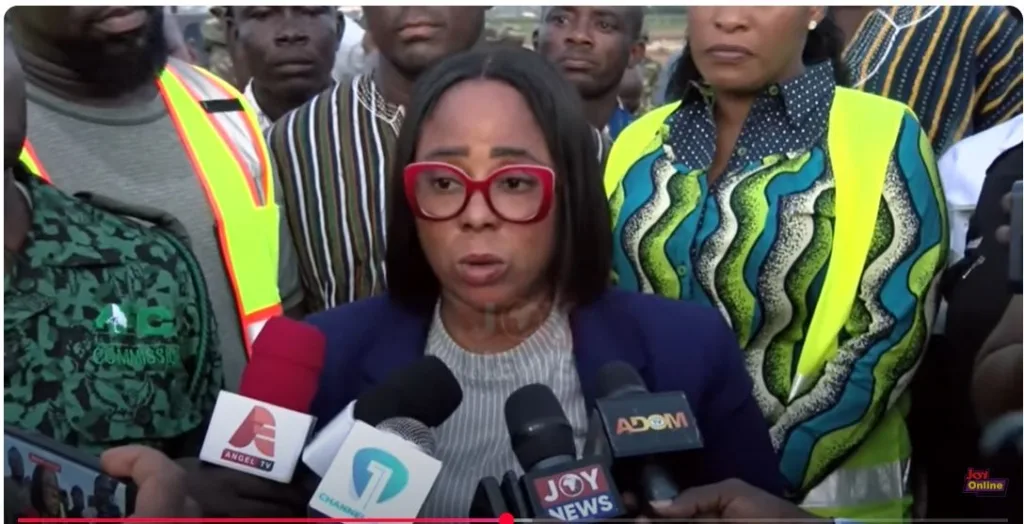
Linda Ocloo has declared that she is determined to ensure at least one official is held accountable as the government intensifies its crackdown on illegal developments contributing to flooding. 'I'm more than ready. In fact, I just want one person as a scapegoat,' she said.
Ms Ocloo made her strongest remarks yet on accountability during the first day of the National General Clean-up Exercise on Friday, July 10. She stated that authorities had encountered several occupants of structures earmarked for demolition who insisted they possessed permits issued by Metropolitan, Municipal and District Assemblies (MMDAs).
According to her, those claims would be thoroughly investigated to establish whether assembly officials improperly authorised developments in prohibited locations. 'If we have that permit and find out that there's this particular MCE who is responsible, why not? That person will be fired,' she stated.
Crackdown after devastating floods Ms Ocloo's warning comes in the wake of President John Dramani Mahama's directive that MMDCEs who approved construction on waterways or other restricted areas should face sanctions. The directive forms part of a broader government response to the devastating floods of June 29, which affected several communities, particularly in the Greater Accra Region, resulting in deaths, the displacement of thousands of residents and widespread destruction of homes, businesses and public infrastructure.
Government has since intensified efforts to remove illegal structures obstructing waterways, improve drainage systems and strengthen enforcement of planning regulations to reduce the risk of future flooding. The exercise, she indicated, forms part of a comprehensive flood mitigation strategy aimed at preventing a recurrence of the disasters that continue to plague the capital during the rainy season.
Demolition underway The Regional Minister disclosed that demolition exercises had already commenced in parts of Greater Accra, with several unauthorised structures identified for removal. She said affected property owners had been given notices to vacate within the stipulated period as authorities move to reclaim waterways and improve the free flow of stormwater.
The National General Clean-up Exercise, coordinated by the Post-Flood Mitigation Committee, is being undertaken across seven flood-affected regions under the theme of restoring environmental sanitation and reducing flood risks. The initiative is being implemented in two phases. The first phase involves personnel from the security services, Metropolitan, Municipal and District Assemblies, and waste management companies undertaking large-scale desilting and sanitation activities, while the second phase brings in members of the public to participate in community clean-up exercises.
Holding MMDCEs accountable Ms Ocloo stressed that holding public officials accountable for unlawful approvals would complement the clean-up campaign and send a clear signal that negligence in land-use planning would no longer be tolerated. She warned that her administration would leave no stone unturned in its efforts to uncover any officials responsible for the devastating floods.
In her strongest remarks yet on accountability, Ms Ocloo said: 'I will leave no stone unturned, I will do every single thing to find who gave the permit. And when we find out, we will fire that person.'
Government response The government has also announced plans to remove all unauthorised structures obstructing waterways across the country. This comes after a series of devastating floods hit several communities in the Greater Accra Region, resulting in deaths, displacement and widespread destruction of homes and public infrastructure.
According to the government, the exercise forms part of a broader national effort to improve sanitation, clear choked drains and reinforce enforcement against developments that obstruct natural watercourses. The initiative is being implemented in conjunction with the Metropolitan, Municipal and District Assemblies (MMDAs) and other stakeholders.
The government has identified several locations across the country where demolition exercises are being undertaken. The affected areas include parts of Accra, Kumasi, Tamale and other major cities in the country.
Investigations underway The government has also launched investigations into the issuance of permits for unauthorised developments. The investigation is being undertaken by a team of experts who will probe the circumstances under which permits were issued for developments in prohibited locations.
The team is expected to submit its report to the government within the next two weeks. The report will provide valuable insights into the circumstances under which permits were issued for unauthorised developments and recommend measures to prevent future occurrences.
The government has also announced plans to strengthen enforcement of planning regulations and improve collaboration between stakeholders to prevent unauthorised developments.
A comprehensive flood mitigation strategy The government has also announced plans to implement a comprehensive flood mitigation strategy aimed at preventing a recurrence of the disasters that continue to plague the capital during the rainy season.
According to the government, the strategy will involve the removal of all unauthorised structures obstructing waterways, improvement of drainage systems and strengthening of enforcement of planning regulations.
The government has also announced plans to establish a flood warning system to alert citizens of impending floods. The system will be established in conjunction with the meteorological agency and other stakeholders.
Ms Ocloo said: 'We are committed to improving the living conditions of Ghanaians. We will do everything within our power to prevent future floods and ensure that those responsible are held accountable.'