

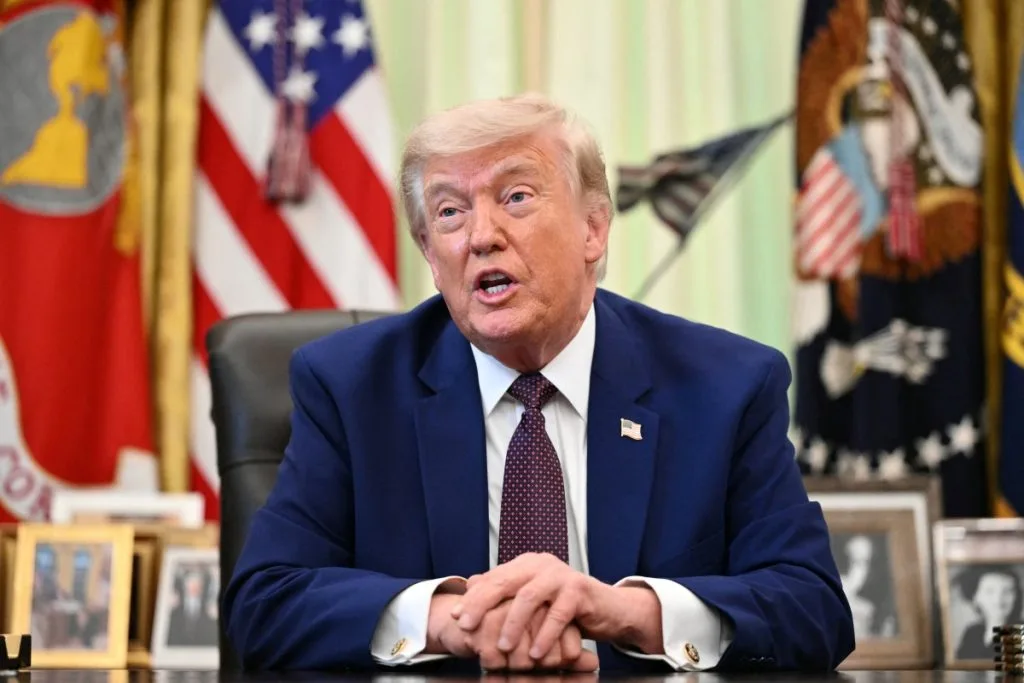
Leaked information from the US president's Truth Social account revealed that his administration has locked and loaded 1,000 missiles aimed at Iran, with thousands more to follow in case of an assassination attempt. The warning was issued after President Trump declared the ceasefire between the US and Iran over, despite earlier agreeing to further talks.
This is not the first time the US and Iran have been at odds. The two countries have been engaged in a bitter dispute over Iran's nuclear program and its alleged support for militant groups in the region. The US has imposed economic sanctions on Iran in an attempt to weaken its economy and force it to comply with international demands.
Iranian Foreign Minister Abbas Araghchi has pushed back against Trump's comments, stating that his country has kept its word on a ceasefire and that the US has been violating the terms of a memorandum of understanding (MoU) signed by both nations. According to Araghchi, Iran will not be intimidated by Trump's threats.
The MoU, signed in June, aimed at reducing tensions between the two nations and promoting dialogue. However, Trump's latest comments have sparked concerns that the agreement is on the brink of collapse.
Iran has been accused of violating the terms of the MoU by continuing to develop its nuclear program. The US has also accused Iran of supporting militant groups in the region, including Hezbollah in Lebanon. Iran has denied the allegations, saying they are baseless and designed to further demonize the country.
The US and Iran have been engaged in a series of negotiations since the signing of the MoU. However, progress has been slow, and tensions remain high. Araghchi has stated that Iran is willing to continue talks, but that the US must take concrete steps to address Iran's concerns.
The situation between the US and Iran remains volatile, with both sides accusing each other of violating the terms of the MoU. As tensions escalate, it remains to be seen whether the agreement can be salvaged.
The MoU outlined several key provisions, including a halt to further sanctions and a reduction in tensions. However, both sides have accused each other of failing to comply with the terms.
Iran's nuclear program has been at the center of the dispute between the US and Iran. The US has accused Iran of developing nuclear weapons, while Iran has maintained that its program is for peaceful purposes. The dispute has led to increased tensions and a series of economic sanctions imposed by the US.
The situation between the US and Iran has significant implications for the region and the global community. The dispute has the potential to destabilize the entire Middle East and could lead to a wider conflict.
Iran has been a major player in regional politics, with its influence extending into countries such as Syria, Lebanon, and Yemen. The US and other Western countries have accused Iran of meddling in regional affairs and supporting militant groups.
President Trump's warning to Iran has sparked concerns among diplomats and analysts. Some have warned that Trump's approach could lead to a wider conflict, while others believe it will only serve to further isolate Iran.
Despite the concerns, it is clear that the US and Iran are far from resolving their differences. The situation remains volatile, and it is uncertain what the future holds.