

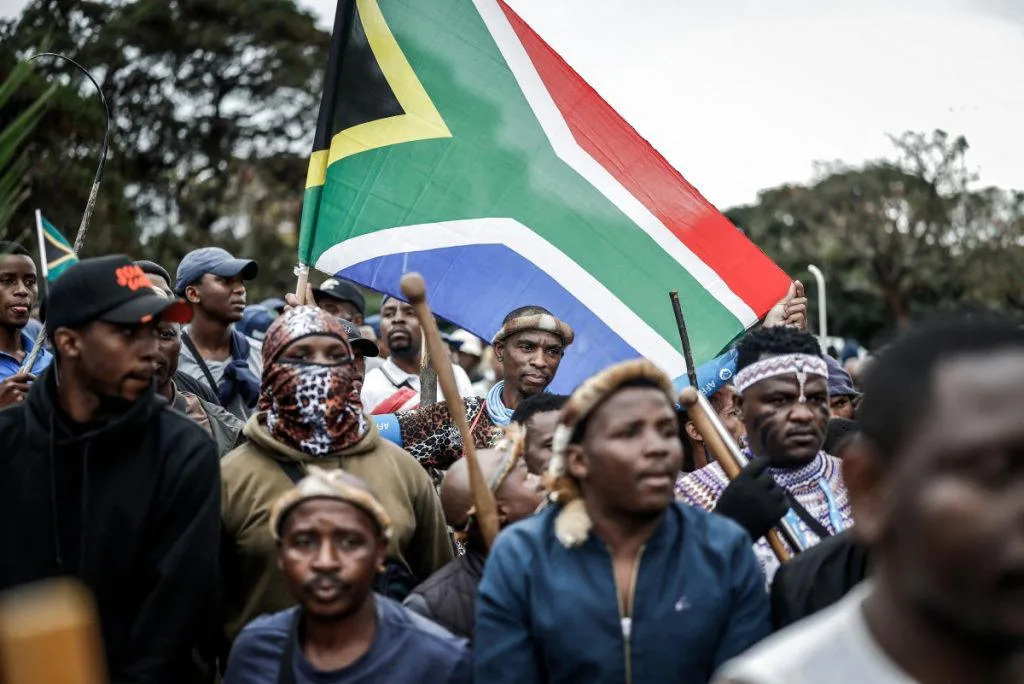
The streets of South Africa have once again become a dangerous place for Nigerians, with two men confirmed dead within days of each other in early September. Bishop Taiwo Michael Fakunle, 58, was shot and killed in his Johannesburg home on September 4th. Just the following day, James Uchechukwu Nwankwo, 48, also lost his life. The details surrounding Nwankwo's death are particularly troubling. Nigeria's Ministry of Foreign Affairs reported he died after what they described as 'gruesome interrogation techniques' by South African police officers.
This contrasts with other accounts that place his death in Cape Town. These aren't isolated incidents. Nigeria’s High Commissioner in South Africa, Femi Fani-Kayode, stated that these two men are the seventh and eighth Nigerians murdered in the country this year. He also revealed a shocking statistic: over 100 Nigerians have been killed in South Africa since 2022, with more than 30 of those deaths allegedly at the hands of police or soldiers. Roughly half of the Nigerian deaths this year, Fani-Kayode claims, fall into this category of state-sanctioned violence.
What's even more concerning than the sheer number of deaths is the lack of accountability. For two decades, this pattern has continued. Take the case of Ernesto Nhamuave, who was brutally beaten, stabbed, and burned alive in 2008. His horrific death was captured in a photograph that circled the globe, yet no one was ever convicted. Then there was Emmanuel Sithole, stabbed to death in Alexandra in 2015.
A photographer also witnessed and recorded that scene. The story of Mido Macia, dragged behind a police van in Daveyton in 2013, stands out. It highlights the rule because the officers involved were eventually convicted, a rare exception. The High Commissioner’s sharpest complaint isn't just about the killings; it's about the absence of any tangible justice. Despite repeated diplomatic efforts and statements from Nigeria, no one has been arrested, detained, prosecuted, or brought to book for these deaths.
South Africa's own legal system has acknowledged the problem, though action seems to be missing. In November 2025, its High Court ruled that private citizens cannot legally demand identification documents from anyone. This move sought to curb vigilantism. The country's President also publicly condemned taking the law into one’s own hands as 'vigilantism thinly disguised in the language of patriotism' in June 2026. Even the Zulu king has spoken out against attacks on foreign nationals.
Yet, these high-level pronouncements haven't translated into consequences on the ground. The issue isn't that South Africa hasn't spoken out; it's that its words haven't been followed by decisive action.
The path forward, according to critics, requires a shift from mere condemnation to concrete demands. Instead of asking for official statements, which are readily available and cost nothing, there's a call to demand prosecutions, specifically by name and case number. For deaths that occur while in police custody, the demand is for investigations to be handled by independent bodies, not the police themselves. There's also a push to enforce Section 38 of South Africa's Immigration Act, which targets employers who hire undocumented foreign workers. This provision, which has been largely unused since 2002, could address a root cause of friction.
Clearing the massive backlog in asylum applications is seen as crucial to reducing the number of undocumented individuals who become easy targets on the streets.
This persistent impunity has taught a harsh lesson: that violence against foreigners, even when well-documented, often results in no convictions. This cycle of violence, fuelled by a lack of consequence, is a mechanism that allows the problem to fester. Meanwhile, a new deadline looms on September 30th, adding urgency to the calls for justice.