

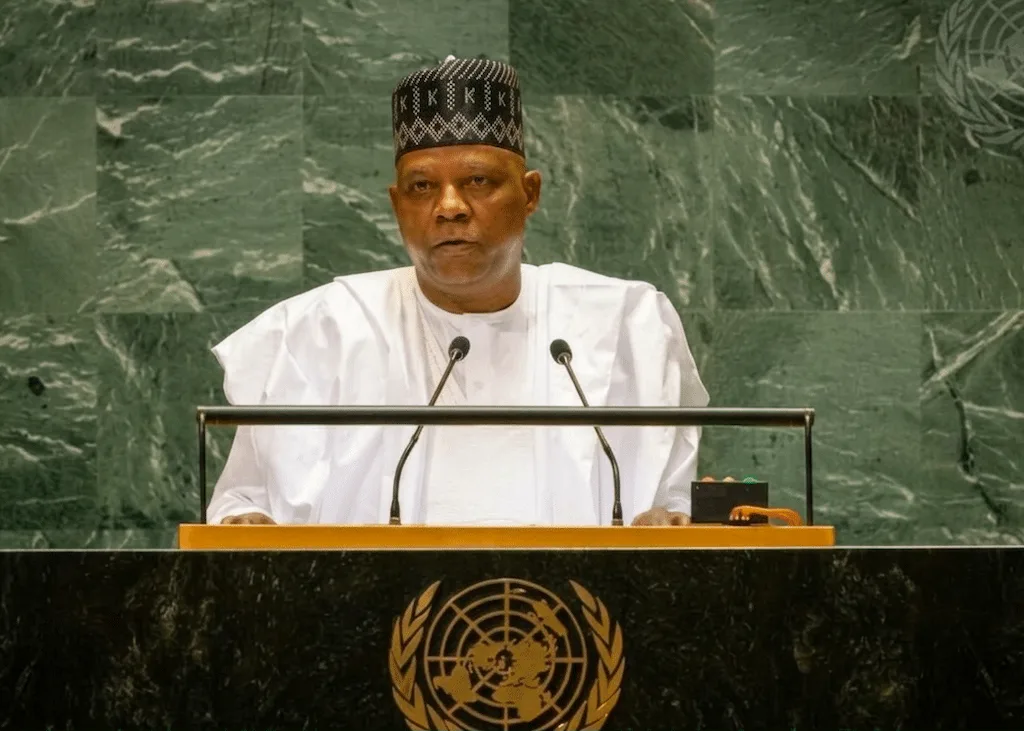
The world of 2026 can’t still be run by the rules set in 1945. That’s the blunt message Nigeria is sending to the United Nations. Vice President Kashim Shettima, standing in for President Bola Tinubu at the 81st UN General Assembly in New York, declared that Africa deserves a bigger say on the global stage. Specifically, he demanded at least two permanent seats on the UN Security Council for the continent. These seats must come with veto power, the same privilege held by the five current permanent members.
But Nigeria isn't stopping there. The demand also includes five non-permanent seats for Africa, aligning with the long-held common African position on reforming the Security Council. Shettima argued that the Council's current setup, a relic from the post-World War II era, simply doesn’t reflect today's geopolitical realities. He implies, how can global decisions be legitimate when the continent that makes up a huge chunk of the world's population is largely sidelined on critical international security matters?
He pointed out that Africa can no longer be an outsider looking in, especially when issues concerning the continent consistently dominate the Council's agenda. Nigeria’s stance is firmly rooted in the Ezulwini Consensus and the Sirte Declaration. These documents together form the Common African Position. This unified African voice seeks not just a place at the table, but a powerful one. It desires permanent membership that carries all the existing privileges, including the veto.
The African Union itself reaffirmed this demand back in May. It stated quite clearly that Africa's exclusion from permanent membership is a historical injustice that needs to be fixed. Shettima underscored the principle that any institution claiming to act for all of humanity must actually represent the people it claims to speak for. He linked the urgent need for Security Council reform to restoring faith in multilateralism. This is especially important as geopolitical divisions continue to widen across the globe.
Nigeria, Shettima assured the assembly, remains committed to the UN Charter and the spirit of international cooperation. The country champions a world order where diplomacy trumps force. It believes international law should govern interactions between nations. He reminded everyone of Nigeria's significant contributions to peace efforts in places like Liberia, Sierra Leone, Darfur, Mali, and The Gambia. Even now, Nigeria actively participates in regional security through ECOWAS, the African Union, and mechanisms aimed at ensuring maritime security in the Gulf of Guinea.
It tackles issues from mediation and counter-terrorism to fostering democratic governance.
The Vice President didn’t shy away from the harsh realities. He noted that ongoing conflicts in various regions, including the devastating situation in Sudan, highlight the absolute necessity of dialogue and collective responsibility for peaceful dispute resolution. He issued a stern warning, too, about a global information environment where propaganda can muddy the waters. This makes it hard to distinguish victims from aggressors and complicates efforts to hold those responsible accountable. He concluded that a truly inclusive and effective UN is still the indispensable tool for achieving global peace and sustainable development.
The push for reform is gaining momentum as African leaders consistently call for changes to an institution whose permanent membership has remained unchanged since its inception. The current five permanent members – China, France, Russia, the United Kingdom, and the United States – all wield veto power. Africa, a continent of over 1.4 billion people, currently has no permanent voice in this crucial body. The AU’s proposed reform model seeks at least two permanent seats for Africa, with veto powers. The five non-permanent seats would also be allocated to the continent, effectively doubling its representation.
Shettima reiterated Nigeria’s dedication to a multilateral system. He believes such a system can genuinely grapple with the complex challenges of the 21st century. He emphasized that despite national differences, a shared humanity and a collective responsibility to secure peace for future generations must prevail.