

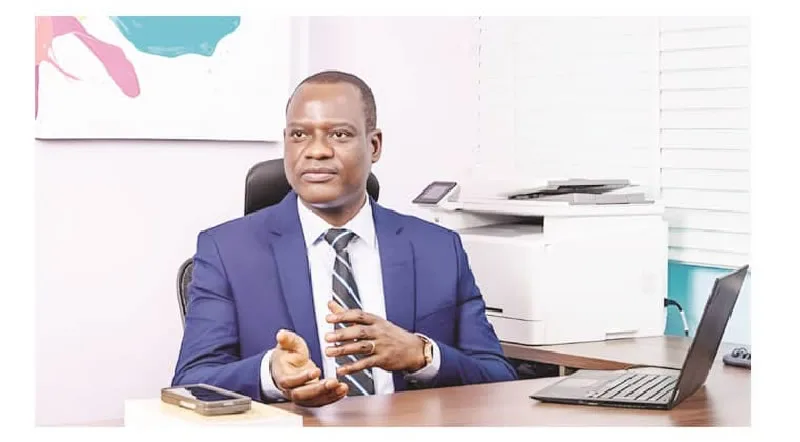
Africa's push for crucial infrastructure development is being severely hampered by expensive borrowing and a lack of accessible, affordable long-term funds, according to Nigeria's Minister of Finance and Coordinating Minister of the Economy, Taiwo Oyedele. He pointed out that not only are financing costs steep, but African countries also face additional premiums and currency risks when trying to attract investment for projects, especially in the energy sector.
Oyedele made these remarks at the United Nations Dialogue on Solutions to Climate Finance, which was held on the sidelines of the 81st Session of the United Nations General Assembly in New York. He argued that it's a paradox that African nations, which contribute relatively little to global carbon emissions, have to shoulder higher costs when seeking finance for their development needs.
He described these extra financial burdens as a "prejudice premium" and a "narrative cost." On top of that, currency volatility and what he termed a "stereotype tax" further complicate matters for countries looking to fund essential infrastructure and energy assets.
Taiwo Oyedele, who was appointed Minister of Finance and Coordinating Minister of the Economy under President Bola Ahmed Tinubu's administration, has been vocal about the need for a fairer global financial system. His focus has consistently been on economic reform and attracting investment to boost Nigeria's growth.
The minister didn't just point out the problems; he also called for a fundamental change in how the world approaches climate finance. He advocated for simpler access to cheaper capital for developing nations, with financing structures that actually consider their real economic situations and development goals. He stressed that Africa’s energy transition must be practical, taking into account the continent's massive energy-access deficit. This means more investment is needed to help countries meet their development needs while still moving towards cleaner energy.
Furthermore, Oyedele urged the international community to step up investments in gas and other transitional energy sources across Africa. He highlighted how such investments could not only help expand reliable and affordable energy access on the continent but also diversify global energy supplies. This is particularly important given the current disruptions affecting energy markets in the Gulf region, which create concentration risks.
For Nigeria specifically, Oyedele stated that the government's top priorities are tackling poverty, creating more economic opportunities, and making sure prosperity is shared widely. He believes that achieving these goals hinges on stronger international cooperation and a financing system that empowers developing countries to gather the necessary capital for infrastructure improvements that will ultimately improve the lives of their citizens.
"He said Africa’s development ambitions, particularly its energy needs, continue to be constrained by high financing costs, currency risks and limited access to affordable long-term capital."