

The billionaire's sudden change of heart
Ken Griffin, the founder of the Miami-based hedge fund giant Citadel, recently performed a complete U-turn regarding artificial intelligence. During January’s Davos summit, he dismissed the technology's potential as mere 'garbage'. By this May, he admitted feeling depressed after watching AI agents complete projects in hours that previously took his top-tier analysts weeks to finish.
Citadel functions as a massive engine for high-level intellectual labor, employing approximately 270 Ph.D. holders across 40 different specialized fields. With a median software engineer salary exceeding $500,000, the firm clearly prioritizes expensive, elite human capital. Griffin’s realization highlights a growing reality: firms can now achieve higher output while simultaneously lowering their massive wage bills. This shift signals a fundamental change in how elite firms value human labor compared to automated processes.
'Software that can replace even part of that labor could save firms like Citadel enormous amounts of money.'
Rethinking the recession rulebook
Since the Great Depression, the U.S. government has relied on GDP as the golden thermometer for economic health. Simon Kuznets, the economist who won a 1971 Nobel Prize for crafting this metric, designed it during the 1930s to monitor the total collapse of the national economy. The traditional logic held that when GDP falls consistently, a recession is inevitable; when it rises, the economy is thriving.
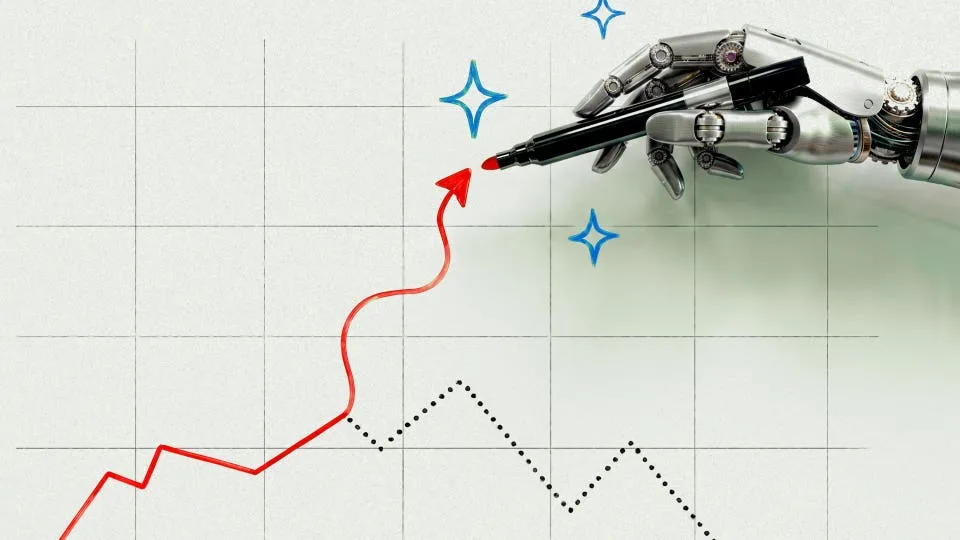
This framework faces a severe stress test as corporations lean into automation. If companies like Meta and Block continue to slash thousands of positions while their productivity and profits climb, the national GDP might rise while the average household's stability crumbles. Between 1950 and 2010, the U.S. cycled through 10 distinct recessions, averaging one every six years. We haven't seen a standard recession since 2008, outside of the immediate COVID-19 lockdowns, partly because the old indicators don't match the new reality.
The shifting tide of
the labor market
Michael Madowitz, a principal economist at the Washington-based Roosevelt Institute, argues that our current economic vocabulary is outdated. Much like 'stagflation' entered the lexicon to describe the 1970s mess of rising prices and high unemployment, we lack a term for a world of high growth and high joblessness. Historically, about two-thirds of national income landed in worker paychecks, leaving the remaining portion to business owners as profit.
That historical split isn't a fixed law of nature. If automation replaces labor, that revenue share shifts rapidly from the worker to the machine owner. It's a terrifying prospect for the middle class, especially when high unemployment usually triggers government intervention. If the GDP remains 'healthy' while 8% of the population is out of work, economists will struggle to prove the economy is actually performing for anyone but the ultra-wealthy.
Why the hype might be masking
the facts
Not every pink slip today is a result of advanced algorithms. Joe Brusuelas, the chief economist at the audit and consulting firm RSM US, notes that many companies are using the 'AI transition' as a convenient cover for correcting previous over-hiring mistakes. He remembers his mother working as a telephone operator, a role that vanished entirely when telecommunications technology improved. She successfully pivoted to healthcare. This is why he remains skeptical that AI will permanently kill the job market.
Brusuelas points out that while U.S. productivity growth rose from 1.5% to 2.3%, much of that gain resulted from pandemic-era labor shortages forcing firms to modernize their tools. He advises caution, urging people not to swallow every AI marketing claim as an absolute truth. AI-related equipment spending played a measurable role in the first-quarter GDP numbers. It isn't the primary driver of all economic activity today.
A warning for the future
Meta recently cut 8,000 roles as Mark Zuckerberg reallocated billions of dollars toward AI infrastructure. Similarly, Block eliminated over 4,000 jobs after Jack Dorsey concluded the company's needs had fundamentally changed. Even Standard Chartered in the United Kingdom has signaled plans to phase out over 7,000 'lower-value' positions by 2030.
These moves confirm that the disconnect between corporate success and individual security is widening. Even if the broader economy avoids a traditional recession, the human cost is becoming impossible to ignore. As wealth inequality continues to swell, the government's official 'growth' statistics will likely suffer a major crisis of credibility among everyday people who feel left behind by this latest machine age. Economic stability will require new metrics to track the welfare of those impacted by these structural shifts.