

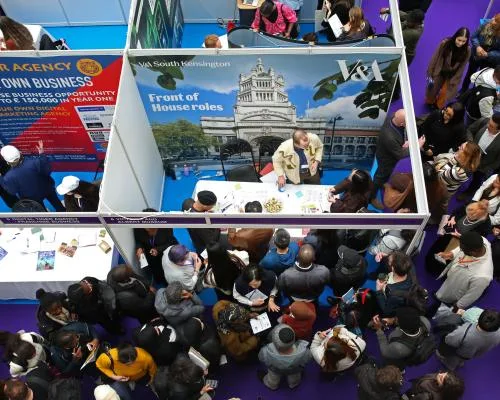
It’s a proper mess, innit? We’re talking about more than a million young people in Britain who are currently classified as 'Neets'—not in education, employment, or training. That figure hit 1,012,000 between January and March 2026. It isn't just a number on a spreadsheet; it’s a million people sitting on the sidelines while the world moves on without them. The Office for National Statistics confirmed this jump of 89,000 over the past year.
This increase demonstrates that the system is failing to get young people onto the first rung of the career ladder.
Alan Milburn, the former health secretary and one-time chair of the Social Mobility Commission, has been sounding the alarm. He was brought in by the government to figure out why this is happening. In his new diagnostic report, he paints a grim picture of a 'generational faultline.' He notes that six in 10 of these young people have never even had a job in their lives. That’s a massive spike from 20 years ago, when the figure was closer to four in 10. It suggests that youth detachment from the labour market is becoming the new normal rather than a temporary phase.
The Neet crisis has been swept under the carpet. Not any longer. This review exists because today Britain faces a genuine generational faultline.
Financial experts estimate this crisis costs the country roughly £125 billion every single year—that’s more than the entire national education budget. The real hit is personal. If a person stays outside of work or study between 18 and 24, they face a lifetime income loss of nearly £300,000. That’s money for a house deposit, a pension, or a decent life that simply vanishes into thin air before they even get a chance to start building a future.
Pat McFadden, the Work and Pensions Secretary, admits the situation is dire. He’s pushing for a massive overhaul, including a new youth jobs grant for businesses starting next month and a focus on apprenticeship programmes. The government is also looking at the impact of the minimum wage and recent workers' rights legislation on low-margin industries like retail and hospitality, where entry-level jobs are disappearing. Employers are telling the government that the current climate makes it tough to justify taking on inexperienced youth.
The Digital Trap
Beyond the economics, there's a very human cost tied to how these young people spend their time. Alan Milburn is strongly considering advocating for a social media ban for anyone under 16. He cites 'doomscrolling' as a major culprit for sleep deprivation and anxiety. Many of the young people his team interviewed admitted to staying awake until 4am or 5am just scrolling through their phones. This habit isn't just about being tired; it’s leading to functional impairment.
This impairment makes it even harder for them to show up for work or training.
Some might dismiss it as just a phase, but the government is taking this seriously. Ministers have already held a consultation on restricted access to these platforms. If the government hasn't put out a clear plan by the autumn, Milburn has promised to include a formal recommendation for a ban in his final report. Keir Starmer, the Prime Minister, has suggested that some form of action is coming. A full-scale ban remains a point of heated debate in Westminster.
This is a brutal reality for the UK economy, especially as the country faces wider threats from extreme weather and global instability impacting the food supply. While local leaders like Andy Burnham and national figures continue to trade barbs over the direction of the country, the reality for the million-plus Neets is that their opportunities are physically shrinking. The dream of a stable life is being replaced by a cycle of anxiety and detachment that threatens to turn a temporary slump into a permanent, lost generation.