

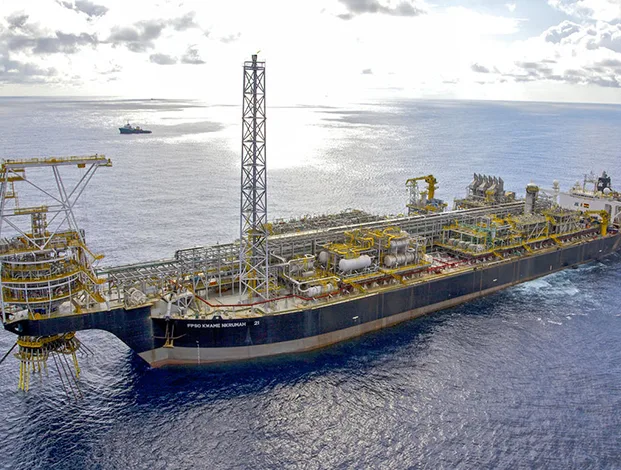
The Public Interest and Accountability Committee (PIAC) has sounded a warning about the potential threat to Ghana's petroleum industry from global energy transition policies. According to Technical Director, Mark Agyemang, adopting uniform policies without considering Ghana's unique economic and energy needs could be disastrous for the oil and gas sector.
Ghana, like other oil-producing countries, is caught in the middle of the global energy transition. The country's reliance on fossil fuels is well-documented, and the shift towards cleaner energy is necessary for the environment and the global economy. However, PIAC is cautioning against a one-size-fits-all approach to implementing energy transition strategies, as it may not work for Ghana's specific situation.
Mark Agyemang, who spoke during the Africa Extractive Media Fellowship lecture, warned that energy transition is the main threat to the industry. He argued that adopting a global policy could be problematic because countries may differ in their approaches to implementation. Ghana needs to work with other countries in the region to develop coordinated strategies that reflect their shared economic realities while positioning themselves to respond to evolving global climate policies.
The PIAC official emphasized that regional cooperation would enable countries to better safeguard their petroleum industries, strengthen energy security, and ensure that the transition to cleaner energy does not come at the expense of economic development. He also noted that such collaboration would strengthen the country's negotiating position in international climate and energy discussions, ensuring that Ghana's development priorities are adequately reflected in global policy decisions.
Ghana's energy sector is expected to play a crucial role in the country's economic growth and development in the coming years. The oil and gas industry already contributes significantly to the country's revenue, and the government is working towards increasing Ghana's energy production. However, the challenges posed by global energy transition policies could put the sector at risk, and the government needs to be prepared to address these challenges.
According to the PIAC, the government should prioritize regional cooperation and develop strategies that take into account Ghana's specific energy needs and economic realities. This could involve working with other oil-producing countries in West Africa to develop common energy policies and strategies that address the challenges posed by global energy transition.
The implications of the PIAC's warning are far-reaching, and the government needs to take immediate action to address the challenges posed by global energy transition policies. Ghana's energy sector is at the forefront of the country's economic growth and development, and any threats to the sector could have serious consequences for the country's economy.
Key Facts
- The PIAC's Technical Director, Mark Agyemang, warned that global energy transition policies could pose significant threats to Ghana's petroleum industry.
- Ghana's oil and gas sector is the country's second-largest source of revenue.
- The government is working towards increasing Ghana's energy production to meet growing energy needs.
- Regional cooperation is crucial for developing common energy policies and strategies that address the challenges posed by global energy transition.
- The PIAC emphasized that the government should prioritize regional cooperation and develop strategies that take into account Ghana's specific energy needs and economic realities.