


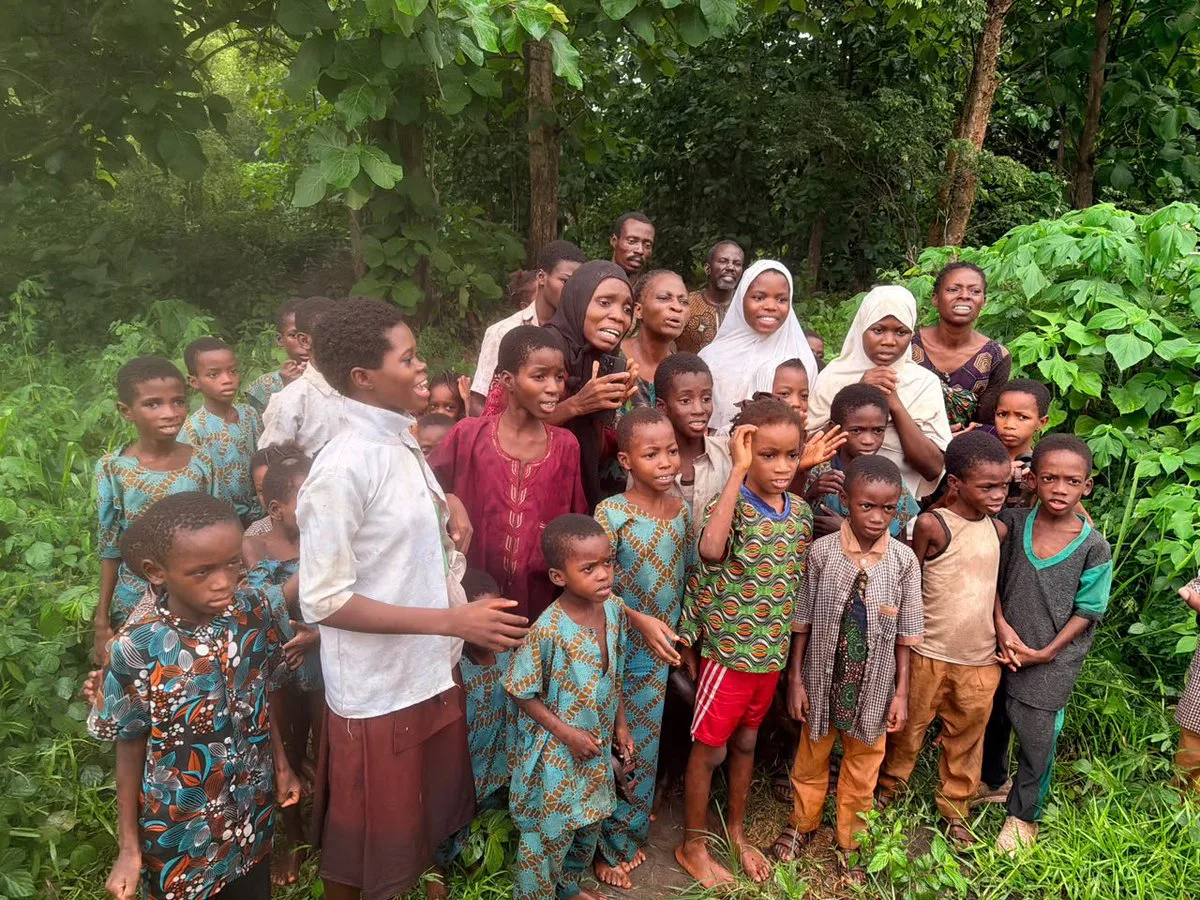
After nearly two months of anguish, prayers and mounting pressure on the Nigerian government, the pupils and teachers abducted from schools in Oriire Local Government Area of Oyo State have finally regained their freedom.
The confirmation came on Friday, July 10, from Bayo Onanuga, Special Adviser to President Bola Tinubu on Information and Strategy, who announced the development on his verified X handle. His words were simple and direct.
"Finally, all the kidnapped pupils and teachers in Orire, Oyo have been rescued by our security agencies."
That single post brought an end to one of the most painful security crises the South West has faced in recent memory, one that started on a Friday afternoon in May and dragged on for weeks under the rain, in a forest, with a nation watching and waiting.
How it all started
On May 15, 2026, gunmen stormed three schools at once in the Ahoro Esiele and Yawota axis of Oriire LGA. The targets were Baptist Nursery and Primary School in Yawota, Community Grammar School and L.A. Primary School in Esiele. It was a coordinated attack, carried out simultaneously across the three locations, and by the time it was over, 39 pupils and seven teachers, including a school principal, had been marched into the forest. Some reports from the Christian Association of Nigeria in Oyo State put the number as high as 46 or 47, since a few community members were also caught up in the raid. Among those taken was a child as young as two years old.
The attack shook the South West, a region that had largely been spared the kind of mass school kidnappings that have plagued the North for over a decade. President Tinubu called it barbaric. He wasn't wrong. What made it worse was that just a day after the abduction, one of the teachers, Michael Oyedokun, a mathematics teacher, was killed by the kidnappers. A video believed to show his death circulated online and sparked outrage across the country. It was a brutal reminder of how dangerous these operations can be, and how little the lives of ordinary Nigerians seem to matter to the men who carry out these attacks.
Weeks of waiting, false alarms and growing anger
What followed was a long, painful stretch of uncertainty. The kidnappers reportedly demanded the release of two detained Boko Haram commanders in exchange for the children and teachers, although the government never confirmed paying any ransom or meeting that demand directly.
In the middle of all this, a false claim went viral on Facebook saying the victims had already been released. Police quickly shut that down, warning that spreading unverified information could actually put the rescue operation at risk. It wasn't true. As of late May, the children were still in the forest.
By June, tempers in Ibadan had boiled over. Protesters blocked the Iwo Road corridor under the banner of the Take It Back Movement, demanding faster action from both the state and federal governments. The Socialist Labour movement also came out publicly, accusing the Tinubu and Makinde administrations of complacency and calling for sustained pressure until every victim was found.
Governor Seyi Makinde, addressing protesters directly, revealed that a Nigerian Army lieutenant had been killed during one of the rescue attempts. He promised residents that Oyo would not become another Chibok, referencing the 2014 abduction that has haunted the country's collective memory ever since. It was a heavy promise to make, and for weeks it looked uncertain whether it would hold.
Teachers in Oyo State also downed tools. The Nigeria Union of Teachers declared an indefinite strike over the insecurity, only calling it off in early July after the state government promised a proper Joint Security Task Force, regular patrols around vulnerable schools, psychosocial support for the eventual returnees, and compensation for the family of the slain teacher.
By late June and early July, the children had reportedly spent over 50 days in the forest, with heavy rainfall adding to fears that some could develop pneumonia, malaria or other illnesses if they weren't found soon. Health experts warned publicly that time was running out.
The tide starts to turn
Things started to shift when the Department of State Services, working with the military, got what security sources described as a major intelligence breakthrough. Investigators reportedly identified key members of the kidnapping gang and traced some of their associates and support network across the country.
According to sources close to the operation, this rattled the kidnappers. One source told reporters the gang's confidence had been shaken and that they were becoming more willing to let the children go. A joint team of DSS operatives and soldiers was said to be closing in on their hideout inside the Old Oyo National Park, which had been identified as the suspected location where the victims were being held.
Around the same time, the Chief of Army Staff, Lieutenant General Waidi Shaibu, gave an update during the 2026 Nigerian Army Day celebrations in Port Harcourt, saying troops were making tremendous progress and that he was confident the operation would end with everyone rescued and reunited with their families.
That confidence turned out to be justified.
The rescue
As of this report, the exact details of how the final rescue happened have not been made public. Onanuga's statement confirmed the outcome but gave no information on whether it was a military raid, a negotiated release, or some other kind of operation. It's also not yet clear whether a ransom was paid at any point, something the government had consistently avoided confirming throughout the ordeal.
What is clear is that after 56 days, every single pupil and teacher taken from those three schools in Oriire is finally free. Families who spent almost two months not knowing whether their children were alive can finally breathe.
Security agencies are expected to release more details in the coming days, including information about the condition of the victims and whether any arrests were made as part of the operation. Given how sensitive these missions usually are, it's likely the full story of the rescue will come out gradually rather than all at once.
What happens next
For now, the focus shifts to the reunion. Families in Oriire and across Oyo State have waited weeks for this moment, and community leaders say plans are already being made to receive the children and teachers and get them the medical and psychological support they need after two months in the forest.
This case will also likely reopen the conversation about school security in Nigeria, especially in rural communities close to forests and porous borders. The Oyo State government had already promised a Joint Security Task Force and stronger patrols around vulnerable schools as part of the deal that ended the teachers' strike, and now that the victims are home, all eyes will be on whether those promises actually get followed through.
For a region that prides itself on being one of the more peaceful parts of the country, the Oriire abduction was a wake up call. Its ending, thankfully, is the one everyone had been praying for.
This is a developing story. We will update this article as more details on the rescue operation become available.