

Ghana Considers Monthly Sanitation Exercise After Two-Day Cleanup
The single sharpest fact in one or two punchy sentences. Who did what, where, when, and why it matters. Not a summary of everything — the one thing that makes someone stop scrolling. A reader who only reads this paragraph must understand what happened.
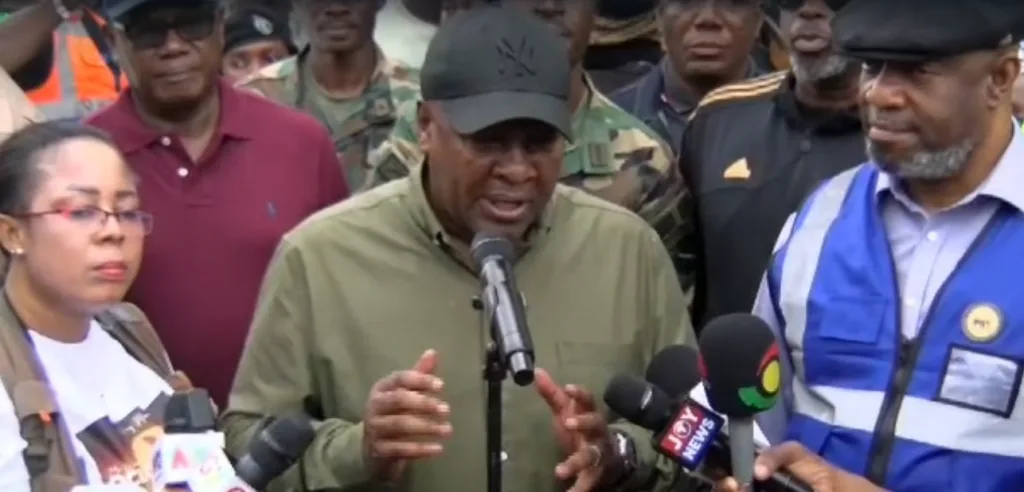
President John Mahama announced plans for a monthly nationwide clean-up exercise, citing the need for a more regular approach to tackle poor sanitation and flooding in Ghana. The President made the remarks during the two-day national clean-up exercise in Accra, which began today.
According to President Mahama, the two-day exercise is not enough to deal with the scale of sanitation challenges across the country. The President said that a longer-term and more regular approach was needed to tackle the volume of work required to tackle poor sanitation and choked drains.
The President also indicated that the government was taking further steps to address flooding and drainage problems, especially in parts of Accra where blocked drains and silted streams continue to pose a threat during the rainy season. He said the Minister of Finance had already released GH¢150 million to support flood mitigation efforts, including the dredging of streams and other drainage works.
The military will continue with aspects of the exercise even after the two-day clean-up exercise has ended.
Ghana's sanitation challenges are not new, and previous initiatives have had limited success. According to the World Bank, Ghana's waste management system is one of the most underdeveloped in West Africa.
President Mahama suggested that urban life had weakened the sense of communal responsibility that was once a hallmark of Ghanaian society. He said that communities used to take responsibility for maintaining clean environments, but this sense of responsibility was being lost in urban areas.
The President also emphasized the need for a change in public attitude if sanitation efforts were to produce lasting results. He said that the government needed to educate the public about the importance of sanitation and the consequences of neglecting it.
The President's proposal for a monthly clean-up exercise is not without its challenges. Implementing such an exercise will require significant resources and coordination, particularly in urban areas.
However, if successful, the President's proposal could have a significant impact on the lives of Ghanaians. Improved sanitation would not only reduce the risk of flooding and water-borne diseases but also enhance the aesthetic appeal of cities.
The Ghanaian government's efforts to address sanitation challenges are a welcome development, especially given the country's significant urbanization rate.
President Mahama's emphasis on the need for a change in public attitude is also a positive step towards creating a culture of sanitation in Ghana.
Ghana's sanitation challenges are not limited to its cities. Rural areas also face significant challenges in terms of waste management and sanitation.
President Mahama's proposal for a monthly clean-up exercise is part of a broader effort by the Ghanaian government to address its sanitation challenges.
The President's emphasis on the need for a change in public attitude is a positive step towards creating a culture of sanitation in Ghana.