

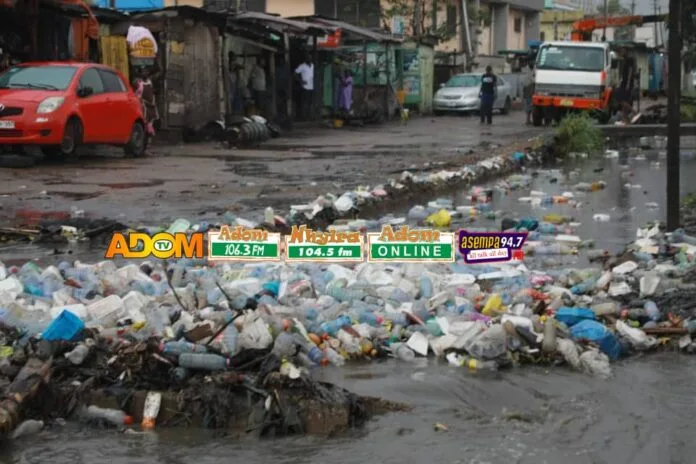
Whenever it rains heavily in Aboabo, a flood-prone community in Ghana, Fasila Alhassan sees something disturbing on the water’s surface: plastics. “Plastics are the majority of what you find,” she says.
Alhassan, a young climate reporter, made this point during the second edition of the Loud and Green XSpaces hosted on JoyNews’ X platform on Saturday. Her message was simple: Ghana’s addiction to single-use plastics is making flooding worse.
The discussion, held under the theme “Pure Water, Styrofoam, Plastic Soil: Addressing Ghana’s Growing Plastic Pollution,” brought together environmental advocates to talk about the country’s plastic crisis. They highlighted how improperly disposed plastic waste blocks drains, turning heavy rain into destructive floods.
Alhassan said the problem goes beyond waste disposal — it’s about consumption habits. Plastics have become deeply integrated into everyday life in Ghana, from sachet water to takeaway containers. But most of these are designed for single use and end up in the environment.
“Plastics have become part of our lives, but we should move away from plastics that are used only once and encourage reusable bottles,” she said.
Ghana produces about 1.1 million tonnes of plastic waste every year, according to government estimates. Only about 5% of it is recycled. The rest ends up in landfills, waterways, or streets — and eventually, drains.
During heavy rains, blocked drains overflow, flooding homes and businesses. Aboabo, a densely populated area in Kumasi, is one of the worst-hit communities. Residents have been dealing with flood-related losses for years.
Alhassan’s call adds to growing demands for practical solutions. Environmental advocates at the forum said tackling the problem requires both behavioural change and stronger enforcement of policies aimed at reducing plastic waste.
Ghana already has a ban on the importation and production of some single-use plastics, including certain types of plastic bags. But enforcement has been weak. The country also has a national plastic waste management policy, but implementation has been slow.
For Alhassan, change starts with individuals. She believes that if more people switch to reusable bottles and reduce their reliance on sachet water, it could make a real difference. “Whenever it rains in Aboabo and the place floods, if you look at the surface of the water, plastics are the majority of what you find,” she repeated — a stark reminder of what’s at stake.
The forum ended with a call for Ghanaians to rethink their relationship with plastic. As the country heads into another rainy season, the question is whether the message will translate into action.