

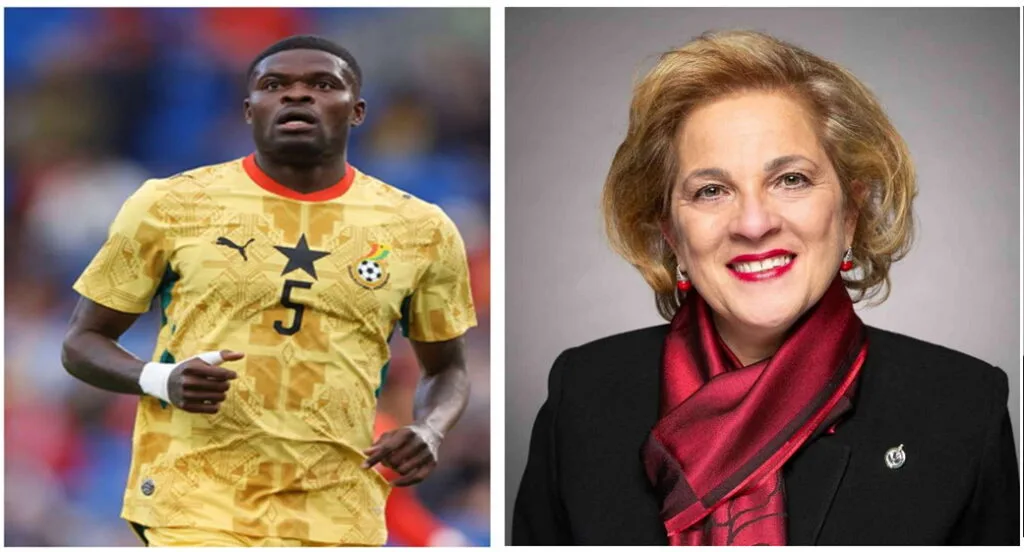
Canada shuts door on Partey hours before World
Cup opener
Canadian authorities have denied entry to Ghana's star midfielder Thomas Partey ahead of the Black Stars' opening FIFA World Cup fixture against Panama on Wednesday, June 17. The decision, announced suddenly, has sparked a legal and diplomatic firestorm.
Ghana's foreign affairs ministry and football association have lodged a formal protest, arguing that excluding an unconvicted athlete is unfair and discriminatory. Canada hasn't explained the basis, citing privacy protocols. FIFA has stayed out, deferring to Canada's sovereign border control.
The missing document at
the centre of the row
The exact legal reason for the ban remains unknown because the official visa refusal letter—which would contain the rationale—hasn't been made public. Until it surfaces, the core question is: can a country lawfully bar someone based on serious criminal allegations that have never been tested in court?
Partey, who's also deputy captain of the national team, faces unresolved charges of rape and sexual assault in the United Kingdom. He's pleaded not guilty. Under British and international human rights law, he remains innocent until proven otherwise.
Ghana's argument: presumption of innocence
Ghana's defence rests on the presumption of innocence. The government argues that barring Partey based on unproven allegations punishes him before a verdict. In a statement, officials called the move "fundamentally unfair" and a violation of the Rule of Law.
But immigration law operates differently from criminal law. Criminal law punishes after proof beyond a reasonable doubt. Immigration law is preventive—it assesses future risk, not past guilt. Sovereign states don't need a conviction to deny entry.
Canada's legal tool: Section 36 of IRPA
If Canada issued a formal inadmissibility finding, it likely used Section 36(1)(c) of the Immigration and Refugee Protection Act (IRPA). That section says a foreign national can be barred for "serious criminality" if they committed an act outside Canada that would be a crime inside Canada punishable by at least 10 years in prison. Crucially, a conviction isn't required.
Rape and aggravated sexual assault carry maximum sentences well over 10 years under Canadian law. So the allegations easily meet the threshold. The key is how a visa officer decides an act was "committed" when no trial has happened.
The legal standard: 'reasonable grounds to believe'
Canadian courts have settled this. In the Supreme Court case Mugesera v. Canada, the court ruled that immigration officers can use a "reasonable grounds to believe" standard. This is more than suspicion but less than the civil "balance of probabilities" and far less than criminal "beyond a reasonable doubt."
Formal charges, prosecutorial findings, and supporting evidence can meet that standard. So Partey's UK charges alone could be enough for a visa officer to deem him inadmissible.
What happens next
Ghana has demanded the refusal letter and is exploring diplomatic channels. Canada hasn't budged. The Black Stars will face Panama without their deputy captain. Partey remains in Ghana, his World Cup dream blocked by a legal system that prioritises border security over sporting glory.
"Excluding an unconvicted elite athlete is fundamentally unfair, discriminatory, and against the Rule of Law." — Ghana foreign affairs ministry statement
For now, the ball is in Canada's court. Until the refusal letter emerges, the world won't know exactly why Partey was locked out. But the legal framework is clear: Canada can do this, and it probably did.