

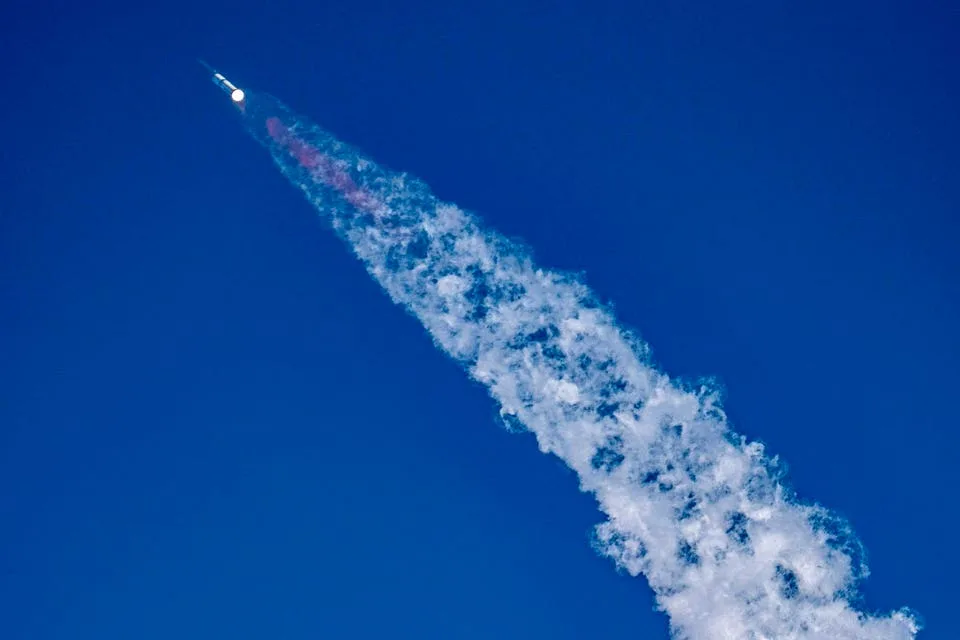
The Starship V3 rocket, launched by SpaceX on Friday, May 22, is the tallest and most powerful rocket ever built. This successful launch is significant, especially with SpaceX's initial public offering (IPO) announced for June, which could reach a record-breaking valuation of $1.75 to $2 trillion. It's a major milestone for the company, and it's happening at a time when the space industry is gaining momentum.
SpaceX's decision to launch Starship V3 during a fuel crisis may seem surreal, but the facts tell a different story. Starship's tanks hold about 1,500 metric tons of propellant, consisting mainly of liquid oxygen and liquid methane cooled to cryogenic temperatures. A single launch, therefore, doesn't affect oil prices or domestic gasoline supplies. They're not connected, and that's an important point to consider.
Many rockets use kerosene, a fossil fuel directly affected by the fuel crisis. By relying on methane, Starship is at the vanguard of a major transition in the launch business away from kerosene. Methane can be produced on Mars using atmospheric carbon dioxide and water, making it a more sustainable option for space travel. This is a key advantage of using methane, and it's something that sets Starship apart from other rockets.
Methane, as used in Starship, is a fossil fuel, but its methane-burning Raptor engines are considered cleaner than older rocket systems that relied on kerosene-like fuels. Methane combustion produces mainly carbon dioxide and water vapor rather than thick soot and toxic chemicals. This makes it a better choice for the environment, and it's a step in the right direction.
Yet, environmental researchers estimate that a single Starship launch can still produce tens of thousands of tons of carbon dioxide equivalent emissions. The bigger environmental concern is the growing number of kerosene-burning rockets already operating at industrial scale, including SpaceX's Falcon 9, which launched 167 times in 2025. That's a lot of launches, and it's having a significant impact on the environment.
And, unlike aircraft, rockets inject exhaust directly into the upper atmosphere, where scientists are still trying to understand the long-term consequences. In a landmark paper published in 2022, scientists modeled the climate effects of rocket black carbon emissions and found they could warm the stratosphere and affect the ozone layer. They're still studying the issue, and they don't have all the answers yet.
Research published last week focused on satellite megaconstellations, such as SpaceX's Starlink, which has nearly 12,000 satellites in orbit, with plans to increase that to 40,000. The researchers found that soot from such rockets absorbs sunlight, warming the upper layers of the atmosphere and decreasing the amount of sunlight reaching Earth's lower atmosphere, causing it to cool. It's a complex issue, and it's not fully understood.
The analysis showed that in 2020, these megaconstellations accounted for about 35% of the total climate impact from the space sector and will reach 42% by 2029. Rockets aren't driving the world's fuel shortages, and Starship is cleaner than most traditional launch systems. But as the space industry enters a hyper-growth era, scientists are increasingly asking whether humanity is beginning to industrialize the upper atmosphere during a climate emergency. It's a question that needs to be answered, and it's something that scientists are working on.
- Starship V3 is the tallest and most powerful rocket ever built
- SpaceX's IPO valuation could reach $1.75 to $2 trillion
- Starship's tanks hold 1,500 metric tons of propellant, mainly liquid oxygen and methane
- Methane combustion produces mainly carbon dioxide and water vapor
- A single Starship launch can produce tens of thousands of tons of carbon dioxide equivalent emissions
- SpaceX's Falcon 9 launched 167 times in 2025, compared to just five Starship launches
Rockets launching megaconstellations and other missions are like small-scale stratospheric aerosol injection experiments without forethought for potential unintended consequences. It's a warning that scientists are sounding, and it's something that needs to be considered.
So, what happens next? As SpaceX prepares for its IPO, the company will need to address the growing concerns about the environmental impact of its launches. With the space industry expected to continue growing, it's essential to consider the long-term consequences of industrializing the upper atmosphere. They can't ignore the issue, and they won't.
But, for now, SpaceX's successful launch of Starship V3 is a significant milestone in the company's history. The launch demonstrates the company's commitment to innovation and its ability to push the boundaries of space technology. As the space industry continues to evolve, it's likely that we'll see more companies like SpaceX pushing the limits of what's possible. They'll be driven by a desire to explore and to innovate, and that's what will drive the industry forward.