

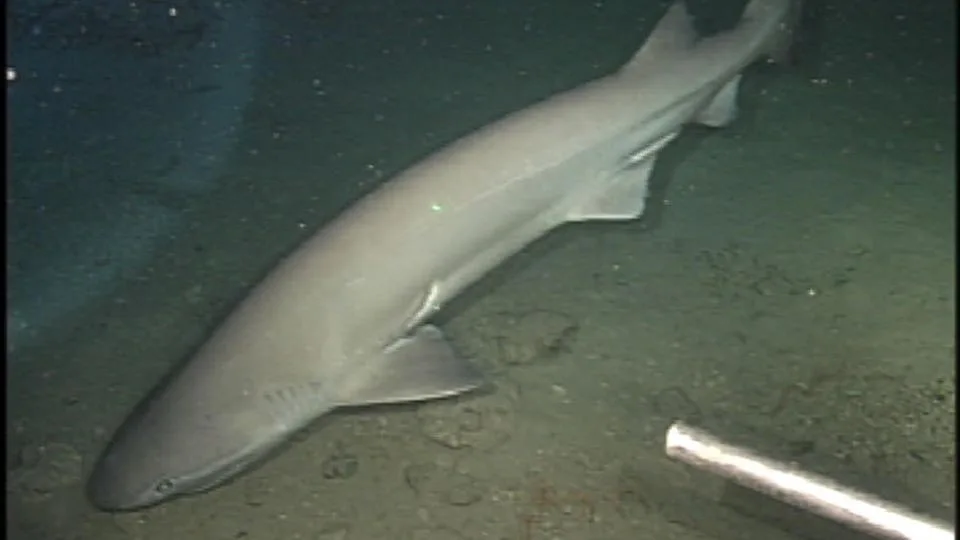
New research published today, May 23, 2026, is set to rewrite the evolutionary history of sharks. A team of scientists, led by Chase Doran Brownstein and Dr. Thomas J. Near at Yale University, analyzed the genomes of 48 cartilaginous fish species, including sharks, rays, skates, and chimaeras. They found a scientific headache: the traditional view of shark evolution may not be entirely accurate.
It's a discovery that doesn't come as a surprise, because scientists haven't fully understood shark evolution yet.
The study examined two types of genomic data: protein-coding genes and ultraconserved elements. While the protein-coding genes supported the traditional idea that sharks form their own exclusive branch on the tree of life, the ultraconserved elements told a different story. The latter suggested that Hexanchiformes, a group that includes frilled sharks and cow sharks, may have split away early. They may represent a sister lineage to all other sharks, rays, and skates. This changes our understanding of shark evolution, and it's a significant finding.
This finding has significant implications for our understanding of vertebrate evolution. Cartilaginous fishes, including sharks, have existed for at least 439 million years, making them one of the oldest surviving branches of jawed vertebrates. The evolution of jaws transformed life on Earth, allowing animals to grab, crush, slice, and manipulate food in entirely new ways. If scientists have misunderstood how these animals are related, it could fundamentally change how researchers interpret the evolution of jaws. It could also change how they interpret body plans, reproductive strategies, and even genome size itself.
Hexanchiformes are an intriguing group of animals, retaining anatomical traits considered 'ancient.' For example, most sharks possess five gill slits, while frilled sharks and cow sharks have six or seven. Their jaw suspension also resembles older vertebrate conditions seen in fossil species. This new research suggests that these characteristics may be primitive leftovers, rather than later evolutionary reversals. They're not just interesting features - they're a key part of the shark's evolutionary history.
“Sharks hold more evolutionary history than any other vertebrate lineage. We need a good tree to understand what we stand to lose,' said Chase Doran Brownstein. He's right”
— sharks are a crucial part of our planet's history.
Not everyone is convinced by the study's findings, however. Some evolutionary biologists caution against relying too heavily on genomic data, arguing that it can create blind spots. This is especially true when studying lineages separated by hundreds of millions of years. They're concerned that scientists might miss important information. They don't think genomic data is enough to fully understand shark evolution.
The study's results are a reminder that science is often messier than we imagine. New technologies can open doors that older methods couldn't. However, they also introduce fresh contradictions. Even the researchers involved in this new work acknowledge that the root of the shark family tree remains a 'hard phylogenetic problem.' It's a challenge that won't be easy to solve.
If future research confirms that some sharks are not 'true sharks' in the way scientists once thought, it may not have a significant impact on everyday life. However, it will reshape the questions scientists ask around anatomy, genetics, and ecology. It will also impact how researchers interpret fossils and reconstruct ancient ecosystems. They'll have to rethink their approach to understanding shark evolution.
As we continue to explore and understand the complexities of shark evolution, it's essential to recognize the importance of preserving these animals and their habitats. Over a third of shark and ray species are threatened with extinction due to overfishing, habitat loss, and climate change. Losing ancient lineages like Hexanchiformes would erase disproportionately deep evolutionary heritage. It's a loss that would be felt for a long time.
In the depths of our ocean, a frilled shark may be unaware that it has just complicated 439 million years of evolutionary assumptions. As we continue to unravel the mysteries of shark evolution, we must also prioritize conservation efforts to protect these incredible creatures and the ecosystems they inhabit. We can't afford to lose them - they're too valuable.
Key Facts
- The study analyzed the genomes of 48 cartilaginous fish species.
- The research suggests that Hexanchiformes may have split away early and represent a sister lineage to all other sharks, rays, and skates.
- Cartilaginous fishes have existed for at least 439 million years.
- Over a third of shark and ray species are threatened with extinction due to overfishing, habitat loss, and climate change.
The journey to understand shark evolution isn't over yet. As scientists continue to explore the complexities of these animals, they may uncover even more surprising discoveries that challenge our current understanding of the natural world. They won't give up - they'll keep searching for answers.