

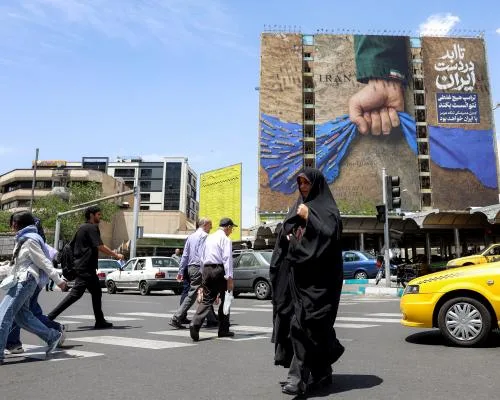
The Middle East crisis has taken a new turn, with Iran reviewing a US peace proposal to end the war. The development comes as Israel and Lebanon are set to hold talks in Washington on May 14-15, despite a new Israeli strike against Hezbollah. The US president, Donald Trump, has said that a deal is 'very possible', but Iranian officials have played down expectations.
The Iranian foreign minister, Abbas Araghchi, has spoken with his Pakistani counterpart, Ishaq Dar, on the phone, discussing the latest developments and emphasizing the importance of continuing dialogue and diplomacy. However, the Iranian judiciary has been carrying out near-daily executions of prisoners in secrecy, with many families only learning of the executions after they have been carried out. The killings have raised fears for hundreds believed to be facing the death penalty over mass anti-government protests in January.
The US secretary of state, Marco Rubio, has held talks with Pope Leo at the Vatican, discussing efforts to achieve a durable peace in the Middle East. The meeting showed a 'strong' relationship between the US and the Vatican, according to a US official. Meanwhile, the governor of Tehran, Mohammad Sadegh Motamedian, has announced that all ministries, government organizations, and executive agencies in the Iranian capital will resume full operations from Saturday.
The European Union is set to tell airlines that the impact from the Iran war on tourism is not yet severe enough to justify emergency measures for the sector. The UAE has formed a committee to document Iran's attacks, which will contribute to supporting the UAE's legal efforts at both the national and international levels. The Israeli military has killed the commander of Hezbollah's Radwan force, Ahmed Ghalib Balut, in a strike in the Dahiyeh neighborhood in southern Beirut.
Key Facts
- The US and Iran are in talks to end the war, with Donald Trump saying a deal is 'very possible'.
- Israel and Lebanon will hold talks in Washington on May 14-15.
- The Iranian foreign minister, Abbas Araghchi, has spoken with his Pakistani counterpart, Ishaq Dar.
- The Iranian judiciary has carried out near-daily executions of prisoners in secrecy.
- The US secretary of state, Marco Rubio, has held talks with Pope Leo at the Vatican.
- The governor of Tehran, Mohammad Sadegh Motamedian, has announced that all ministries, government organizations, and executive agencies in the Iranian capital will resume full operations from Saturday.
- The European Union is set to tell airlines that the impact from the Iran war on tourism is not yet severe enough to justify emergency measures for the sector.
- The UAE has formed a committee to document Iran's attacks.
- The Israeli military has killed the commander of Hezbollah's Radwan force, Ahmed Ghalib Balut.
Background to the Conflict
The conflict in the Middle East has been ongoing for months, with the US, Iran, and Israel involved in a complex web of alliances and rivalries. The war has had a significant impact on the region, with many countries affected by the fighting. The US has been seeking to negotiate a deal with Iran to end the war, but the talks have been difficult, with both sides accusing each other of bad faith.
The Iranian government has been under pressure from its own people, with mass anti-government protests in January. The government has responded with force, carrying out near-daily executions of prisoners in secrecy. The killings have raised fears for hundreds believed to be facing the death penalty over the protests.
The US has been trying to build a coalition of countries to support its efforts to negotiate a deal with Iran. The US secretary of state, Marco Rubio, has held talks with Pope Leo at the Vatican, discussing efforts to achieve a durable peace in the Middle East. The meeting showed a 'strong' relationship between the US and the Vatican, according to a US official.
The Role of Israel
Israel has been involved in the conflict from the beginning, with its military carrying out strikes against Hezbollah targets in Lebanon. The Israeli military has killed the commander of Hezbollah's Radwan force, Ahmed Ghalib Balut, in a strike in the Dahiyeh neighborhood in southern Beirut. The strike was the first in the Lebanese capital in nearly a month.
The Israeli government has been under pressure from its own people, with many calling for a tougher approach to the conflict. The government has responded by carrying out more strikes against Hezbollah targets, despite the risk of escalating the conflict.
The Israeli prime minister, Benjamin Netanyahu, has issued a video statement in response to the reported killing of a Hezbollah commander in Beirut. He said that the Israeli military would continue to target Hezbollah commanders and that no terrorist has immunity.
The Human Cost of the Conflict
The conflict in the Middle East has had a significant human cost, with many people killed or injured in the fighting. The Iranian judiciary has carried out near-daily executions of prisoners in secrecy, with many families only learning of the executions after they have been carried out.
The killings have raised fears for hundreds believed to be facing the death penalty over mass anti-government protests in January. The families of those executed have been facing harassment and pressure not to speak publicly about the executions.
The families of those executed are facing 'profound psychological trauma', according to a family member of one of the victims. 'After our brother's execution, individuals who support the government have repeatedly gathered in front of our home, chanting slogans and subjecting us to ongoing harassment and psychological pressure,' they said.
The Economic Impact of the Conflict
The conflict in the Middle East has had a significant economic impact, with many countries affected by the fighting. The war has disrupted trade and investment in the region, with many businesses forced to close or reduce operations.
The European Union is set to tell airlines that the impact from the Iran war on tourism is not yet severe enough to justify emergency measures for the sector. However, the war has already had a significant impact on the tourism industry, with many countries in the region experiencing a decline in visitor numbers.
The UAE has formed a committee to document Iran's attacks, which will contribute to supporting the UAE's legal efforts at both the national and international levels. The committee will document and monitor all incidents of attacks and military actions associated with the Iranian aggression.
The Future of the Conflict
The future of the conflict in the Middle East is uncertain, with many factors that could influence the outcome. The US and Iran are in talks to end the war, but the talks have been difficult, with both sides accusing each other of bad faith.
The Israeli government has been under pressure from its own people, with many calling for a tougher approach to the conflict. The government has responded by carrying out more strikes against Hezbollah targets, despite the risk of escalating the conflict.
The Iranian government has been under pressure from its own people, with mass anti-government protests in January. The government has responded with force, carrying out near-daily executions of prisoners in secrecy. The killings have raised fears for hundreds believed to be facing the death penalty over the protests.
The conflict in the Middle East is a complex and multifaceted issue, with many different factors at play. The US, Iran, and Israel are all involved, along with many other countries in the region. The conflict has had a significant human cost, with many people killed or injured in the fighting. The economic impact of the conflict has also been significant, with many countries affected by the fighting.