

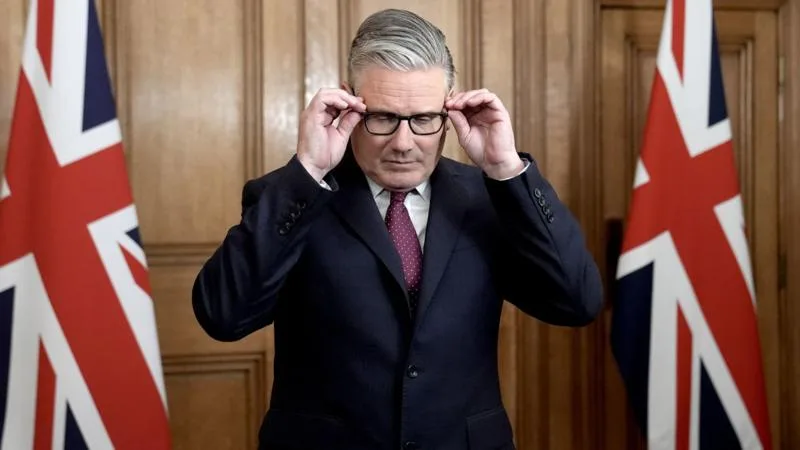
The UK is in a state of political turmoil as Prime Minister Starmer struggles to maintain his grip on power. The Labour party's poor performance in recent elections has led to a growing chorus of criticism and opposition from within the party's own ranks. Starmer's leadership has been called into question, with many Labour MPs and party members expressing a lack of confidence in his ability to lead the party to victory.
The election losses are a significant blow to Starmer and the Labour party, which had been hoping to make gains and challenge the ruling party's dominance. Instead, the party found itself on the back foot, struggling to defend its seats and facing a resurgent opposition. The losses have been attributed to a combination of factors, including a lack of clear policy direction, ineffective campaigning, and a failure to connect with voters.
The Labour party's internal strife is nothing new, but the current crisis is particularly acute. Starmer's leadership has been under fire for some time, with critics accusing him of being out of touch with the party's grassroots and failing to provide a compelling vision for the country's future. The election losses have brought these tensions to a head, with many Labour MPs and party members demanding that Starmer take responsibility for the party's poor performance and step down as leader.
The UK's political landscape is notoriously unpredictable, and the current crisis is no exception. As the Labour party teeters on the brink of chaos, the ruling party is sensing an opportunity to capitalize on its opponent's misfortune. The coming days and weeks will be crucial in determining the future of the Labour party and the UK government, with Starmer's leadership hanging precariously in the balance.
Key Facts
- The Labour party suffered significant losses in recent elections
- Prime Minister Starmer's leadership is under fire
- Many Labour MPs and party members are calling for Starmer's resignation
- The party's internal strife is nothing new, but the current crisis is particularly acute
- The Labour party's poor performance has been attributed to a lack of clear policy direction, ineffective campaigning, and a failure to connect with voters
The Rise of Starmer
Starmer's rise to the top of the Labour party was nothing short of meteoric. A former lawyer and director of public prosecutions, Starmer entered politics relatively late in life, but quickly made a name for himself as a charismatic and effective communicator. He won the Labour leadership contest in 2020, promising to unite the party and lead it to victory.
Starmer's early days as leader were marked by a sense of optimism and renewal. He surrounded himself with a talented team of advisors and set about rebranding the party as a force for change and progress. However, as time went on, Starmer's leadership style began to attract criticism. Some accused him of being too cautious and risk-averse, while others felt that he was failing to connect with the party's grassroots.
Despite these criticisms, Starmer remained a popular figure within the party, and his leadership was widely seen as a stabilizing influence. However, the recent election losses have changed everything, and Starmer's position is now under serious threat.
The Labour Party's Internal Strife
The Labour party has a long history of internal strife and factionalism. From the militant tendency of the 1980s to the Blairite-Brownite divide of the 2000s, the party has often been torn apart by competing ideologies and personalities. The current crisis is no exception, with Starmer's leadership being challenged by a range of different factions and interest groups.
One of the main challenges facing Starmer is the party's lingering divisions over Brexit. The Labour party's decision to support a second referendum on the UK's membership of the EU was widely seen as a mistake, and the party has struggled to recover from the fallout. Starmer's own position on Brexit has been criticized as unclear and ambiguous, and many Labour MPs and party members feel that he has failed to provide a compelling vision for the country's future.
The Ruling Party's Opportunity
The ruling party is sensing an opportunity to capitalize on the Labour party's misfortune. With Starmer's leadership under fire and the Labour party in disarray, the ruling party believes that it can make significant gains and consolidate its position in power. The party's leaders are already beginning to circle the wagons, sensing that the Labour party is vulnerable and that the time is right to strike.
The ruling party's strategy is likely to involve a combination of short-term tactical maneuvering and long-term strategic planning. In the short term, the party will seek to exploit the Labour party's divisions and weaknesses, using every opportunity to attack Starmer's leadership and undermine the Labour party's credibility. In the long term, the party will seek to build a compelling narrative about its own vision for the country's future, highlighting its achievements and setting out a clear plan for the years ahead.
The Future of the Labour Party
The future of the Labour party hangs in the balance, with Starmer's leadership under threat and the party's internal strife showing no signs of abating. The coming days and weeks will be crucial in determining the party's direction and trajectory, with a range of different outcomes possible.
The Labour party is at a crossroads, and the choices it makes now will have a profound impact on its future. As one Labour MP put it, "We need to get back to our roots and remember what we're fighting for. We need to be a party that stands up for the many, not the few." Whether the party can achieve this goal remains to be seen, but one thing is certain: the Labour party will emerge from this crisis a changed and potentially unrecognizable entity.
The Wider Implications
The Labour party's crisis has wider implications for the UK's politics and society. The party's struggles are a reflection of deeper divisions and uncertainties within the country, and the outcome of the crisis will have a significant impact on the UK's future.
The UK is a country in flux, with the legacy of Brexit still casting a long shadow over its politics and economy. The Labour party's crisis is just one aspect of a broader landscape of uncertainty and change, with the country facing a range of challenges and opportunities in the years ahead. As the Labour party navigates its internal strife and struggles to find a way forward, the UK as a whole will be watching with bated breath, wondering what the future holds and what kind of country it will become.
Conclusion
The Labour party's crisis is a complex and multifaceted phenomenon, with deep roots and far-reaching implications. As the party struggles to come to terms with its recent election losses and the challenges that lie ahead, the UK's politics and society will be watching with great interest. The future of the Labour party and the UK government hangs in the balance, and the coming days and weeks will be crucial in determining the direction and trajectory of the country. One thing is certain, however: the Labour party will emerge from this crisis a changed and potentially unrecognizable entity, with a new leader, a new direction, and a new sense of purpose.