

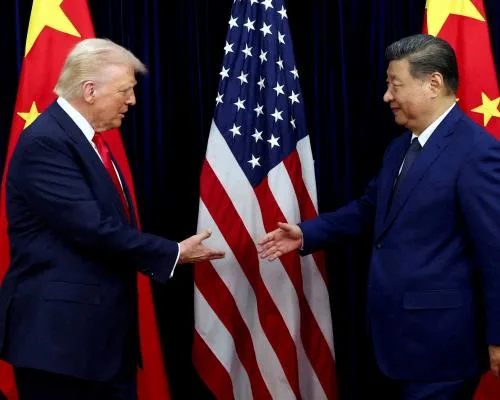
Donald Trump's trip to China is a high-stakes affair, with the US president seeking to maintain a tentative trade truce with China while navigating the complex web of tensions over Iran, Taiwan, and global supply chains. The meeting comes at a critical time, as the US war with Iran has cost an estimated $29 billion and US inflation has jumped to 3.8%, the highest increase since 2023. Trump's defense secretary, Pete Hegseth, testified on Capitol Hill earlier today, facing tough questions from lawmakers about the war and its costs.
The US president has been using social media to push back against criticism of his handling of the war, posting AI-generated images of US military victories and mocking his Democratic foes. But despite the bravado, the situation on the ground remains fragile, with the ceasefire between the US and Iran hanging by a thread. Trump has dismissed Tehran's peace proposal as "totally unacceptable" and warned that the ceasefire is "on life support." The US is seeking China's help in convincing Iran to end the war, but it's unclear what concessions the US will be willing to make in return.
The meeting between Trump and Xi will also focus on trade and technology, with the US president bringing a delegation of top tech executives, including Tim Cook and Elon Musk. The US is seeking to maintain its dominance over global supply chains, while China is pushing for greater access to US markets and technology. The two nations have been engaged in a bitter trade war, with the US imposing tariffs on Chinese goods and China responding in kind. But despite the tensions, there are signs that the two nations are seeking to find common ground, with Trump's administration taking cues from China's more stringent approach to AI regulation.
Key Facts
- Donald Trump is traveling to China for a three-day meeting with Xi Jinping
- The meeting will focus on trade, technology, and the ongoing Iran conflict
- The US war with Iran has cost an estimated $29 billion
- US inflation has jumped to 3.8%, the highest increase since 2023
- Trump will be joined by top tech executives, including Tim Cook and Elon Musk
- The US is seeking China's help in convincing Iran to end the war
- China is likely to push for the US to declare opposition to Taiwanese sovereignty
Background on US-China Relations
The US and China have a complex and often fraught relationship, with tensions over trade, technology, and security. The two nations have been engaged in a bitter trade war, with the US imposing tariffs on Chinese goods and China responding in kind. But despite the tensions, there are signs that the two nations are seeking to find common ground, with Trump's administration taking cues from China's more stringent approach to AI regulation. China's laws require AI companies to submit their models to Beijing for review on both security and political sensitivity grounds, a move that has raised concerns about censorship and human rights.
The US has also been critical of China's human rights record, particularly in the Xinjiang region, where millions of Uighur Muslims have been detained in internment camps. The US has imposed sanctions on Chinese officials and companies accused of human rights abuses, and has sought to rally international support for its criticism of China's actions. But despite these tensions, the US and China have a deep and complex economic relationship, with the US relying on China for many of its imports and China relying on the US for many of its exports.
The Role of Tech Executives
The inclusion of top tech executives, including Tim Cook and Elon Musk, in Trump's delegation to China is a significant development, and reflects the growing importance of technology in the US-China relationship. The US is seeking to maintain its dominance over global supply chains, while China is pushing for greater access to US markets and technology. The two nations have been engaged in a bitter competition for dominance in the tech sector, with the US seeking to restrict China's access to sensitive technologies and China seeking to develop its own domestic tech industry.
"The US and China are engaged in a high-stakes competition for dominance in the tech sector, and the outcome will have far-reaching implications for the global economy," said a White House official. "We are seeking to maintain our dominance over global supply chains, while China is pushing for greater access to US markets and technology. It's a complex and often fraught relationship, but we are committed to finding common ground and promoting American interests."
The Iran Conflict
The Iran conflict is a major point of tension in the US-China relationship, with the US seeking China's help in convincing Iran to end the war. The US has imposed sanctions on Iran and has sought to rally international support for its criticism of Iran's actions. But despite these efforts, the situation on the ground remains fragile, with the ceasefire between the US and Iran hanging by a thread. Trump has dismissed Tehran's peace proposal as "totally unacceptable" and warned that the ceasefire is "on life support."
The US is seeking China's help in convincing Iran to end the war, but it's unclear what concessions the US will be willing to make in return. China has been a key player in the Iran conflict, providing diplomatic and economic support to Tehran. The US has sought to restrict China's access to Iranian oil, but China has continued to import Iranian crude, despite US sanctions. The situation is complex and often fraught, with multiple parties vying for influence and control.
The Taiwan Question
The Taiwan question is another major point of tension in the US-China relationship, with China seeking to convince the US to declare opposition to Taiwanese sovereignty. The US has long maintained a policy of strategic ambiguity on Taiwan, neither confirming nor denying its support for the island's independence. But China has been pushing for the US to take a clearer stance, and has sought to restrict US arms sales to Taiwan.
The situation is complex and often fraught, with multiple parties vying for influence and control. The US has sought to maintain its dominance over the region, while China has sought to expand its influence and control. The Taiwan question is a major point of tension, with the US seeking to maintain its support for the island's independence and China seeking to restrict US arms sales. The outcome will have far-reaching implications for the region and the global balance of power.
What's Next
The meeting between Trump and Xi will be closely watched, as the two nations seek to navigate the complex web of tensions over Iran, Taiwan, and global supply chains. The US is seeking to maintain its dominance over the region, while China is seeking to expand its influence and control. The outcome will have far-reaching implications for the global economy and the balance of power. The US and China have a deep and complex relationship, and the meeting between Trump and Xi will be a critical moment in the ongoing saga of US-China relations.