

The Director General of the National Institute for Cancer Research and Treatment (NICRAT), Dr. Usman M. Aliyu, says Nigeria can't fix its cancer care crisis without the private sector.
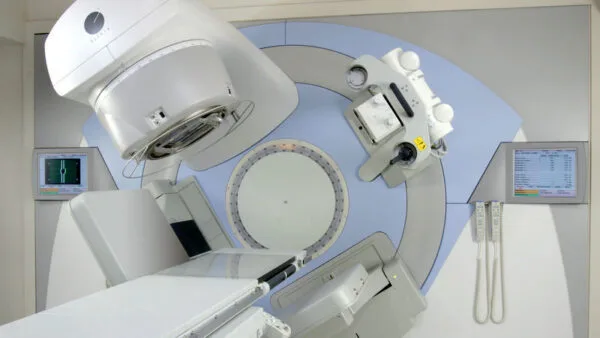
Speaking on Thursday, Aliyu said public-private partnerships (PPP) are already making a difference, especially in radiotherapy services. He revealed that many of the cancer centres currently operating in the country function through collaborative arrangements between the government and private players.
NICRAT was established in 2017 under the Federal Ministry of Health to coordinate cancer research, treatment, and control in Nigeria. Aliyu was appointed as its Director General in 2023.
The country's cancer burden is heavy. According to the World Health Organization, Nigeria records about 124,000 new cancer cases and over 78,000 cancer deaths every year. But access to treatment remains a major challenge — there are fewer than 10 functional radiotherapy machines in the entire country for a population of over 200 million.
"Public-private partnerships were already improving radiotherapy services, adding that many operational cancer centres in the country currently function through collaborative arrangements," Aliyu said.
The DG's comments come as the government struggles to expand cancer treatment infrastructure. Most radiotherapy centres are concentrated in Lagos, Ibadan, and Abuja. That leaves patients in other regions with limited options.
Aliyu didn't name specific private partners or centres during his remarks. But the message was clear: the government alone can't do it.
The NICRAT DG pointed to existing PPP models as proof that the approach works. Some of the country's best-equipped cancer centres, like the NSIA-LUTH Cancer Centre in Lagos, operate on a public-private model. The centre, a partnership between the Nigeria Sovereign Investment Authority and the Lagos University Teaching Hospital, has treated thousands of patients since opening in 2018.
Similar arrangements exist at the University College Hospital in Ibadan and the National Hospital in Abuja, where private firms help maintain and operate radiotherapy machines.
For the average Nigerian cancer patient, the reality is harsh. A full course of radiotherapy can cost hundreds of thousands of naira, and many patients travel long distances to reach a treatment centre. Waiting lists are long.
Aliyu's push for more private sector involvement suggests the government is looking for ways to expand capacity without waiting for full public funding. That could mean more treatment centres in underserved regions, shorter waiting times, and potentially lower costs if competition drives prices down.
But partnerships also raise questions about affordability. If private companies run the centres, will treatment become even more expensive? Aliyu didn't address pricing during his statement.
Nigeria's cancer control efforts have historically been underfunded. The National Health Act of 2014 set aside 1% of the Consolidated Revenue Fund for basic healthcare, but cancer-specific funding has been inconsistent. The country also lacks a comprehensive national cancer registry, making it hard to track cases and plan interventions.
NICRAT has been working to change that. Under Aliyu, the institute has pushed for better data collection, more training for oncologists, and stronger partnerships with international organisations.
For now, the message from NICRAT is that the private sector isn't just a nice addition — it's essential.