

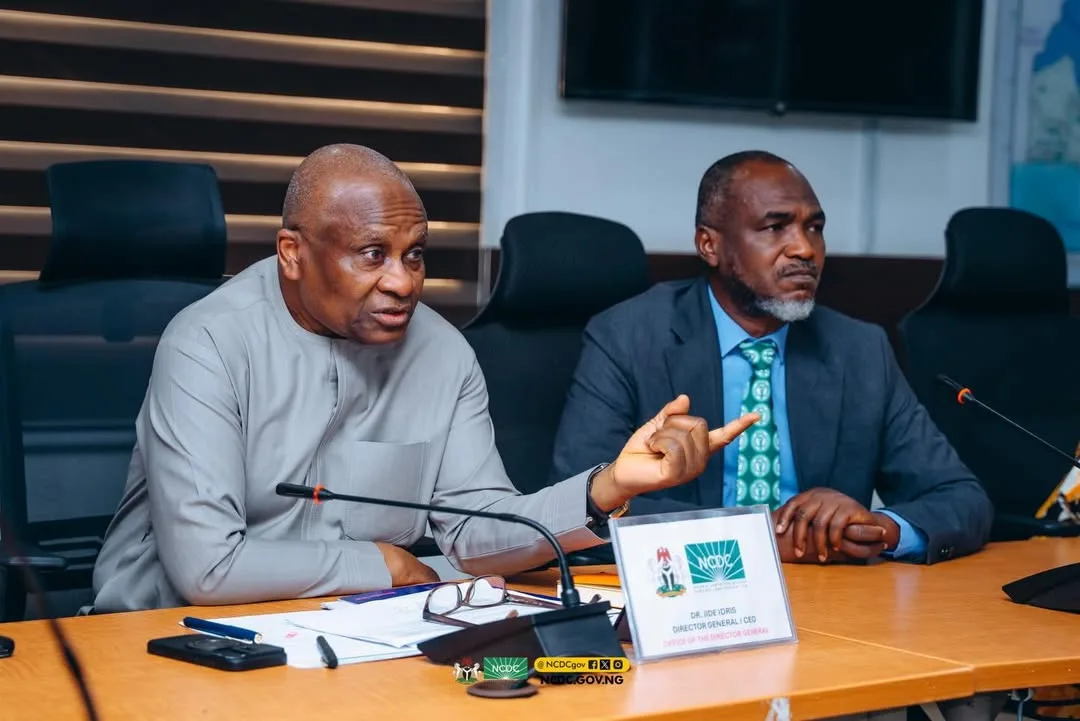
The Ebola outbreak in the Democratic Republic of Congo and Uganda has put Nigeria on high alert. The Nigeria Centre for Disease Control and Prevention (NCDC) has reinforced its public health defence system to prevent the spread of the disease. This is according to a public health alert issued by the Director-General of the NCDC, Dr. Jide Idris. He's the one who issued the alert.
Dr. Idris stated that the agency is collaborating with the Port Health Service under the Federal Ministry of Health and Social Welfare, as well as other relevant partners, to stop any possible entry of the virus into the country. He said the alert follows confirmed Ebola infections in the Democratic Republic of Congo and an imported case recorded in neighbouring Uganda. Nigeria hasn't recorded any case, but the agency warned that increased cross-border movement across the region has raised the risk of importation. This has prompted tighter surveillance at entry points and stronger monitoring within the health system.
The NCDC described Ebola as a severe and highly infectious viral disease. It's transmitted through direct contact with infected blood, body fluids, secretions or contaminated materials from humans or animals. The virus is deadly, and it's essential to take precautions. To boost national readiness, the NCDC said it has widened event-triggered surveillance across Nigeria. It's also improved laboratory capacity for faster confirmation of suspected cases.
The agency has strengthened infection prevention and control practices in healthcare facilities and stepped up public risk messaging alongside community outreach efforts.
The agency urged Nigerians to remain calm and avoid misinformation. No confirmed case has been recorded in the country, so there's no need to panic. It further advised strict hand hygiene, avoidance of contact with body fluids of sick persons, caution against bushmeat from unknown sources, and prompt reporting of unusual illnesses to health facilities. The NCDC also urged healthcare personnel to stay alert for possible cases. They should ensure rapid isolation of any suspected infections, consistently use approved protective gear, and escalate reports promptly through established health reporting systems.
The resurgence of the deadly disease was first confirmed on May 15, 2026, when health authorities in the DRC and Uganda activated emergency response measures. This isn't the first time Nigeria has had to deal with an Ebola outbreak. In 2014, a Liberian-American diplomat, Patrick Sawyer, collapsed at the Murtala Muhammed International Airport in Lagos after flying in from Liberia. He was taken to First Consultants Medical Centre, a private hospital in Obalende, Lagos, where he was diagnosed with Ebola by Dr. Ameyo Stella Adadevoh.
She was the lead consultant physician at the hospital.
Dr. Adadevoh's clinical intuition told her that Sawyer had Ebola, despite his claims of having malaria. She immediately ordered him to be isolated. Her actions single-handedly prevented Sawyer from taking a public flight and spreading the virus into the wider Nigerian population. Sadly, because of her close contact with him during diagnosis, Dr.
Adadevoh and several of her staff contracted the virus. She passed away on August 19, 2014, sacrificing her life to save millions of Nigerians. She won't be forgotten for her bravery.
The NCDC has reassured Nigerians that it will continue to issue timely briefings as the situation unfolds and new developments emerge. The agency is working closely with regional and global health authorities to monitor the situation and prevent the spread of the disease. As the situation continues, it's essential for Nigerians to remain vigilant and take necessary precautions to prevent the spread of the disease. They shouldn't take any chances.
Key Facts
- The Ebola outbreak was first confirmed on May 15, 2026, in the DRC and Uganda.
- Nigeria has reinforced its public health defence system to prevent the spread of the disease.
- The NCDC has widened event-triggered surveillance across Nigeria and improved laboratory capacity for faster confirmation of suspected cases.
- The agency has urged Nigerians to remain calm and avoid misinformation, and to take necessary precautions to prevent the spread of the disease.
- Dr. Ameyo Stella Adadevoh, the lead consultant physician at First Consultants Medical Centre, diagnosed Patrick Sawyer with Ebola in 2014 and prevented the spread of the virus into the wider Nigerian population.
'We continue to maintain surveillance systems for Ebola and other epidemic-prone diseases while closely monitoring regional and global developments,' the NCDC stated. They're doing a great job.
The NCDC's efforts to prevent the spread of the disease are crucial, and it's essential for Nigerians to cooperate with the agency to prevent the spread of the disease. By taking necessary precautions and remaining vigilant, Nigerians can help prevent the spread of the disease and protect themselves and their loved ones. They don't want to get infected.
As the situation continues to unfold, it's essential for Nigerians to stay informed and take necessary precautions to prevent the spread of the disease. The NCDC's efforts to prevent the spread of the disease are commendable, and it's essential for Nigerians to cooperate with the agency to prevent the spread of the disease. They won't be able to do it alone.
Nigeria's experience with Ebola in 2014 has prepared the country to deal with the current outbreak. The NCDC's swift response to the outbreak and its efforts to prevent the spread of the disease are a testament to the country's preparedness. However, it's essential for Nigerians to remain vigilant and take necessary precautions to prevent the spread of the disease. They can't be too careful.
The Ebola outbreak in the DRC and Uganda is a reminder of the importance of global health security. The outbreak highlights the need for countries to be prepared to deal with infectious diseases and to have measures in place to prevent the spread of diseases. Nigeria's experience with Ebola in 2014 and its current response to the outbreak demonstrate the country's commitment to global health security. It's a good thing they're taking it seriously.
The NCDC's efforts to prevent the spread of the disease are crucial, and it's essential for Nigerians to cooperate with the agency to prevent the spread of the disease. By taking necessary precautions and remaining vigilant, Nigerians can help prevent the spread of the disease and protect themselves and their loved ones. They're in this together. The Ebola outbreak in the DRC and Uganda has put Nigeria on high alert, and the NCDC's efforts to prevent the spread of the disease are underway. Nigerians are advised to stay calm and follow the NCDC's guidelines to prevent the spread of the disease.
They don't want to risk getting infected. The situation is being closely monitored, and the NCDC will continue to issue updates as more information becomes available.