

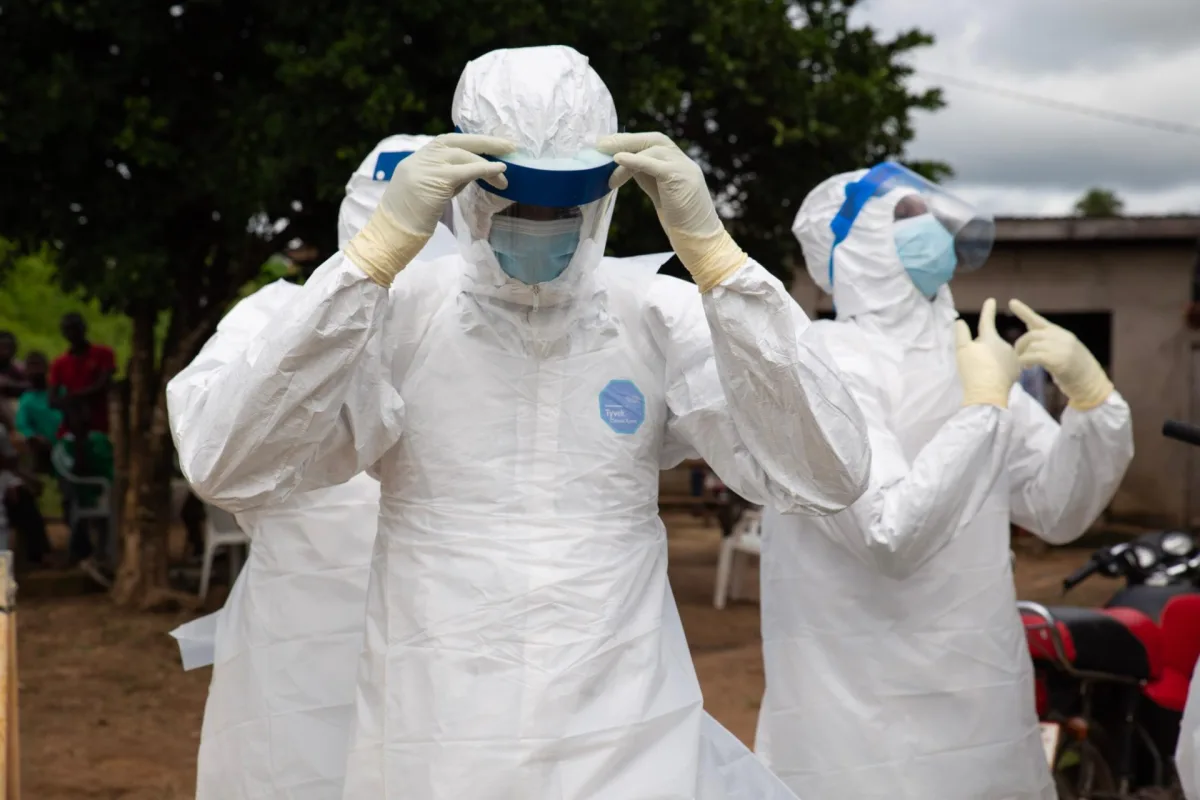
The Ebola outbreak in the Democratic Republic of Congo has taken a turn for the worse, with 513 suspected cases and 131 deaths reported so far. The Congolese Minister of Health, Samuel Roger Kamba, disclosed this on Monday, adding that the virus has spread to six areas in Ituri Province, including Mongbwalu and Rwampara. These areas are now regarded as epicentres of the disease in Ituri Province, alongside Bunia and Nyankunde.
The virus has also spread to Butembo-Katwa and Goma in North Kivu Province. Kamba explained that not all the deaths recorded had been confirmed as Ebola-related, noting that investigations are still ongoing. He said they're waiting for the results of these investigations to determine which deaths are actually linked to the disease.
"These are suspected deaths, and investigations are underway to determine which ones are actually linked to the disease," he said. Kamba didn't specify when they expect to have the results, but he said it's crucial that they complete the investigations as soon as possible.
The delayed detection of the outbreak is attributed to local beliefs and misconceptions surrounding the disease. "The alert was delayed in the community because there was a belief that it was a mystical disease, and this caused the disease to spread," Kamba said. He noted that neighbouring Uganda, the Africa Centres for Disease Control and Prevention (Africa CDC), confirmed two Ebola cases and one death in Kampala. They're working to prevent the spread of the disease in Uganda, and they won't let their guard down until the outbreak is under control.
The Congolese Ministry of Health declared the outbreak on May 15, making it the country’s seventeenth Ebola outbreak since 1976. Authorities said genomic sequencing identified the virus as the Bundibugyo variant, a strain that's genetically distinct from the Ebola outbreaks recorded in 2007 and 2012. The National Institute of Biomedical Research (INRB) said the strain originated directly from an animal reservoir. It's a complex situation, and they're still learning about the virus.
Health officials also confirmed that there is currently no approved vaccine or specific treatment for the Bundibugyo variant. The World Health Organization (WHO) declared the outbreak a Public Health Emergency of International Concern (PHEIC), while Africa CDC on Monday announced a continental public health emergency - the first such declaration for an Ebola outbreak. This declaration is a clear indication of the gravity of the situation, and it highlights the need for a swift and effective response to the outbreak.
The Nigeria Centre for Disease Control and Prevention (NCDC) said it is closely monitoring the Ebola outbreak in both DRC and Uganda. The NCDC’s role in monitoring the outbreak is crucial, given the potential for the virus to spread to Nigeria. The country’s health authorities have been working to prevent the spread of the disease, and their efforts will be closely watched in the coming days. They're taking all necessary precautions to prevent the outbreak from spreading to Nigeria.
The Ebola outbreak in the DRC is a reminder of the need for continued vigilance and cooperation among health authorities in Africa. The fact that the virus has spread to six areas in Ituri Province and two areas in North Kivu Province highlights the need for a swift and effective response to the outbreak. The WHO’s declaration of the outbreak as a Public Health Emergency of International Concern (PHEIC) is a clear indication of the gravity of the situation. It's essential that they respond quickly to prevent further spread of the disease.
In the coming days, health authorities in the DRC and neighbouring countries will be working to contain the outbreak and prevent further spread of the disease. The international community will be watching closely, and the WHO will be providing support and guidance to the affected countries. The situation is serious, and it requires a coordinated and effective response to prevent further loss of life. They won't be able to contain the outbreak without the support of the international community.
Key Facts
- 513 suspected cases of Ebola reported in the DRC
- 131 deaths reported, with investigations ongoing to confirm Ebola as the cause
- Six areas in Ituri Province and two areas in North Kivu Province affected
- No approved vaccine or specific treatment for the Bundibugyo variant
- WHO declares outbreak a Public Health Emergency of International Concern (PHEIC)
- Africa CDC announces a continental public health emergency
The situation in the DRC is complex, and the outbreak has the potential to spread to other countries in the region. The WHO and other international health authorities will be working closely with the DRC government to contain the outbreak and prevent further spread of the disease. The people of the DRC are facing a serious health crisis, and it's essential that the international community provides support and assistance to help them respond to the outbreak. They can't respond to the outbreak alone, and they need the help of the international community.
The role of the Africa CDC in responding to the outbreak is crucial, given its expertise and resources in dealing with public health emergencies. The organization’s declaration of a continental public health emergency is a clear indication of the seriousness of the situation, and it highlights the need for a coordinated and effective response to the outbreak. They're well-equipped to handle the situation, and they won't hesitate to take action.
The Ebola outbreak in the DRC is a serious health crisis that requires a swift and effective response. The international community must work together to support the DRC government and health authorities in containing the outbreak and preventing further spread of the disease. The situation is complex, and it will require a coordinated and sustained effort to bring it under control. They'll need to work together to prevent further loss of life, and they won't be able to do it without the support of the international community. The outbreak is a serious health crisis, and it's essential that they respond quickly to prevent further spread of the disease.