

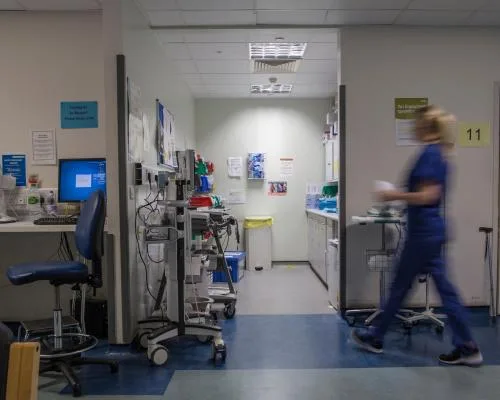
Children in England are spending up to three days in A&E before they get a bed in a specialist mental health unit, according to NHS figures. This highlights the crisis in mental health services for young people, which can't be ignored. The fact that children are waiting so long for help is shocking.
One children's nurse who works in an emergency department said such long waits for under-18s who were in acute distress were "frankly barbaric" but "becoming far more normal". The nurse didn't mince words, and it's clear they're frustrated. They're trying to help these young people, but they're struggling to do so.
The Royal College of Nursing (RCN) said the delays highlighted a "catastrophic system-wide failure" by NHS mental health services to intervene and stop school-age children ending up in crisis. The RCN emphasizes the need for urgent action to address this crisis. They don't think it's acceptable that children are waiting so long for help.
Freedom of information requests by the RCN to NHS trusts in England found that the number of under-18s in mental health crisis forced to wait at least 12 hours before being admitted to a mental health unit had more than trebled, from 237 in 2019 to 802 in 2025. This increase is alarming, and it's a clear indication of the growing demand for mental health services. The RCN didn't expect to see such a big jump in waiting times.
Three trusts – Barts Health trust and Lewisham and Greenwich trust, both in London, and the Morecambe Bay trust in Cumbria – told the union that children and young people had spent three days or more waiting in their A&E for a bed. These trusts aren't the only ones struggling to provide adequate mental health services, but they're among the most affected. They're doing their best, but it's not enough.
"A&E is just seen as this big receptacle for all children who are dysregulated or in crisis. But A&E is not respite for children with mental health concerns. It can often exacerbate their trauma."
This quote from an A&E nurse highlights the limitations of A&E departments in providing adequate care for young people with mental health issues. The nurse thinks A&E departments aren't the right place for children with mental health concerns.
Dr Sam Jones, the research officer for mental health at the Royal College of Paediatrics and Child Health (RCPCH), said children in mental health crisis were now often more unwell than in the past. "Alongside rising levels of poor mental health, the nature of need is changing fast. Problems are more complex and severe, more younger children are affected and rates of self-harm and eating disorders continue to rise," Jones said. Dr Jones emphasizes the complexity and severity of mental health issues affecting young people. They're getting worse, and it's a big concern.
The RCN estimates that almost 500,000 under-18s have sought help for mental health problems at A&E units in England since 2019. This number is staggering, and it highlights the need for more resources and support for mental health services. The RCN thinks it's essential to provide more help for young people with mental health issues. They can't do it alone, though - they need more funding and support.
The RCN and RCPCH are urging ministers and NHS bosses to speed up the rollout of a planned network of mental health emergency units. This would allow under-18s to seek help away from A&E. It's a crucial step towards addressing the crisis in mental health services for young people. They don't want children to have to wait so long for help.
Rebecca Gray, the director of the NHS Alliance's mental health network, said: "Too often young people with mental illness end up going to hospital emergency departments and facing very long waits in an inappropriate or even harmful setting. This is bad for patients and staff." Rebecca Gray's statement highlights the need for alternative settings and services that can provide more appropriate care for young people with mental health issues. They need a safer, more supportive environment.
An NHS England spokesperson said: "Busy A&Es are not the right place for anyone in a mental health crisis, which is why children can access 24/7 support through NHS 111, combining crisis assessment, rapid response and home treatment where needed." The spokesperson acknowledges the limitations of A&E departments and highlights the importance of alternative services like NHS 111. They think it's a better option for children with mental health concerns.
The NHS has also expanded mental health services, with 70% more children accessing support than before the pandemic. Mental health support teams are also being rolled out in schools to provide earlier help and prevention. These initiatives are a step in the right direction, but more needs to be done to address the crisis in mental health services for young people. They're making progress, but it's not enough yet.
Key Facts
- 500,000 under-18s have sought help for mental health problems at A&E units in England since 2019
- 237 under-18s waited at least 12 hours for a mental health unit bed in 2019, rising to 802 in 2025
- Three trusts reported waiting times of three days or more for a mental health unit bed
- 70% more children are accessing mental health support than before the pandemic
- Mental health support teams are being rolled out in schools to provide earlier help and prevention