

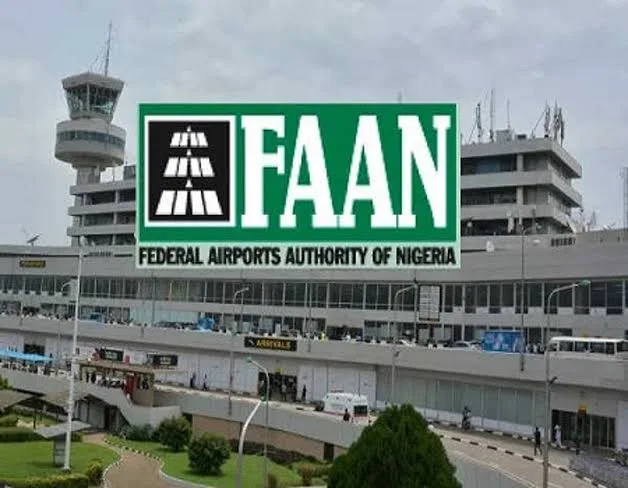
The Federal Airports Authority of Nigeria (FAAN) has stepped up health safety measures at the nation's international airports following the renewed Ebola outbreak in parts of Central Africa. This move is aimed at preventing any possible importation of the disease into Nigeria as authorities continue to monitor developments linked to the outbreak in the Democratic Republic of Congo and Uganda. The authorities are taking this measure because they don't want the disease to spread to Nigeria.
FAAN's Director of Public Affairs and Consumer Protection, Henry Agbebire, made this known in a statement on Wednesday. According to him, surveillance has been intensified in partnership with the Port Health Services, the Nigeria Centre for Disease Control (NCDC), and other relevant authorities. They're working together to prevent the spread of the disease.
Arriving passengers, particularly those from affected regions, are being subjected to additional health checks. Emergency response structures have also been strengthened across airports. Passengers are being screened for symptoms associated with Ebola. Any suspected case will be promptly isolated and subjected to secondary health checks in line with established national and international health protocols. This is because they can't afford to take any risks when it comes to public health.
Henry Agbebire explained that FAAN has strengthened coordination with relevant stakeholders. They've also enhanced staff sensitisation and reinforced emergency response procedures to ensure swift action where necessary. While there isn't a confirmed case of Ebola in Nigeria, FAAN remains vigilant and fully committed to safeguarding public health and maintaining safe airport operations. They won't let their guard down, even if it's just a precaution.
Passengers are being screened for symptoms associated with Ebola, and any suspected case will be promptly isolated and subjected to secondary health checks in line with established national and international health protocols.
The World Health Organization classified the Bundibugyo strain of the Ebola outbreak in the Democratic Republic of Congo and Uganda as a Public Health Emergency of International Concern on May 17, 2026. Health authorities say the outbreak, which began in the DRC's Ituri Province and later spread into Uganda, has resulted in reported infections and fatalities. This has prompted heightened vigilance across neighbouring countries. They're taking it very seriously, and they shouldn't, because it's a severe outbreak.
Ebola cases in the Democratic Republic of Congo had climbed to 513, with the death toll rising to 131 amid efforts by health authorities to contain the spread of the virus. The World Health Organization's declaration of the outbreak as a Public Health Emergency of International Concern highlights the severity of the situation. It also highlights the need for increased vigilance. They can't ignore the severity of the situation, and they won't.
- The Federal Airports Authority of Nigeria has intensified health safety measures at international airports.
- The move is in response to the renewed Ebola outbreak in parts of Central Africa.
- The World Health Organization classified the outbreak as a Public Health Emergency of International Concern on May 17, 2026.
- Ebola cases in the Democratic Republic of Congo had climbed to 513, with the death toll rising to 131.
- FAAN has strengthened coordination with relevant stakeholders and enhanced staff sensitisation.
The Nigeria Centre for Disease Control (NCDC) plays a crucial role in monitoring and responding to public health emergencies in Nigeria. The NCDC works closely with other agencies, including FAAN and the Port Health Services, to prevent and control the spread of infectious diseases like Ebola. They're working together to stop the spread of the disease. They don't want it to spread, and they're taking proactive measures.
As the situation continues to unfold, FAAN and other relevant authorities will remain vigilant. They'll take necessary measures to safeguard public health. The increased surveillance and screening of passengers at international airports are critical steps in preventing the importation of the Ebola virus into Nigeria. They're taking it one step at a time, and they won't rush into anything.
The Federal Airports Authority of Nigeria has urged travellers to cooperate with airport health officials. They should observe screening procedures and immediately report any symptoms linked to the virus. By taking these precautions, Nigeria can reduce the risk of an Ebola outbreak and protect its citizens. They're doing everything they can to prevent an outbreak, and they won't give up.
FAAN's proactive approach to addressing the Ebola outbreak is a testament to the agency's commitment to public health and safety. As the World Health Organization and other global health authorities continue to monitor the situation, Nigeria's airports will remain a critical point of defense against the spread of the virus. They're committed to stopping the spread of the virus, and they won't back down.
In a bid to strengthen emergency response procedures, FAAN has reinforced its coordination with relevant stakeholders. This includes working closely with the Nigeria Centre for Disease Control (NCDC) and other agencies to ensure that any suspected cases of Ebola are promptly identified and isolated. They're working together to identify and isolate suspected cases. They don't want to take any risks, and they're being cautious.
The World Health Organization's declaration of the Ebola outbreak as a Public Health Emergency of International Concern serves as a reminder of the need for increased vigilance and coordination among global health authorities. As the situation continues to unfold, FAAN and other relevant agencies will remain at the forefront of efforts to prevent the spread of the virus and protect public health. They're taking it seriously, and they're not going to ignore it.
And as Nigeria continues to take proactive measures to prevent an Ebola outbreak, the country's citizens can be assured that their safety is a top priority. The Federal Airports Authority of Nigeria, alongside other relevant agencies, will remain vigilant and take necessary measures to safeguard public health. They're putting the citizens' safety first, and they won't compromise on that.
So what does this mean for travellers? It means that they will be subjected to additional health checks, particularly if they are arriving from affected regions. It also means that they must cooperate with airport health officials and observe screening procedures. They shouldn't be concerned, though, because it's just a precaution.
But why is this necessary? The answer lies in the severity of the Ebola outbreak and the need to prevent its spread. By taking proactive measures, Nigeria can reduce the risk of an outbreak and protect its citizens. They're being proactive, and they're not waiting for anything to happen.
Yet the situation is complex, and the World Health Organization's declaration of the outbreak as a Public Health Emergency of International Concern highlights the need for increased vigilance. As the situation continues to unfold, FAAN and other relevant authorities will remain at the forefront of efforts to prevent the spread of the virus and protect public health. They're staying vigilant, and they won't let their guard down.