

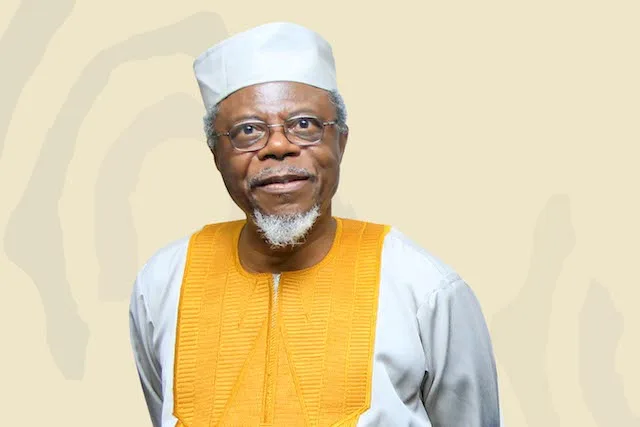
Dr. Samuel Olusegun Ọṣọba, a renowned Nigerian Marxist scholar, has passed away at the age of 92. His death was announced on May 14, and it's sent shockwaves through academic and intellectual circles in Nigeria. They're still reeling from the news.
As a historian, Ọṣọba was known for his work on the social and economic history of Nigeria, approached from a Marxist perspective. He was a specialist in the structures of exploitation and accumulation. He wrote extensively on the relation between colonialism and the emergence of a comprador bourgeoisie in Nigeria. Ọṣọba's scholarly production was vast and relevant to public intellectualism in Nigeria during his time. It doesn't seem like he didn't leave a stone unturned in his research.
Ọṣọba's most notable contribution was his co-authorship of the Minority Report and Draft Constitution for the Federal Republic of Nigeria in 1976. He was appointed to the Constitutional Drafting Committee by General Murtala Mohammed, along with Dr. Yusufu Bala Usman. They disagreed with the majority members and wrote a minority report that was pro-people. This report was in opposition to the Lugardian system that many Nigerians perceive today as the pro-elite Constitution.
It's clear that Ọṣọba and his colleagues didn't agree with the majority.
Ọṣọba's teaching career was marked by his ability to make complicated historical events comprehensible to his students. He knew how to make history come alive. He made it relevant and interesting. His seminars were vibrant and participatory, always focused on fostering critical thinking and sound analysis, supported by evidence. Many of his students went on to become prominent figures in Nigerian public life.
They included trade unionists, civil society activists, lawyers, journalists, and politicians. He didn't just teach them history; he taught them how to think.
Under his influence, the University of Ife became a breeding ground for a generation of intellectuals who bore the imprints of his teaching into Nigerian public life for decades. People around him gained clarity about the link between scholarship and social duty. He mentored and inspired young scholars, guiding and nurturing them as they began their academic careers. They're now making a difference in Nigeria.
He taught us that history was more than the anthem of monarchs, more than governor's elegant rhetoric. It was the scream at the marketplace, perspiration on rail lines, absence of voice at dinner tables under colonial ensigns. This quote captures the essence of his teaching.
Ọṣọba's radicalism was social, conversional, and profoundly human. He knew that the intellectual life is as much lived in hallways and canteens and over shared meals as in lecture theatres. He took his politics into all those areas without self-consciousness. He was a dependably honest scholar who informed Nigerians about their nation and how it came to be. This was at a time when stating the truth had a cost. He didn't hesitate to speak the truth, even if it was difficult.
Dr. Osoba is most generally recognized outside strictly academic circles for his co-authorship of the Minority Report and Draft Constitution for the Federal Republic of Nigeria, 1976. This is one of the most fascinating sagas in Nigerian intellectual and constitutional history. It's a story that won't be forgotten.
As a professor of History, Toyin Falola, who wrote about Ọṣọba, noted that his work on corruption in Nigerian public life was pathbreaking. His pioneering assessment of the role of corruption in public life and his original contribution on neocolonialism are works that the current generation of scholars of decolonization could do well to revisit. They shouldn't overlook his research.
Dr. Samuel Olusegun Ọṣọba's legacy will live on through the generations of intellectuals he mentored and the work he did to shape Nigeria's intellectual and constitutional history. He survived a nation with a long tradition of killing its honest minds. He lived life on his own terms, and that's what matters. His legacy won't be forgotten.
Key Facts
- Dr. Samuel Olusegun Ọṣọba was a Nigerian Marxist scholar who passed away at 92.
- He co-authored the Minority Report and Draft Constitution for the Federal Republic of Nigeria in 1976.
- Ọṣọba was a specialist in the social and economic history of Nigeria, approached from a Marxist perspective.
- He was a professor at the University of Ife, where he mentored generations of intellectuals.
- Dr. Ọṣọba's work on corruption in Nigerian public life was pathbreaking, and his assessment of neocolonialism is still relevant today.