

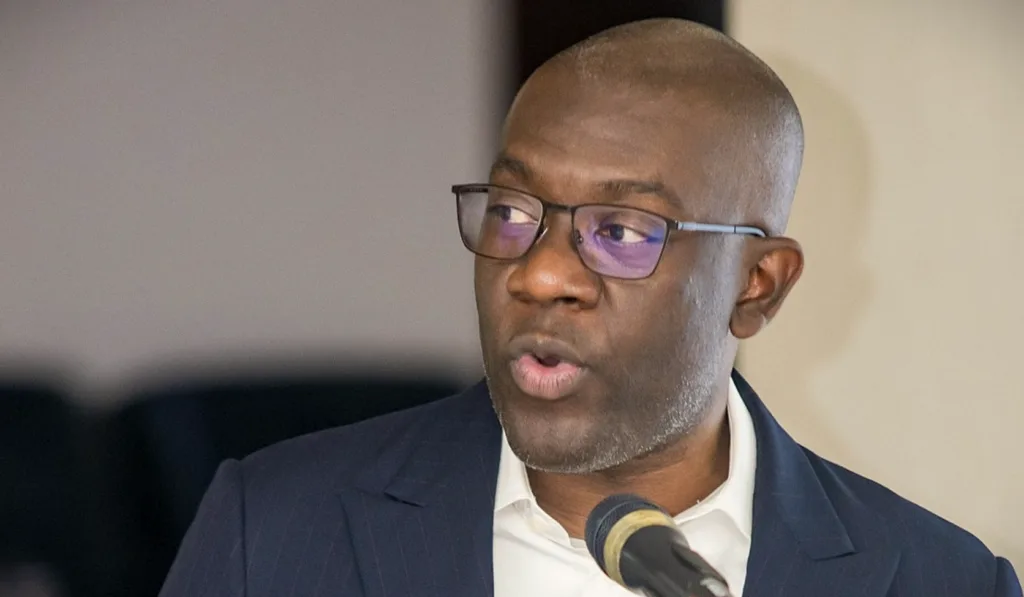
Nearly two million young Ghanaians are neither earning nor learning — and the numbers keep getting worse.
Ofoase-Ayirebi MP Kojo Oppong Nkrumah dropped the grim statistics on the floor of Parliament on Thursday, using fresh data from the Ghana Statistical Service to paint a picture of a crisis that, he says, no government has fully solved.
By the third quarter of 2025, unemployment among 15- to 24-year-olds stood at 32.5 per cent — up from 32 per cent in December 2024. In Greater Accra, the figure hit 49.3 per cent. That means nearly one in every two young people in the capital region can't find work.
Seven out of every ten unemployed Ghanaians are under 35. And when you count those aged 15 to 24 who are Not in Education, Employment, or Training (NEET), the number hits 1.34 million. Stretch the definition to age 35 — as Ghana’s National Youth Policy does — and it jumps to 1.95 million.
“Nearly two million young Ghanaians are neither earning nor learning,” Oppong Nkrumah stressed.
He acknowledged that the previous NPP administration also failed to crack the problem. But his point was blunt: this isn't a general economic issue with a youth angle — it's fundamentally a youth crisis, and it's getting worse.
So what is the current government doing about it?
Oppong Nkrumah listed the basket of solutions President Nana Akufo-Addo's administration has rolled out: the 24-Hour Economy, the One Million Coders Programme, the Adwumawura Programme, and a promise of 250,000 jobs every year.
But he questioned whether any of them are actually working.
The 24-Hour Economy was launched in July 2025, but its Authority Bill only reached Parliament in February 2026. Concerns have already been raised that the bill doesn't properly provide for the promised shift system or employment expansion.
The One Million Coders Programme — meant to train a million young people in coding — got over 90,000 applications in 48 hours. That's proof that young Ghanaians are desperate for opportunities. But by November 2025, the programme's website was offline. It was later relaunched with plans to onboard only 30,000 people in the first cohort.
Oppong Nkrumah urged the government to implement these programmes transparently and effectively. He called for bipartisan commitment, arguing that the future of Ghana's economy and social stability depends on creating sustainable jobs for its youth.
“The burden is getting worse, and the question before this House today is what is being done now to tackle it and whether it is working,” he said.
The MP didn't offer his own policy solutions. Instead, he framed the issue as one that should unite all sides. With nearly two million young people idle, he warned, the cost of failure isn't just economic — it's social and political.
- Youth unemployment (15–24): 32% in Dec 2024 → 32.5% in Q3 2025
- Greater Accra youth unemployment: 49.3% in Q3 2025
- 7 in 10 unemployed Ghanaians are under 35
- NEET youth (15–24): 1.34 million; (15–35): 1.95 million
- One Million Coders: 90,000+ applications in 48 hours, but website went offline; relaunched with 30,000 first-cohort target
- 24-Hour Economy launched July 2025, Authority Bill in Parliament Feb 2026