

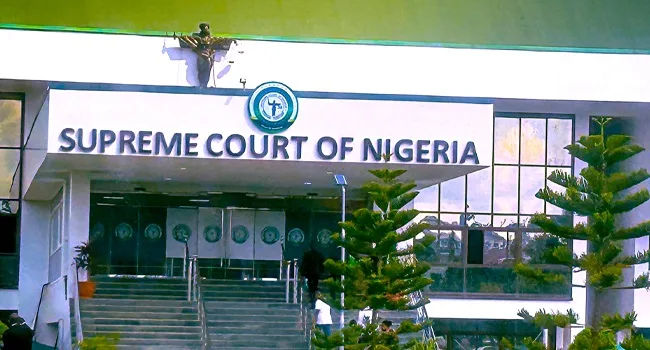
The single sharpest fact in one or two punchy sentences. Who did what, where, when, and why it matters. Not a summary of everything — the one thing that makes someone stop scrolling. A reader who only reads this paragraph must understand what happened.
The Supreme Court has directed lawyers handling appeals and motions slated for hearing between September and December 2026 to upload all relevant court documents through the Nigerian Case Management System (NCMS). The directive was contained in a statement issued by the Chief Registrar of the Supreme Court, Kabir E. Akanbi, who urged counsel to review the list of cases scheduled for hearing during the period.
Lawyers can access the list by visiting the Supreme Court's website, proceeding to the Litigation section, and selecting the Nigerian Case Management System (NCMS), where the hearing schedule for appeals and motions has been made available for download. According to the apex court, legal practitioners are expected to upload all processes already filed in their matters, including Records of Appeal, Briefs of Argument, pending motions and any other relevant court documents, no later than 30 days before the hearing date.
The court explained that the measure is intended to ensure compliance with the provisions of the Supreme Court Practice Direction, enhance the effective operation of the NCMS, and support the speedy and efficient disposal of cases before the court. This is in line with efforts to digitize the judicial process in Nigeria, a move that has been ongoing in recent years. However, challenges still persist, with many lawyers and court officials expressing frustration with the current system.
The Supreme Court further called on all counsel with matters listed within the period to adhere strictly to the directive. Failure to comply may result in the court taking necessary steps to ensure that the case is heard as scheduled.
And what does this mean for lawyers and the Nigerian judicial system? The Supreme Court's directive has been met with mixed reactions from the legal community, with some lawyers expressing support for the measure while others have expressed concerns about the feasibility of uploading documents through the NCMS.
So what's next? The Supreme Court will continue to monitor the compliance of lawyers with the directive, and any lawyer found to be in default may face disciplinary action. This could have significant implications for the legal profession in Nigeria, particularly for those who have not yet adapted to the digital age.
Key Facts
- The Supreme Court has instructed lawyers to upload case documents through the NCMS by September.
- The directive applies to appeals and motions slated for hearing between September and December 2026.
- Lawyers are expected to upload all processes already filed in their matters, including Records of Appeal, Briefs of Argument, pending motions and any other relevant court documents.
- The measure aims to ensure compliance with the provisions of the Supreme Court Practice Direction, enhance the effective operation of the NCMS, and support the speedy and efficient disposal of cases before the court.
- Failure to comply may result in the court taking necessary steps to ensure that the case is heard as scheduled.
The Supreme Court's directive has been a long time coming, with efforts to digitize the judicial process in Nigeria ongoing for several years. The NCMS was introduced in 2020 with the aim of improving the effectiveness of the judicial process, but challenges still persist. The system has been plagued by technical issues, server crashes, and inadequate infrastructure, making it difficult for lawyers and court officials to access and upload documents.
But what about the benefits of digitization? Proponents of the NCMS argue that it will improve the efficiency of the judicial process, reduce costs, and increase transparency. However, critics argue that the system is still in its infancy and requires significant improvements before it can be fully effective.
The Supreme Court's directive has brought attention to the need for lawyers and court officials to adapt to the digital age. With the increasing use of technology in the judicial process, it is clear that the NCMS is here to stay. Lawyers and court officials would do well to familiarize themselves with the system and ensure that they are in compliance with the directive.
The Supreme Court's directive has significant implications for the legal profession in Nigeria. Lawyers who fail to comply with the directive may face disciplinary action, which could have serious consequences for their careers. On the other hand, lawyers who adapt to the digital age and upload their documents through the NCMS may be better positioned to succeed in the changing landscape of the judicial process.