

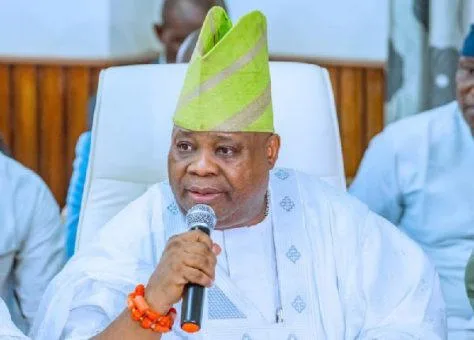
The deposing of Oba Joseph Oloyede by Governor Ademola Adeleke is a shocking turn of events that has sent ripples through the Nigerian monarchy and beyond. It's a story that involves fraud, corruption, and a complex web of international laws. At the center of it all is Oba Joseph Oloyede, a monarch who was once revered in his community but is now facing the consequences of his actions. The conviction of Oba Joseph Oloyede for tax fraud related to COVID-19 relief funds is a stark reminder of the severity of the issue and the lengths to which some individuals will go to exploit vulnerable systems.
And it's not just Oba Joseph Oloyede who's facing the music - his conviction is part of a larger trend of Nigerians being involved in COVID-related fraud schemes. This has led to increased scrutiny of the Nigerian community in the United States and raised questions about the effectiveness of the country's anti-corruption measures. But Governor Ademola Adeleke's decision to depose Oba Joseph Oloyede sends a strong message that corruption will not be tolerated, regardless of one's status or position. It's a bold move that could have far-reaching implications for the Nigerian monarchy and the country as a whole.

So, what exactly happened? Oba Joseph Oloyede was convicted of tax fraud by a United States District Court in the Northern District of Ohio in August 2025. The specifics of the case are still unclear, but it's alleged that he was involved in a scheme to defraud the US government of COVID-19 relief funds. The conviction was a significant blow to Oba Joseph Oloyede's reputation, and it ultimately led to his downfall. Governor Ademola Adeleke's decision to depose him is seen as a necessary step in maintaining the integrity of the Nigerian monarchy.
But this story isn't just about Oba Joseph Oloyede - it's also about the broader issue of corruption in Nigeria. The country has long struggled with corruption, and it's estimated that billions of dollars are lost each year to fraudulent activities. The COVID-19 pandemic has only exacerbated the problem, with many individuals and organizations seeking to exploit vulnerable systems for personal gain. Governor Ademola Adeleke's move to depose Oba Joseph Oloyede is a step in the right direction, but it's just the beginning of a long and difficult journey to root out corruption in Nigeria.
Key Facts
- Oba Joseph Oloyede was deposed by Governor Ademola Adeleke on May 11, 2026
- He was convicted of tax fraud by a US District Court in August 2025
- The conviction was related to COVID-19 relief funds
- Governor Ademola Adeleke's decision to depose Oba Joseph Oloyede is seen as a bold move to combat corruption
- Nigeria has long struggled with corruption, with billions of dollars lost each year to fraudulent activities
Background on Oba Joseph Oloyede
Oba Joseph Oloyede was a respected monarch in his community before his conviction. He was known for his wisdom and leadership, and many looked up to him as a role model. However, his involvement in the COVID-19 relief fund fraud scheme has tarnished his reputation and led to his downfall. It's a cautionary tale about the dangers of corruption and the importance of accountability. Oba Joseph Oloyede's story serves as a reminder that no one is above the law, regardless of their status or position.

But what led Oba Joseph Oloyede to become involved in such a scheme? Some have speculated that he was driven by greed, while others believe that he was manipulated by external forces. Whatever the reason, it's clear that Oba Joseph Oloyede made a grave mistake that has had far-reaching consequences. His conviction and subsequent deposition are a stark reminder of the severity of the issue and the importance of holding individuals accountable for their actions.
And what about Governor Ademola Adeleke's role in all of this? He's been praised for his bold move to depose Oba Joseph Oloyede, but some have questioned his motives. Is he truly committed to combating corruption, or is this just a publicity stunt? Whatever the reason, it's clear that Governor Ademola Adeleke has taken a significant step in the right direction. His decision to depose Oba Joseph Oloyede sends a strong message that corruption will not be tolerated in Nigeria.
The Impact of COVID-19 on Nigeria
The COVID-19 pandemic has had a devastating impact on Nigeria, with widespread poverty, unemployment, and inequality. The country's economy has been severely affected, and many individuals and families are struggling to make ends meet. The pandemic has also highlighted the weaknesses of Nigeria's healthcare system, with many hospitals and clinics lacking the necessary resources to cope with the crisis. In this context, the news of Oba Joseph Oloyede's conviction and deposition is a stark reminder of the importance of accountability and transparency.
But the pandemic has also brought out the best in many Nigerians, with countless individuals and organizations working tirelessly to support those in need. From volunteer groups to community organizations, there are many examples of Nigerians coming together to make a positive difference. And it's not just individuals - the Nigerian government has also taken steps to mitigate the impact of the pandemic, including implementing lockdowns and distributing relief funds.
The Role of International Law
The conviction of Oba Joseph Oloyede by a US District Court raises important questions about the role of international law in combating corruption. How can countries work together to hold individuals accountable for their actions, regardless of where they are committed? It's a complex issue, but one that is becoming increasingly important in today's globalized world. As more and more individuals and organizations operate across borders, the need for effective international cooperation and coordination is becoming increasingly clear.
As Governor Ademola Adeleke noted, "The deposition of Oba Joseph Oloyede is a significant step in our efforts to combat corruption and ensure accountability in Nigeria. We will continue to work with international partners to hold individuals accountable for their actions, regardless of where they are committed."
The Future of the Nigerian Monarchy
The deposition of Oba Joseph Oloyede raises important questions about the future of the Nigerian monarchy. What does this mean for the institution as a whole, and how will it impact the relationships between monarchs and their communities? It's a complex issue, but one that is likely to have significant implications for the country as a whole. As Nigeria continues to evolve and grow, it's clear that the monarchy will need to adapt and change in order to remain relevant and effective.
But what does the future hold for Oba Joseph Oloyede himself? It's unclear what will happen to him next, but it's likely that he will face significant challenges in the coming months and years. His conviction and deposition are a stark reminder of the consequences of corruption, and it's likely that he will struggle to rebuild his reputation and regain the trust of his community. Whatever the future holds, it's clear that Oba Joseph Oloyede's story serves as a cautionary tale about the dangers of corruption and the importance of accountability.
Conclusion
The deposition of Oba Joseph Oloyede by Governor Ademola Adeleke is a significant development in the ongoing battle against corruption in Nigeria. It's a story that involves fraud, corruption, and a complex web of international laws. As Nigeria continues to evolve and grow, it's clear that the country will need to adapt and change in order to remain relevant and effective. The conviction and deposition of Oba Joseph Oloyede are a stark reminder of the importance of accountability and transparency, and it's likely that this story will have significant implications for the country as a whole.