

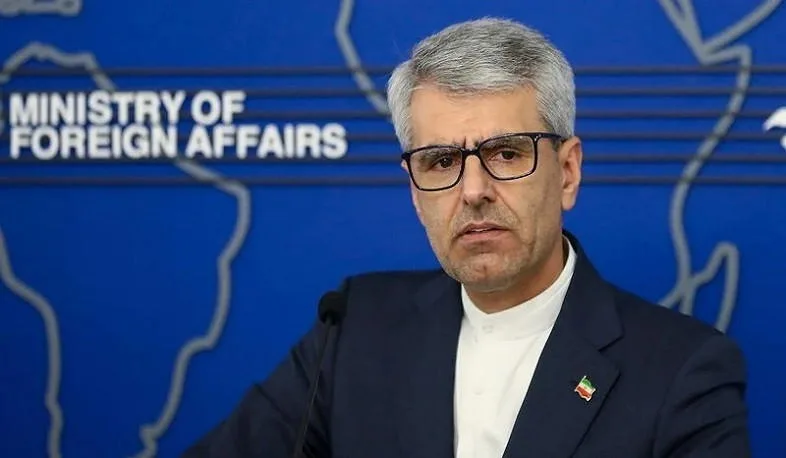
Iran said Monday it had responded to a new US proposal aimed at ending the war, adding that exchanges were continuing despite Iranian media reports describing Washington's demands as excessive. The conflict between the two countries broke out on February 28, and since then, they've been swapping proposals in an effort to end the war.
The two sides have held a single round of talks so far, and a fragile ceasefire has been in place since April 8. Iran's foreign ministry spokesman, Esmaeil Baqaei, announced that Iran's concerns were conveyed to the American side during a press briefing on Monday.
He also stated that the exchanges were continuing through the Pakistani mediator, but he didn't provide any details. Baqaei defended Iran's demands, including the release of Iranian assets frozen abroad and the lifting of long-standing sanctions.
The points raised are Iranian demands that have been firmly defended by the Iranian negotiating team in every round of negotiations, Baqaei said.
He also defended an Iranian stipulation that the US pay war reparations, describing the conflict as illegal and baseless. On the possibility of another military confrontation, Baqaei said Iran was fully prepared for any eventuality.
On Sunday, Iran's Fars news agency said Washington had presented a five-point list, which included a demand for Iran to keep only one nuclear site in operation and transfer its stockpile of highly enriched uranium to the United States. The US had refused to release even 25 percent of Iran's frozen assets or pay any reparations for war damage, according to Fars.
The report said the US had also made clear it would only cease hostilities when Tehran engages in formal peace negotiations. Iran's Mehr news agency said the United States, offering no tangible concessions, wants to obtain concessions that it failed to obtain during the war, which will lead to an impasse in the negotiations.
The US conditions are excessive. In an earlier proposal, which was sent last week, Iran had called for an end to the war on all fronts, including Israel's campaign in Lebanon, as well as a halt to a US naval blockade on Iranian ports in place since April 13.
It also called for the lifting of all US sanctions on Iran and the release of its assets frozen abroad. Fars said that Iranian proposal had emphasised that Tehran would continue to manage the strategic Strait of Hormuz, a vital energy conduit which Iran has largely kept closed since the start of the war.
The Strait of Hormuz is a critical waterway that connects the Persian Gulf to the Gulf of Oman and the Arabian Sea, and it's a major shipping route for oil exports. Iran's control over the Strait gives it significant influence over the global energy market.
The ongoing conflict between Iran and the US has significant implications for global energy prices and the stability of the region. It's unclear what the next steps will be in the negotiations, but it's clear that both sides are committed to finding a resolution to the conflict.
Key Facts
- Iran responded to the US's latest peace proposal on Monday
- The conflict between Iran and the US broke out on February 28
- A fragile ceasefire has been in place since April 8
- The US has refused to release 25 percent of Iran's frozen assets or pay any reparations for war damage
- Iran has called for an end to the war on all fronts, including Israel's campaign in Lebanon
- The US has demanded that Iran keep only one nuclear site in operation and transfer its stockpile of highly enriched uranium to the United States
Given the history of tensions between Iran and the US, it's not surprising that the negotiations are challenging. The US has imposed significant sanctions on Iran in recent years, which have had a major impact on the country's economy.
The Iranian people have been affected by the sanctions, with many struggling to access basic necessities like food and medicine. The conflict has also had a significant impact on the global energy market, with oil prices rising in response to the instability in the region.
The situation is complex, and the outcome is uncertain. The negotiations between Iran and the US will have significant implications for the region and the world.
The Iranian government has been under pressure from its citizens to resolve the conflict and improve the economy. The US has also been under pressure to find a resolution, with many Americans concerned about the impact of the conflict on global stability.
The negotiations are being closely watched by the international community, with many countries calling for a peaceful resolution to the conflict. The United Nations has also been involved in the negotiations, with the organization's secretary-general calling for calm and restraint.
The conflict has also had a significant impact on the environment, with the war causing damage to natural habitats and wildlife. The economic impact of the conflict has also been significant, with trade disrupted and businesses affected.
It's not clear what the next steps will be in the negotiations, but it's clear that both sides are committed to finding a resolution to the conflict. The Iranian government has said that it is willing to negotiate, but it won't compromise on its core demands.
The US has also said that it is willing to negotiate, but it won't lift sanctions until Iran meets its demands. The negotiations are challenging, but they are necessary to find a peaceful resolution to the conflict.
As the negotiations continue, the situation is complex and challenging. Both sides are committed to finding a resolution to the conflict, and that's a positive step forward.
The international community is watching the negotiations closely, and many countries are calling for a peaceful resolution to the conflict. The United Nations has also been involved in the negotiations, and the organization's secretary-general has called for calm and restraint.
The conflict has significant implications for the region and the world, and a peaceful resolution is necessary to avoid further instability. The negotiations are challenging, but they are necessary to find a peaceful resolution to the conflict.
The situation is complex, and the outcome is uncertain. The negotiations between Iran and the US will have significant implications for the region and the world.
The Iranian government has been under pressure from its citizens to resolve the conflict and improve the economy. The US has also been under pressure to find a resolution, with many Americans concerned about the impact of the conflict on global stability.
The conflict has also had a significant impact on the environment, with the war causing damage to natural habitats and wildlife. The economic impact of the conflict has also been significant, with trade disrupted and businesses affected.
It's not clear what the next steps will be in the negotiations, but it's clear that both sides are committed to finding a resolution to the conflict. The Iranian government has said that it is willing to negotiate, but it won't compromise on its core demands.
The US has also said that it is willing to negotiate, but it won't lift sanctions until Iran meets its demands. The negotiations are challenging, but they are necessary to find a peaceful resolution to the conflict.