

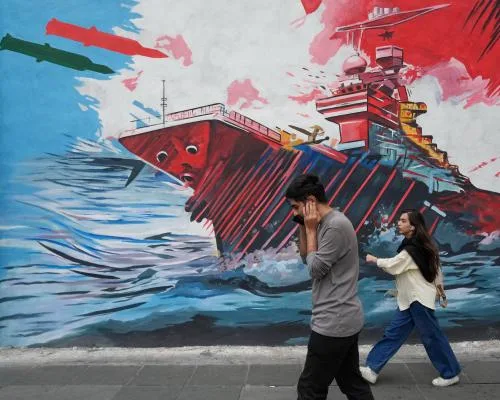
Trump's warning to Iran is the latest development in the ongoing conflict between the two countries. The Iranian foreign ministry spokesperson, Esmail Baghaei, has been speaking at a news conference where he revealed that Iranian and Omani technical teams met in Oman to discuss a safe transit mechanism in the Strait of Hormuz.
The Strait of Hormuz is a strategic waterway located between Iran, the UAE, and Oman. It's a crucial passage for international oil trade, with about a fifth of the world's oil and liquefied natural gas passing through it. However, Iran closed the shipping route to 'hostile' countries in response to being attacked by Israel and the US on 28 February. This move caused global energy prices to surge, and it's increased bills for consumers worldwide. They can't afford to pay more, and it's affecting their daily lives.
Iran effectively closed the strait by attacking or threatening to attack some ships and told others not affiliated with the US or Israel that they could pass through the waterway if they paid a toll. The US imposed a counter-blockade of ships using Iranian ports on 13 April to pressure Tehran into accepting concessions to end the war. However, this move failed, and the US has said repeatedly that there can't be a permanent solution to the blockade that involves paying a toll to Iran. They won't agree to it, and it's not a viable option.
Oman's foreign ministry has condemned the drone strike that caused a fire at the perimeter of the UAE's Barakah nuclear power plant on Sunday. The ministry expressed its solidarity with the UAE but stressed that it rejected all 'hostile and escalatory acts' as it urged for dialogue to address regional issues. It also called for international law to be respected by all parties. They don't want to see the situation escalate further, and they're calling for calm.
The UAE didn't say who launched the attack, and there was no immediate claim of responsibility. No injuries were reported, and officials said there was no impact on radiological safety levels. They're investigating the incident, and they'll release more information soon.
For Iran, time is running out, and they'd better get moving fast, or there won't be anything left of them. Time is of the essence, and they can't afford to wait. Trump is expected to meet top national security advisers on Tuesday to discuss options for military action on Iran. It came as a drone strike in the United Arab Emirates caused a fire at a nuclear power plant – which the country called a 'dangerous escalation' and blamed on Iran or its proxies – and Saudi Arabia reported intercepting three drones.
Tehran has demanded a lasting ceasefire in Lebanon before any broader peace deal with Washington. Israel's airstrikes killed seven people in Lebanon on Sunday, including an Islamic Jihad commander, Lebanese authorities and state media said, despite the fragile ceasefire. Hezbollah called US-brokered talks between the two countries a 'dead end', and they're not optimistic about the outcome. They don't think it's going to lead to a resolution, and they're preparing for other scenarios.
In other key developments, Iranian media said the US had failed to make any concrete concessions in its latest response to Iran's proposed agenda for negotiations to end the war. The Fars news agency said on Sunday that Washington had presented a five-point list that included a demand for Iran to keep only one nuclear site in operation and transfer its stockpile of highly enriched uranium to the US. It's a significant demand, and Iran won't agree to it easily. They're not willing to give up their nuclear program, and it's a major sticking point in the negotiations.
Islamic Jihad commander Wael Abdel Halim and his 17-year-old daughter were killed in an Israeli missile strike on an apartment in eastern Lebanon on Sunday, Lebanese state media said. Israeli strikes on towns in southern Lebanon earlier killed five people, including two children, and left at least 15 people injured, the Lebanese health ministry said, despite Israel and Lebanon agreeing to extend their ceasefire by 45 days. It's a fragile ceasefire, and it could break down at any moment. They're trying to maintain the peace, but it's not easy.
Hezbollah had fired about 200 projectiles at Israel and its troops over the weekend, an Israeli military official said on Sunday. Israel's cabinet approved a plan to build a defence compound on the site of the recently demolished premises of the UN Palestinian refugee agency (Unrwa) in East Jerusalem. Israel seized the site last year in an act the agency condemned as a violation of international law. It's a contentious issue, and it's causing tensions between Israel and the Palestinians. They're not happy about it, and they're protesting the move.
Key Facts
- About a fifth of the world’s oil and liquefied natural gas passes through the Strait of Hormuz.
- Iran closed the shipping route to 'hostile' countries in response to being attacked by Israel and the US on 28 February.
- The US imposed a counter-blockade of ships using Iranian ports on 13 April.
- Oman's foreign ministry condemned the drone strike that caused a fire at the UAE's Barakah nuclear power plant.
- Trump is expected to meet top national security advisers on Tuesday to discuss options for military action on Iran.
- Tehran has demanded a lasting ceasefire in Lebanon before any broader peace deal with Washington.
The conflict between Iran and the US has significant implications for global energy prices and international relations. As the situation continues to unfold, the world watches with bated breath, waiting to see what will happen next. The situation is complex, and it's difficult to predict the outcome. Many factors are at play, and they're all interconnected.
The role of Oman in the conflict is also significant. As a neutral party, Oman has been trying to facilitate dialogue between Iran and the US. However, its efforts have been met with limited success so far. They're trying to broker a peace deal, but it's not easy. The two sides are far apart, and they don't see eye to eye.
The impact of the conflict on the people of Lebanon is also a major concern. The fragile ceasefire between Israel and Lebanon is under threat, and the situation could escalate at any moment. They're living in fear, and they don't know what the future holds. The conflict is affecting their daily lives, and it's causing them a lot of hardship.
The conflict between Iran and the US is a complex and multifaceted issue. With multiple parties involved and various interests at stake, it's difficult to predict what will happen next. The situation demands careful attention and diplomacy to prevent further escalation. It's a challenging task, but it's necessary to prevent a war. The world is watching, and they're waiting to see what will happen next. The outcome is uncertain, and it's causing a lot of anxiety.