

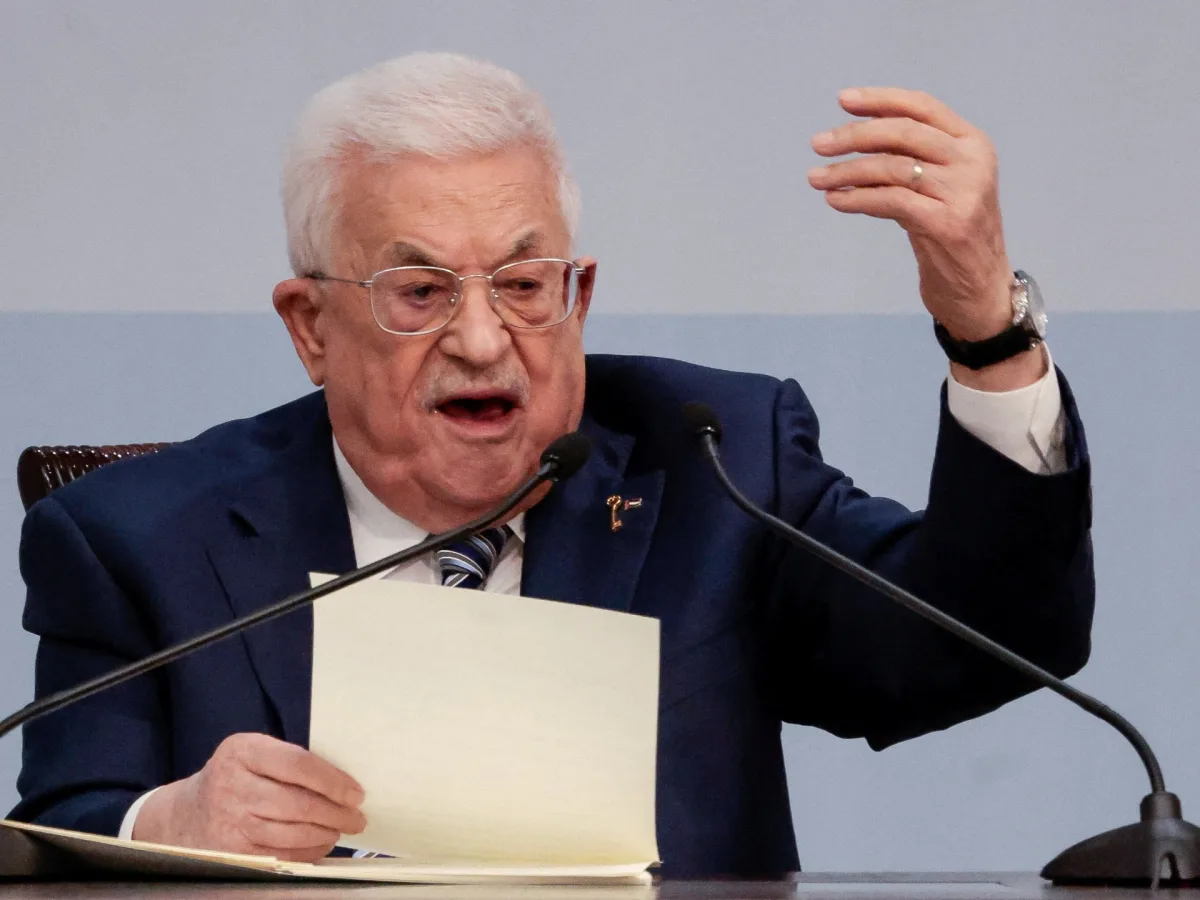
The single sharpest fact to emerge from Fatah's eighth General Conference is that Mahmoud Abbas, the 91-year-old Palestinian President, has tightened his grip on power. The conference, which concluded late Saturday, saw the replacement of half of the incumbent old guard in the Central Committee, Fatah's highest leadership body. It's a body that's responsible for making key decisions about the direction of the Palestinian national movement.
The Central Committee's new lineup is significant because it indicates Abbas's control over the party. Abbas's close ally and intelligence chief, Majed Faraj, also won a seat on the Central Committee. Faraj is seen by many in Fatah as a competitor to Hussein al-Sheikh, who Abbas appointed as vice president a year ago. They don't see Faraj as a threat, though - at least, not yet.
Another signal of Abbas's grip on the Congress was the nomination and victory of his son, Yasser, to the Central Committee. That was despite the fact that Yasser Abbas has never held a leadership position at any level in Fatah. Yasser's election has overshadowed Fatah's argument that the Congress was a sign of democratic vitality and inclusion. The development hasn't gone unnoticed, and it's raised eyebrows among Fatah members.
As members of the Congress, we are leading members of Fatah and regardless of the outcome of the elections, we must stand by it and help Fatah lead the Palestinian national movement, said Kifah Harb, a prominent Fatah figure who ran unsuccessfully for the Central Committee. He didn't win, but he's still committed to Fatah.
So, who are the new faces in the Central Committee? There's Marwan Barghouti, a Palestinian detainee who has been imprisoned by Israel for more than 20 years. He earned the highest number of votes among all competitors. There's also Zakariya al-Zubaidi, a prominent Fatah figure who has been imprisoned repeatedly by Israel over the years. Al-Zubaidi notoriously escaped with five other Palestinian prisoners from Gilboa prison in 2021.
He was recaptured, but then freed again in one of the prisoner exchange deals struck between Israel and Hamas during the Gaza genocide.
The winners of the elections also include an abundance of technocrats and senior officials working in the Palestinian Authority. They're people like the popular Ramallah Governor Laila Ghannam or the head of the PA's General Personnel Council Musa Abu Zaid. These aren't leaders, according to one Fatah official, who spoke to Al Jazeera on condition of anonymity. They're employees, who will do as they're ordered. They won't rock the boat, and they won't challenge Abbas's authority.
The election results of Fatah's top body also saw the replacement of all but one of Gaza's representatives in the Central Committee. Ahmed Hilles, a close ally of Palestinian President Mahmoud Abbas, is the only one remaining. Absent from the Central Committee for the first time is a representative of Fatah outside Palestine. This is seen by many as a worrying precedent for a movement that has followers across the widespread Palestinian diaspora. They're concerned that Fatah is losing touch with its roots.
As the new Central Committee takes shape, it's clear that Abbas's grip on power is tighter than ever. Dr Nasser al-Qudwa, who was the only member of the Central Committee to boycott the General Conference, told Al Jazeera that Mahmoud Abbas engineered this meeting to produce the outcome he wants. He succeeded, and many Fatah members agree with that assessment. They don't think the outcome was fair, though.
And now, Fatah's new leaders are faced with the task of resolving several chronic crises. They can't pay civil servants, and Israel's hostile policies aren't helping. Israel's been withholding Palestinian tax revenues, grabbing land, and settlers have been attacking Palestinians. The Israeli-made humanitarian disaster is becoming entrenched in Gaza. It's a tough situation, and Fatah's leaders won't find it easy to resolve.
The international community will be watching closely to see how Fatah's new leadership navigates these challenges. Western governments are demanding reforms in return for increased support to the Palestinian Authority. Fatah leaders say the Congress is proof of their commitment to reform. They hope it'll placate the international community, and they hope they can get the Palestinian public on side. They won't find it easy, though - the Palestinian public is demanding presidential and legislative elections.
These elections will likely become more pressing, and they're one of the many tests that awaits Fatah's reformulated leadership.
In the meantime, the Palestinian public is getting impatient. They want elections, and they want them now. It's not clear if Fatah can deliver, though. They're facing a lot of challenges, and they won't find it easy to overcome them.
Key Facts
- 60 candidates competed for 18 seats in the Central Committee
- 450 members competed for the 80 seats of the Revolutionary Council
- Mahmoud Abbas was unanimously voted as chair ahead of the vote
- The election results saw the replacement of half of the incumbent old guard in the Central Committee
- Abbas's close ally and intelligence chief, Majed Faraj, won a seat on the Central Committee
- Yasser Abbas, the son of Mahmoud Abbas, won a seat on the Central Committee despite having no history of involvement in Fatah