

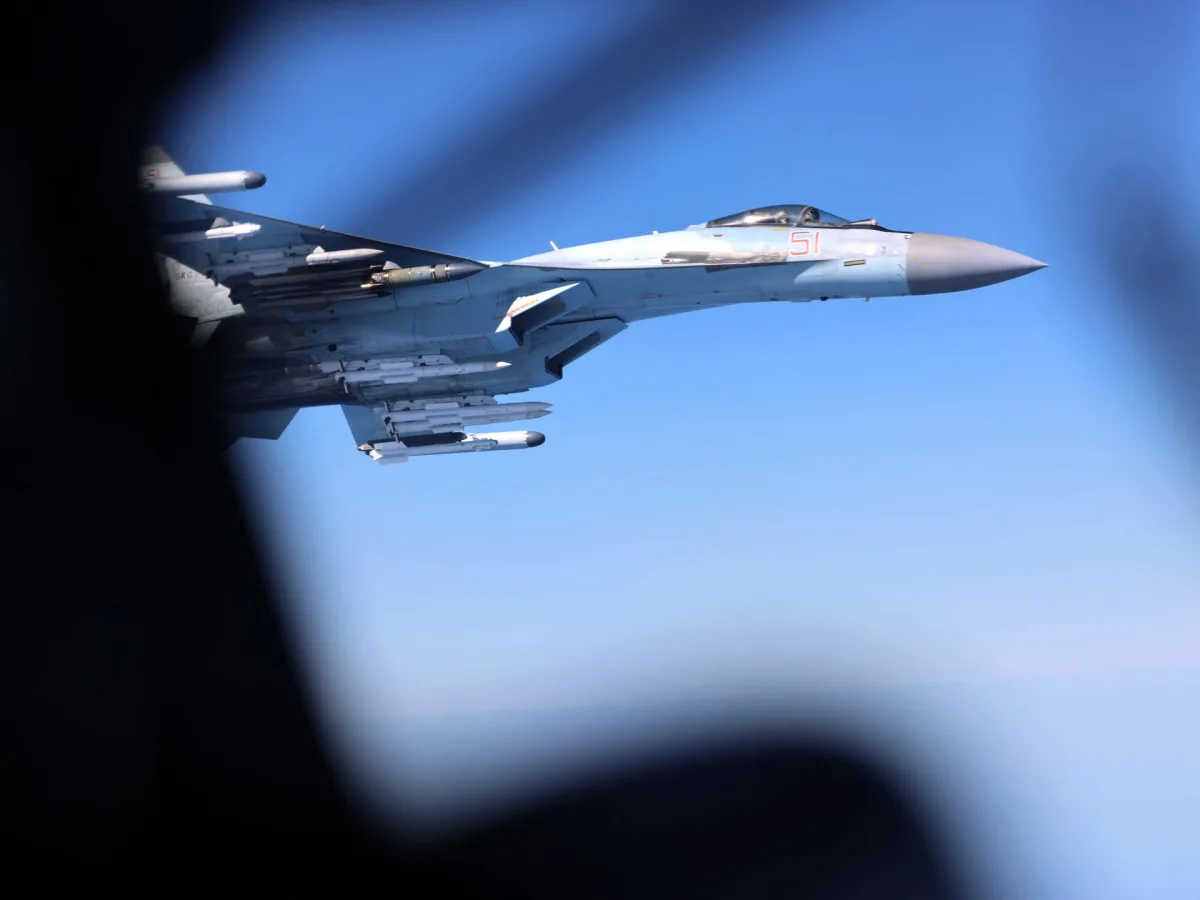
The British Royal Air Force's Rivet Joint aircraft was intercepted by two Russian jets over the Black Sea in April. It's worth stating that the Russian Su-35 aircraft flew close enough to trigger emergency systems on the British plane. The Russian jets didn't follow standard safety protocols, which made the situation more dangerous.
The incident occurred while the Rivet Joint aircraft was carrying out routine surveillance in international airspace over the Black Sea. The UK's Ministry of Defence said the Russian pilots' actions were 'dangerous and unacceptable'. They won't tolerate such behaviour, and they're taking steps to address the issue.
Defence Minister John Healey said, 'This incident is another example of dangerous and unacceptable behaviour by Russian pilots, towards an unarmed aircraft operating in international airspace.' He added, 'These actions create a serious risk of accidents and potential escalation.' It's clear that the UK won't back down in the face of Russian aggression.
The Russian Su-27 conducted six passes, flying six metres from the Rivet Joint's nose. This was a highly provocative move, and it's lucky that an accident didn't occur. The incident was the most dangerous Russian action against a UK surveillance plane since 2022. It's a reminder that tensions between the UK and Russia are still running high.
The UK has formally complained to the Russian embassy about the air incident. The complaint was made by defence and foreign ministry officials, who don't think the Russian pilots' actions were justified. They're calling for Russia to take steps to prevent similar incidents in the future.
The incident came days after John Healey announced that the Royal Navy had tracked and 'seen off' three Russian submarines on an alleged month-long 'covert operation' in Atlantic waters. The submarines were operating near vital undersea cables and pipelines, which they shouldn't have been near. The UK can't let Russia get away with such actions, or it'll set a bad precedent.
The UK monitoring mission involved about 500 personnel, and they didn't have an easy task. They saw UK aircraft fly more than 450 hours, which is a significant amount of time. A navy frigate covered several thousand nautical miles during the operation, and it's clear that the UK is committed to defending its interests.
A defence review last year concluded that Russia poses an 'immediate and pressing' threat to the nation. John Healey said, 'Let me be very clear: this incident won't deter the UK's commitment to defend NATO, our allies, and our interests from Russian aggression.' The UK won't back down, and they'll keep working to protect their nation.
The Royal Air Force's Rivet Joint aircraft is used for surveillance and reconnaissance missions. It's equipped with advanced sensors and communication systems, which make it a valuable asset. The aircraft is based on the Boeing 767, and it's been in service with the Royal Air Force since 2014. They're getting a lot of use out of it, and it's proving to be a reliable plane.
Key Facts
- Two Russian jets intercepted a British Royal Air Force surveillance aircraft over the Black Sea
- The incident occurred in April while the British aircraft was carrying out routine surveillance
- The Russian pilots' actions were described as 'dangerous and unacceptable' by the UK's Ministry of Defence
- The incident was the most dangerous Russian action against a UK surveillance plane since 2022
- The UK has formally complained to the Russian embassy about the air incident
The incident highlights the ongoing tensions between Russia and the UK. The UK has been increasing its military presence in the region in response to Russia's actions, and they won't stop now. They're committed to defending their nation, and they won't let Russia push them around. The incident is a reminder of the risks faced by military personnel, and it's essential to reduce tensions through diplomatic efforts.
The UK's commitment to defending NATO and its allies remains unchanged. They won't let Russia's aggressive behaviour deter them from carrying out their surveillance and reconnaissance missions. The UK will continue to work with its allies to ensure the security and stability of the region, and they'll do whatever it takes to protect their interests. They can't afford to back down, and they won't.