

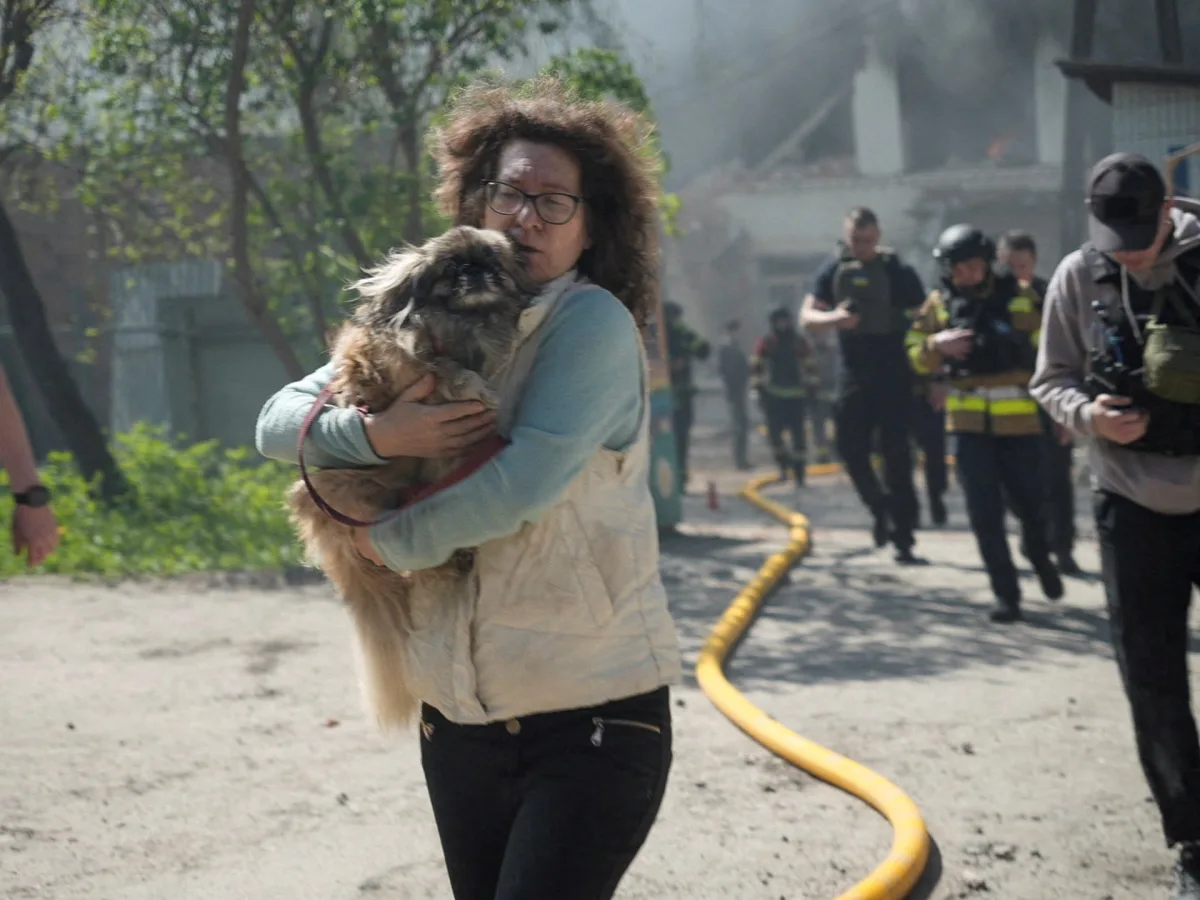
The war between Ukraine and Russia has been raging for months, with both sides suffering heavy losses. But now, it seems that Ukraine may have finally gained the upper hand. According to the Institute for the Study of War (ISW), a think tank that tracks the conflict, Moscow's advance is slowing, and Ukraine is making significant gains. This is a major shift in the balance of power, and it could have significant implications for the future of the war.
The ISW says that Russia's army has suffered more than 35,000 casualties in April alone, a staggering number that underscores the brutality of the conflict. Ukraine, on the other hand, has been pushing back against Russian forces, regaining control of key areas and slowly but surely driving the Russians back. This is a testament to the bravery and determination of the Ukrainian military, which has been fighting against overwhelming odds for months.
The conflict between Ukraine and Russia is complex and multifaceted, with deep historical and cultural roots. The two countries have been at odds for centuries, and the current war is just the latest chapter in a long and bloody history. But despite the complexities of the conflict, one thing is clear: Ukraine is fighting for its very existence, and the outcome of the war will have far-reaching consequences for the entire region.
The international community has been watching the conflict with growing concern, and many countries have imposed sanctions on Russia in an effort to pressure them to withdraw their troops. But so far, these efforts have had limited success, and the war continues to rage on. As the situation on the ground continues to evolve, one thing is certain: the people of Ukraine are paying a heavy price for the conflict, and it's up to the international community to do everything in its power to bring an end to the bloodshed.
Key Facts
- The Institute for the Study of War (ISW) tracks the conflict between Ukraine and Russia.
- Moscow's advance is slowing, according to the ISW.
- Russia's army suffered more than 35,000 casualties in April.
- Ukraine is making significant gains and regaining control of key areas.
- The conflict between Ukraine and Russia is complex and multifaceted.
- The international community has imposed sanctions on Russia.
- The war has been raging for months, with both sides suffering heavy losses.
The Human Cost
The war between Ukraine and Russia has had a devastating impact on civilians, with thousands of people killed or injured in the fighting. Many more have been forced to flee their homes, seeking refuge in other parts of the country or in neighboring countries. The humanitarian crisis is dire, with many people lacking access to basic necessities like food, water, and shelter. The international community has been working to provide aid to those in need, but it's an uphill battle, and much more needs to be done to address the scale of the crisis.
The human cost of the war is not just limited to the physical toll it's taking on civilians. The conflict is also having a profound emotional and psychological impact, with many people struggling to cope with the trauma they've experienced. The war has torn families apart, leaving many people without loved ones or a sense of security. It's a heartbreaking situation, and one that requires a compassionate and comprehensive response from the international community.
As the war continues to rage on, it's essential to remember the human cost of the conflict. The people of Ukraine are not just statistics or headlines; they're real people with hopes, dreams, and aspirations. They deserve our support and our solidarity, and it's up to us to do everything in our power to bring an end to the bloodshed and help them rebuild their lives.
The Military Situation
The military situation on the ground is complex and fluid, with both sides engaged in intense fighting. The Ukrainian military has been pushing back against Russian forces, using a combination of conventional and unconventional tactics to drive them back. The Russians, on the other hand, have been relying heavily on artillery and airstrikes, causing significant damage to civilian infrastructure.
Despite being outgunned and outmanned, the Ukrainian military has shown remarkable resilience and determination. They've been able to adapt to the changing circumstances on the ground, using their knowledge of the terrain to outmaneuver the Russians. It's a testament to the bravery and skill of the Ukrainian soldiers, who are fighting against overwhelming odds to defend their country.
The military situation is constantly evolving, with new developments emerging every day. The international community is watching the situation closely, trying to understand the implications of the conflict and how it might be brought to an end. It's a challenging and complex situation, but one thing is certain: the military situation on the ground will play a critical role in determining the outcome of the war.
The Role of the International Community
The international community has been watching the conflict between Ukraine and Russia with growing concern, and many countries have imposed sanctions on Russia in an effort to pressure them to withdraw their troops. The United States, the European Union, and other countries have been providing significant financial and military aid to Ukraine, helping them to bolster their defenses and push back against the Russians.
The international community has also been working to provide humanitarian aid to those affected by the conflict. The United Nations and other organizations have been providing food, shelter, and medical care to civilians, helping to alleviate the suffering caused by the war. It's a critical effort, and one that requires the continued support and commitment of the international community.
The international community has a moral obligation to act in the face of such suffering, and to do everything in its power to bring an end to the bloodshed. As the situation continues to evolve, it's essential that we remain committed to this goal, and that we work tirelessly to support the people of Ukraine.
The Historical Context
The conflict between Ukraine and Russia has deep historical and cultural roots, with the two countries having been at odds for centuries. The Soviet Union's collapse in 1991 led to a period of instability and conflict, with Ukraine and Russia competing for influence in the region. The current war is just the latest chapter in this long and complex history, with both sides fighting for control and dominance.
The historical context of the conflict is essential to understanding the underlying dynamics at play. The two countries have a shared history and culture, but they also have significant differences and tensions. The conflict is not just about territory or resources; it's about identity, culture, and the future of the region.
As the situation continues to evolve, it's essential to understand the historical context of the conflict. The international community needs to recognize the complexities and nuances of the situation, and to develop a comprehensive and sustainable solution that takes into account the needs and concerns of all parties involved.
The Future of the Conflict
The future of the conflict between Ukraine and Russia is uncertain, with many possible outcomes and scenarios. The international community is working to find a peaceful resolution to the conflict, but it's a challenging and complex process. The parties involved need to be willing to compromise and negotiate, and to find a solution that meets the needs and concerns of all sides.
The future of the conflict will depend on a range of factors, including the military situation on the ground, the diplomatic efforts of the international community, and the political will of the parties involved. It's a critical moment in the history of the region, and one that requires careful consideration and attention.
As the situation continues to evolve, it's essential to remain vigilant and committed to finding a peaceful resolution to the conflict. The people of Ukraine deserve our support and solidarity, and it's up to us to do everything in our power to help them build a brighter future for themselves and their country.