

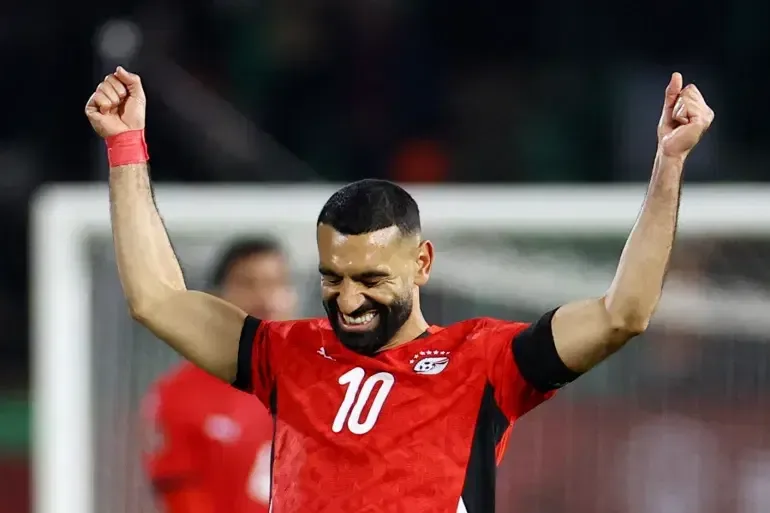
For many football fans, there’s nothing quite as painful as a "golden generation" that fails to turn hype into silverware. This summer, the 2026 World Cup in the United States, Canada, and Mexico serves as the final frontier for stars who’ve dominated European club football but remained empty-handed on the global stage. Egypt’s Mohamed Salah, alongside Belgian icons Kevin De Bruyne, Romelu Lukaku, and Thibaut Courtois, are all pushing into their mid-thirties. They’re staring down the barrel of a tournament that represents their last genuine shot at etching their names into World Cup history.
Group G has become the place where these narratives collide. Egypt and Belgium have been drawn together in a cluster that also includes New Zealand and Iran. The inclusion of Iran caused a massive diplomatic headache for the tournament organisers. Tensions between the United States and Iran threatened to derail the team’s participation entirely. US special envoy Paolo Zampolli actually suggested replacing Iran with Italy in the tournament.
That proposal sounded more like a desperate football fantasy than a diplomatic solution.
American Secretary of State Marco Rubio had to step in to clarify that Washington wasn't actively blocking the Iranian team from entering the country. This intervention stopped wild rumours from spiralling out of control as the kick-off date drew near. Iran is heading into their fourth consecutive World Cup appearance. Their focus remains on navigating these political storms to finally reach the knockout stages for the first time in their history.
Belgium’s story is one of missed potential. Their golden generation, which included legends like Eden Hazard and Vincent Kompany, was supposed to rule the world. They climbed to the top of the FIFA rankings, acting as the team to beat for years. Yet, the best they ever managed was a third-place finish in 2018. Now, only Kevin De Bruyne, Romelu Lukaku, and Thibaut Courtois remain from that core group.
Their chemistry is tested by past dramas, including a well-publicised falling-out between Thibaut Courtois and his former manager Domenico Tedesco, which caused the keeper to miss the Euro 2024 exit.
"The upcoming World Cup in the US, Canada and Mexico will be their last chance of turning all that initial hope and expectation into some long-awaited silverware."
Despite the age of their leaders, the Belgian squad isn't just a group of old heads. They have a crop of exciting talent meant to carry the torch. Players like Amadou Onana, Charles De Ketelaere, Jeremy Doku, and Youri Tielemans are the heartbeat of a new-look team. They’ll be tasked with doing the heavy lifting to support the ageing stars in their final act. It’s a delicate balance between honouring the veterans and giving the new guys enough room to shine.
Mohamed Salah is fighting a different kind of battle. He’s widely recognised as the greatest Egyptian player to ever lace up a pair of boots, yet his trophy cabinet with the national team is shockingly sparse. Since Egypt dominated the Africa Cup of Nations, winning three titles in a row until 2010, the country has struggled to replicate that success on the continental or global stage. Salah turns 34 during the tournament and carries the weight of a nation that expects him to perform miracles every single time he steps onto the pitch.
His World Cup history is also a bit of a tragic script. In 2018, he arrived in Russia nursing a shoulder injury picked up during a brutal Champions League final clash against Real Madrid. He never quite hit his peak performance level during that tournament. This time around, he’s dealing with a hamstring injury suffered in late April, which unceremoniously ended his final season at Liverpool. If Salah is to finally give Egypt something to celebrate, he’ll need his body to hold up better than it did eight years ago.
New Zealand rounds out the group, marking their third appearance at a World Cup final. They secured their spot after a convincing 3-0 thrashing of New Caledonia in the Oceania Football Confederation qualifying final. While they might be considered the underdogs of Group G, they arrive without the baggage of failing as a "golden generation" or the burden of international diplomatic tensions. The team with the least to prove is often the one that causes the most trouble for the giants.