

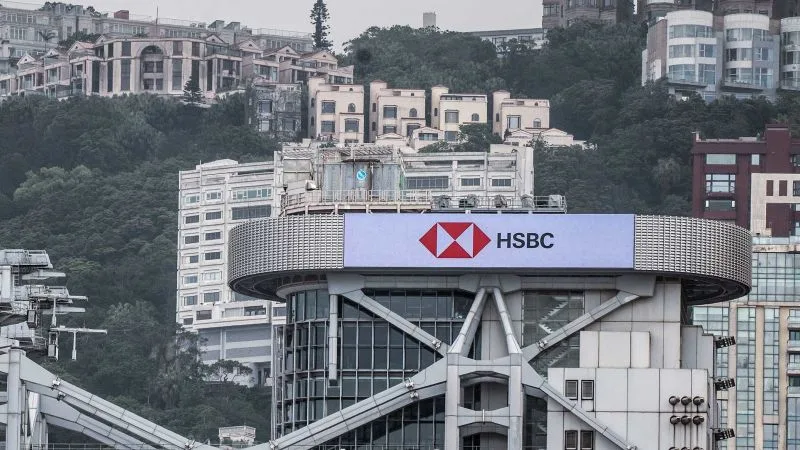
HSBC's top executives faced a tough crowd on Monday as they met with shareholders in the bank's largest market. The meeting was tense, with many shareholders calling for the bank to be split up. This isn't a new idea - there have been rumors of a potential breakup for years. But the pressure is mounting, and the bank's leadership is feeling the heat. They defended their strategy, but it's clear that they're facing an uphill battle.
The meeting was a significant one, with many of the bank's largest shareholders in attendance. They're not happy with the bank's performance, and they're looking for change. The bank's leadership, including its CEO, is under pressure to deliver results. They're facing challenges on multiple fronts, from increasing competition to regulatory pressures. It's a tough environment, and the bank's leadership is struggling to navigate it.
So, what's behind the call to break up the bank? It's largely due to the bank's global operations. HSBC is a huge bank, with operations in dozens of countries around the world. But that size and complexity can be a challenge. The bank's shareholders are worried that the bank is too big to manage, and that it's not delivering the returns that they expect. They're looking for a simpler, more focused bank, and they think that breaking up the bank could be the answer.
The bank's leadership, on the other hand, is defending their strategy. They argue that the bank's global operations are a strength, not a weakness. They say that the bank's size and scale give it a competitive advantage, and that it's well-positioned to take advantage of growth opportunities around the world. They're also pointing to the bank's recent performance, which has been strong. But despite this, the pressure from shareholders is likely to continue.
Key Facts
- HSBC is Europe's biggest bank, with operations in dozens of countries around the world.
- The bank's shareholders are calling for it to be split up, citing its size and complexity as a challenge.
- The bank's leadership is defending their strategy, arguing that the bank's global operations are a strength.
- The meeting between the bank's executives and shareholders was tense, with many shareholders expressing frustration with the bank's performance.
- The bank's CEO is under pressure to deliver results, with the bank facing challenges on multiple fronts.
The Bank's History
HSBC has a long and complex history, with roots dating back to the 19th century. The bank was founded in Hong Kong, and it quickly grew into a major international bank. Over the years, the bank has expanded through a series of acquisitions and mergers, growing into the huge bank it is today. But that growth has also created challenges, as the bank has struggled to integrate its various operations and manage its complexity.
The bank's history is also marked by controversy, with the bank facing criticism for its role in various scandals over the years. The bank has been accused of money laundering, tax evasion, and other wrongdoing, and it has faced significant fines and penalties as a result. This has damaged the bank's reputation and eroded trust with its customers and shareholders.
Despite these challenges, the bank's leadership is committed to moving forward. They're focused on rebuilding trust and delivering strong performance, and they're taking steps to simplify the bank's operations and improve its management. This includes investing in new technology and streamlining the bank's processes, as well as strengthening its risk management and compliance functions.
The Call to Break Up the Bank
The call to break up the bank is largely driven by the bank's shareholders, who are frustrated with the bank's performance. They're looking for a simpler, more focused bank, and they think that breaking up the bank could be the answer. They argue that the bank's size and complexity are a challenge, and that it's not delivering the returns that they expect.
The idea of breaking up the bank is not a new one. There have been rumors of a potential breakup for years, with some analysts arguing that it could be the best way to unlock value for shareholders. But the pressure is mounting, and the bank's leadership is facing increasing pressure to consider the idea. They're likely to face tough questions from shareholders and regulators in the coming months, and they'll need to be able to defend their strategy.
The Bank's Global Operations
HSBC's global operations are a key part of its business, with the bank having a presence in dozens of countries around the world. The bank's international operations are a major strength, giving it a competitive advantage and allowing it to take advantage of growth opportunities in emerging markets. But they're also a challenge, with the bank facing regulatory pressures and competitive threats in many of its markets.
The bank's global operations are also a key part of its strategy, with the bank focused on building its presence in key markets such as Asia and Latin America. The bank is investing heavily in these markets, with a focus on building its brand and expanding its customer base. This includes investing in new technology and hiring more staff, as well as partnering with local businesses and organizations to build its presence.
The Role of the CEO
The bank's CEO is under pressure to deliver results, with the bank facing challenges on multiple fronts. The CEO is responsible for setting the bank's strategy and overseeing its operations, and they're facing tough questions from shareholders and regulators. They'll need to be able to defend the bank's strategy and demonstrate its commitment to rebuilding trust and delivering strong performance.
“The CEO's role is to provide leadership and direction, and to ensure that the bank is well-positioned for the future. This includes setting the bank's strategy and overseeing its operations, as well as building trust with customers and shareholders. It's a tough job, but it's also a critical one”
— the bank's success depends on the CEO's ability to deliver results and rebuild trust.
The Future of the Bank
The future of the bank is uncertain, with the pressure from shareholders and regulators likely to continue. The bank's leadership will need to be able to defend their strategy and demonstrate its commitment to delivering strong performance. This will require a focus on rebuilding trust and improving the bank's operations, as well as investing in new technology and streamlining the bank's processes.
The bank's future is also dependent on its ability to adapt to changing market conditions and regulatory pressures. The bank will need to be able to navigate the complex and rapidly changing landscape of international banking, and to stay ahead of the competition. This will require a focus on innovation and customer service, as well as a commitment to rebuilding trust and delivering strong performance.
And the bank's leadership is well aware of the challenges ahead. They're focused on delivering results and rebuilding trust, and they're taking steps to simplify the bank's operations and improve its management. This includes investing in new technology and streamlining the bank's processes, as well as strengthening its risk management and compliance functions. It's a tough road ahead, but the bank's leadership is committed to moving forward and delivering strong performance for its shareholders.