

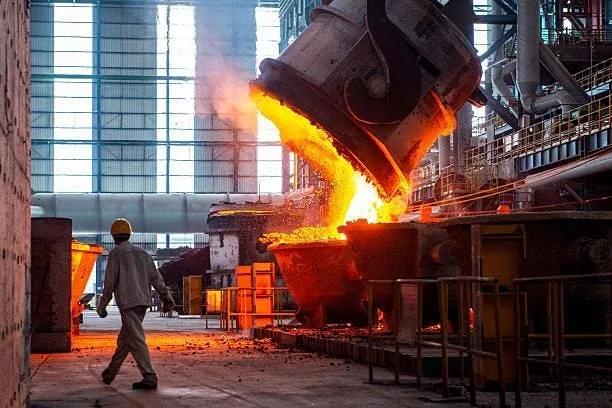
For decades, making steel has been a messy, dirty business. It usually involves feeding massive blast furnaces with coal, which acts as both fuel and a chemical tool to turn iron ore into metal. This old-school process belches out carbon dioxide at a scale comparable to the emissions of entire nations. With global production hitting 1.8 billion tonnes a year, the industry accounts for roughly 2.6 billion tonnes of CO₂ annually. That's a massive weight on the climate, and until now, the alternatives haven't been affordable or energy-efficient.
Swedish company FerroSilva might have just cracked the code. Instead of relying on coal or the massive amounts of electricity needed for hydrogen-based systems, their method uses biomass gasification. They essentially take forest and agricultural waste, turn it into gas, and use it to process iron. This technique uses less than one-tenth of the electricity required by the hydrogen-based models being developed by other industry giants. It’s a circular economy move that feels like something straight out of a textbook, but it's actually happening in the real world.
Our process requires less than a tenth of the electricity per ton of sponge iron produced, because most of the energy we use is stored in forest residues that we gasify. — Göran Nyström, FerroSilva.
The math behind this is quite simple for the planet. While competing technologies like hydrogen-based Direct Reduced Iron (DRI) struggle with rising energy costs and grid constraints, FerroSilva’s approach produces Direct Reduced Iron with about 2% biogenic carbon. This creates a carbon-negative footprint because the carbon is captured during the process rather than escaping into the air. This captured carbon can then be repurposed for things like e-fuels or bio-methanol, which are in high demand as the world tries to shift away from traditional petroleum.
This isn't just a wild idea from a basement lab; the project has already passed a rigorous feasibility study backed by industry heavyweights. Players like Ovako, Alleima, Uddeholm, and the agricultural giant Lantmännen have all thrown their weight behind it. The goal is to set up a commercial plant that provides cost-competitive, fossil-free steel raw material. With letters of intent for biomass supply already signed and land use agreements in place, the plan is moving from the whiteboard to the factory floor.
The Technology Landscape
To understand why this matters, you have to look at what everyone else is trying to do. Electric Arc Furnaces, or EAFs, are the most common alternative, but they rely on scrap steel. The problem is simple: there simply isn't enough scrap metal in the world to meet the insatiable global demand for new steel. The industry has been looking for ways to produce Direct Reduced Iron, which acts as a clean substitute for iron ore in those furnaces. Hydrogen-based DRI is the current favorite for "green steel," but projects like those run by Stegra and Hybrit have hit significant speed bumps.
Those hurdles involve the astronomical cost of energy infrastructure. They also involve the technical difficulty of scaling up to industrial levels.
Stegra recently caught a break when the Swedish Agency for Economic and Regional Growth, known as Tillväxtverket, recognized it as a Strategic Net-Zero Project this past April. The European Union now views it as a key piece of the puzzle for reaching climate targets. The sheer energy demand for these hydrogen-based routes remains a headache for investors and power grid operators alike. FerroSilva’s method avoids this by relying on the heat balance reduction reactions that are already well-understood in the industry. It essentially mirrors the logic of natural gas-based production without the fossil fuel baggage.
This technology has implications for resource-rich nations that are currently looking to modernize their industrial base. For a place like Nigeria, which has been trying to revitalize its steel sector at Ajaokuta for decades, the shift toward biomass or localized renewable energy models offers a different path. Instead of relying on massive, coal-guzzling blast furnaces that require imported fuel and expensive grids, localized production powered by agricultural waste could change the economic stakes. Green tech isn't just about saving the trees; it’s about decoupling heavy industry from the volatile, expensive fossil fuel markets that dictate so much of our local economy.