

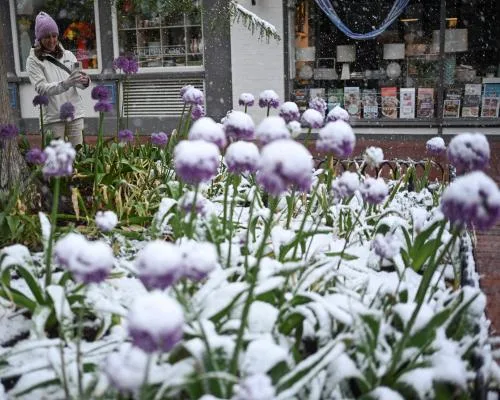
A rare spring snowstorm has hit Colorado, bringing significant snowfall to the state. The snowstorm, which started on Tuesday afternoon, has dumped up to 15cm of snow in some areas, causing hundreds of flight delays and 35 cancellations at Denver International Airport. The city of Denver has been the hardest-hit area, with snow depths of 10-15cm across the city and 15-20cm in some southern and western suburbs.
The snowstorm has been caused by an outbreak of Arctic air, which has brought freezing cold temperatures to the state. This has allowed rainfall to turn widely to snow, resulting in significant snowfall in the Rocky Mountains. The town of Estes Park, located north-west of Denver, has received over 70cm of snow, making it one of the areas most affected by the storm. However, the snowstorm has come too late for popular ski resorts such as Vail and Breckenridge, which are now closed for the season.
The snowstorm has had a significant impact on the state, with many residents waking up to a winter wonderland on Wednesday morning. However, the snow has started to thaw quickly, with daytime maximums approaching 20C in some areas. This rapid warming trend has transformed Denver from a winter wonderland to a warm spring scene in just a few hours. Meanwhile, in south-eastern South Africa, an extreme rainfall event has unfolded, causing flooding and damage in the city of Gqeberha.
The extreme rainfall event in South Africa has been caused by an area of low pressure that has stalled off the coast of the Eastern Cape province. This has brought torrential rain onshore, resulting in flooding and damage across the Eastern Cape. The inland Drakensberg mountains have intensified the event, with rainfall totals of 100-150mm causing significant flooding. Local authorities have warned of overtopping waters at dams, with the Kouga dam in the Gamtoos Valley reaching 113% of its capacity.
Key Facts
- The snowstorm in Colorado is the largest in May in 23 years.
- Denver has been the hardest-hit area, with snow depths of 10-15cm across the city.
- The town of Estes Park has received over 70cm of snow.
- The snowstorm has caused hundreds of flight delays and 35 cancellations at Denver International Airport.
- The extreme rainfall event in South Africa has caused flooding and damage in the city of Gqeberha.
- Rainfall totals of 100-150mm have been recorded in the Eastern Cape.
- The Kouga dam in the Gamtoos Valley has reached 113% of its capacity.
The Impact of the Snowstorm
The snowstorm in Colorado has had a significant impact on the state, with many residents affected by the snow and cold temperatures. The snow has caused disruptions to daily life, with many schools and businesses closed due to the weather. The snowstorm has also had an impact on the state's economy, with many ski resorts now closed for the season. However, the snowstorm has also brought some benefits, with the snow providing much-needed moisture to the state's parched soil.
The snowstorm has also had an impact on the state's infrastructure, with many roads and highways closed due to the snow and ice. The Colorado Department of Transportation has been working to clear the roads, but it may take some time for all the roads to be reopened. The snowstorm has also caused power outages, with many residents left without electricity or heat. The utility companies have been working to restore power, but it may take some time for all the outages to be resolved.
The snowstorm has been a surprise to many residents, with the weather forecast not predicting such a significant snowfall. However, the snowstorm has also been a welcome surprise to some, with the snow providing a much-needed break from the warm weather. The snowstorm has also brought the community together, with many residents coming out to help each other with snow removal and other tasks.
The Extreme Rainfall Event in South Africa
The extreme rainfall event in South Africa has had a devastating impact on the city of Gqeberha and the surrounding areas. The flooding has caused significant damage to homes and businesses, with many residents displaced by the floodwaters. The local authorities have been working to provide assistance to those affected, with emergency shelters set up to provide food and shelter.
The extreme rainfall event has been caused by a combination of factors, including the area of low pressure that has stalled off the coast of the Eastern Cape province. The inland Drakensberg mountains have also played a role, with the mountains intensifying the rainfall event. The result has been a significant amount of rainfall, with totals of 100-150mm recorded in the Eastern Cape.
The extreme rainfall event has also had an impact on the local economy, with many businesses affected by the flooding. The flooding has also had an impact on the local infrastructure, with many roads and highways closed due to the floodwaters. The local authorities have been working to clear the roads, but it may take some time for all the roads to be reopened.
The Response to the Disasters
The response to the disasters in Colorado and South Africa has been swift and effective, with many organizations and individuals coming out to provide assistance. In Colorado, the American Red Cross has been providing shelter and food to those affected by the snowstorm. The organization has also been providing warm clothing and blankets to those in need.
In South Africa, the local authorities have been working to provide assistance to those affected by the flooding. The authorities have set up emergency shelters to provide food and shelter to those displaced by the floodwaters. The authorities have also been working to clear the roads and restore power to the affected areas.
The response to the disasters has been heartening, with many people coming out to help those in need. It's a testament to the strength and resilience of the human spirit, and a reminder that even in the darkest of times, there is always hope.
The Long-Term Effects of the Disasters
The long-term effects of the disasters in Colorado and South Africa are still unknown, but it's likely that they will be significant. In Colorado, the snowstorm may have a positive impact on the state's water supply, with the snow providing much-needed moisture to the parched soil. However, the snowstorm may also have a negative impact on the state's economy, with many ski resorts now closed for the season.
In South Africa, the extreme rainfall event may have a significant impact on the local economy, with many businesses affected by the flooding. The flooding may also have a negative impact on the local infrastructure, with many roads and highways closed due to the floodwaters. However, the flooding may also have a positive impact on the local environment, with the rain providing much-needed moisture to the parched soil.
The long-term effects of the disasters will depend on many factors, including the response of the local authorities and the resilience of the affected communities. However, one thing is certain - the disasters will have a significant impact on the lives of those affected, and it will take time for the communities to recover.
The Role of Climate Change
The role of climate change in the disasters in Colorado and South Africa is still unclear, but it's likely that it has played a role. Climate change has been linked to an increase in extreme weather events, including snowstorms and flooding. The increase in extreme weather events is due to the rising temperatures, which are causing more moisture to be available in the atmosphere.
The increase in extreme weather events has significant implications for communities around the world, with many areas vulnerable to the impacts of climate change. The disasters in Colorado and South Africa are a reminder of the importance of addressing climate change, and the need for communities to be prepared for the impacts of extreme weather events.
The response to climate change will require a coordinated effort from governments, organizations, and individuals around the world. It will require significant investments in infrastructure, including sea walls and levees, as well as efforts to reduce greenhouse gas emissions. The response will also require a change in behavior, with individuals and communities taking steps to reduce their carbon footprint and prepare for the impacts of climate change.