

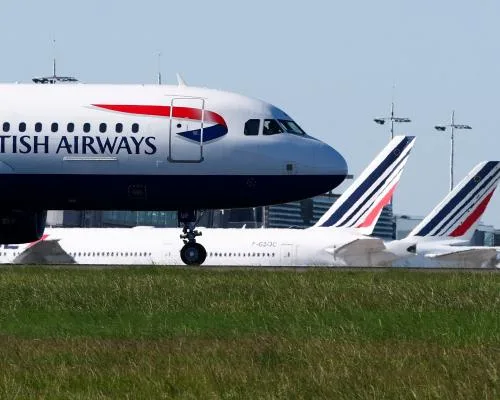
The Iran war has been raging on for a while now, and its effects are being felt across various industries. One of the hardest-hit sectors is the airline industry, with jet fuel costs skyrocketing. International Airlines Group (IAG), the parent company of British Airways, has just issued a profit warning due to the soaring costs. The company expects to spend about €2bn more on fuel than planned this year, which is a significant increase.
The reason behind this increase is the surge in global oil prices, which have reached peaks of $126 a barrel. This has been caused by the ongoing conflict in the Middle East, which has disrupted oil supplies. The impact of this is being felt across the airline industry, with many companies struggling to cope with the rising fuel costs. IAG, which also owns Aer Lingus, Iberia, and Vueling, is no exception. The company has hedged 70% of its expected fuel use for this year, but the remaining 30% is still exposed to the fluctuating oil prices.
Luis Gallego, the chief executive of IAG, has stated that the company is actively managing the uncertainty created by the fuel price increase. He said that IAG is taking necessary actions on yields, costs, and capacity to mitigate the impact of the higher fuel costs. However, he also acknowledged that the impact of the higher fuel price will inevitably lead to lower profit this year than originally anticipated. The company has reported a pre-tax profit of €422m during the three months to the end of March, up 77% on the same period a year earlier.
The situation is not just limited to IAG; the entire airline industry is feeling the pinch. According to data released by Cirium, about 2m airline seats have been cut from this month's schedules as airlines redraw their operations due to soaring jet fuel prices. This has resulted in about 13,000 fewer flights operating in May around the world. While IAG is not currently seeing any issues with fuel availability in its main markets, the company is confident about fuel availability through the peak summer period. However, there are fears that shortages of jet fuel could cause further summer cancellations, especially in the UK, which is the largest net importer of jet fuel in Europe.
Key Facts
- International Airlines Group (IAG) has issued a profit warning due to soaring jet fuel costs.
- The company expects to spend about €2bn more on fuel than planned this year.
- Global oil prices have reached peaks of $126 a barrel.
- IAG has hedged 70% of its expected fuel use for this year.
- The company has reported a pre-tax profit of €422m during the three months to the end of March.
- About 2m airline seats have been cut from this month's schedules as airlines redraw their operations due to soaring jet fuel prices.
- About 13,000 fewer flights will operate in May around the world.
- The UK is the largest net importer of jet fuel in Europe.
- IAG owns British Airways, Aer Lingus, Iberia, and Vueling.
Impact on the Airline Industry
The airline industry is facing a significant challenge due to the soaring jet fuel costs. Many airlines are struggling to cope with the rising costs, and some have already started to cut back on their operations. The reduction in airline seats and flights will likely have a ripple effect on the entire travel industry. Travelers may face higher prices, reduced options, and increased cancellations. The situation is further complicated by the fact that the summer period is usually the peak travel season, and any disruptions during this time can have a significant impact on the industry.
The airline industry is also facing the challenge of adapting to the changing fuel prices. Companies like IAG are trying to hedge their fuel costs, but it's not always possible to predict the fluctuations in the market. The use of fuel-efficient aircraft and the implementation of cost-saving measures are some of the strategies that airlines are exploring to mitigate the impact of the rising fuel costs. However, these measures may not be enough to offset the significant increase in fuel costs, and airlines may need to consider other options, such as increasing ticket prices or reducing their operations.
The impact of the soaring jet fuel costs is not just limited to the airline industry; it also has broader economic implications. The travel industry is a significant contributor to many economies, and any disruptions to the industry can have a ripple effect on the entire economy. The rising fuel costs can also lead to higher prices for goods and services, which can further exacerbate the economic challenges faced by many countries.
Background on IAG
IAG is a leading airline company that owns several prominent airlines, including British Airways, Aer Lingus, Iberia, and Vueling. The company was formed in 2011 through the merger of British Airways and Iberia, and it has since grown to become one of the largest airline companies in the world. IAG has a strong presence in Europe and operates a significant number of flights to destinations around the world. The company has a diverse fleet of aircraft and offers a range of services, including passenger and cargo transportation.
IAG has a history of adapting to changing market conditions and has implemented various strategies to stay competitive. The company has invested in fuel-efficient aircraft and has implemented cost-saving measures to reduce its operating costs. IAG has also expanded its operations through strategic acquisitions and partnerships, which has helped the company to grow its presence in the market. However, the current challenge posed by the soaring jet fuel costs is one of the most significant that the company has faced in recent years.
The company's leadership, including Luis Gallego, has a deep understanding of the airline industry and has a proven track record of navigating complex market conditions. Gallego has stated that IAG is committed to managing the uncertainty created by the fuel price increase and is taking necessary actions to mitigate the impact of the higher fuel costs. The company's experience and expertise will be crucial in navigating the current challenges and finding opportunities for growth in the future.
The Iran War and Its Impact on Oil Prices
The Iran war has been a significant factor in the surge in global oil prices. The conflict has disrupted oil supplies from the Middle East, which has led to a shortage of oil in the market. The resulting increase in oil prices has had a ripple effect on the entire economy, with many industries feeling the pinch. The airline industry, which is heavily dependent on fuel, has been one of the hardest-hit sectors.
The Iran war has also led to a significant increase in geopolitical tensions, which has further exacerbated the uncertainty in the oil market. The conflict has involved several countries, including the United States, and has led to a significant escalation in military action. The situation remains volatile, and any further escalation could lead to even higher oil prices. The impact of the war on oil prices is a complex issue, and it's difficult to predict when the situation will stabilize.
The oil market is also subject to various other factors, including supply and demand, production levels, and global economic trends. The current situation is further complicated by the fact that the oil market is highly speculative, and prices can fluctuate rapidly in response to changing market conditions. The soaring jet fuel costs are just one of the many challenges posed by the current oil market, and airlines like IAG will need to be agile and adaptable to navigate the uncertainty.
The UK's Vulnerability to Jet Fuel Shortages
The UK is particularly vulnerable to jet fuel shortages due to its high dependence on imports. The country is the largest net importer of jet fuel in Europe, and any disruptions to supplies can have a significant impact on the airline industry. The UK's refineries are also not equipped to produce sufficient jet fuel to meet the country's needs, which further exacerbates the situation.
The UK government has been warned about the potential for jet fuel shortages, and the country's airlines are taking steps to mitigate the risk. However, the situation remains uncertain, and any further disruptions to supplies could lead to significant challenges for the airline industry. The UK's vulnerability to jet fuel shortages is a concern not just for the airline industry but also for the broader economy, as the travel industry is a significant contributor to the country's GDP.
The impact of the soaring jet fuel costs will inevitably lead to lower profit this year than we originally anticipated.
- Luis Gallego, Chief Executive of IAG
The UK's airlines, including British Airways, are working closely with the government to address the issue of jet fuel shortages. The companies are exploring options to increase their fuel efficiency and reduce their dependence on imports. However, the situation remains challenging, and the UK's airlines will need to be proactive in managing the risk of jet fuel shortages.
The Future of the Airline Industry
The future of the airline industry is uncertain, and the current challenges posed by the soaring jet fuel costs are just one of the many factors that will shape the industry's trajectory. The industry is likely to undergo significant changes in the coming years, driven by factors such as changing consumer behavior, advances in technology, and shifting market conditions.
Airlines like IAG will need to be agile and adaptable to navigate the uncertainty and find opportunities for growth. The company's experience and expertise will be crucial in navigating the current challenges and finding ways to mitigate the impact of the soaring jet fuel costs. The airline industry is a complex and dynamic sector, and the future will likely be shaped by a combination of factors, including technological innovations, changing consumer preferences, and shifting market conditions.
The soaring jet fuel costs are a significant challenge for the airline industry, but they also present an opportunity for airlines to innovate and find new ways to reduce their costs and improve their efficiency. The industry is likely to see significant investments in fuel-efficient aircraft, sustainable aviation fuels, and other technologies that can help reduce the environmental impact of air travel. The future of the airline industry will be shaped by a combination of factors, and the current challenges posed by the soaring jet fuel costs are just one of the many factors that will drive the industry's growth and development.