

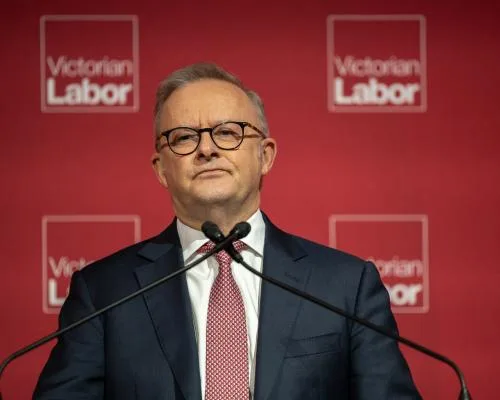
Australian Prime Minister Anthony Albanese gave an emotional speech on Saturday, defending his government's proposed changes to negative gearing and the capital gains tax discount. Albanese argued that the reforms are necessary to help first home buyers, as they're struggling to afford homes.
At the Victorian Labor state conference, Albanese said the reforms will rebalance the housing market in favor of first home buyers, rather than property investors. He claimed that young people are missing out on buying homes because they're bidding against investors who have the advantage of tax breaks.
Because of the tax breaks that are there, it's not an equal process. If it's a matter of an extra $20,000 to bid or $30,000 to bid, they know that they can do that in the comfort that that will be an increase in their tax deduction, that all of you and every Australian taxpayer is their partner here.
Albanese's speech came after his government faced criticism over the proposed reforms, which include limiting negative gearing to new builds and changing how capital gains tax is calculated. Some of Albanese's own MPs have expressed concerns that the reforms may not be well explained to the public, and that scare campaigns could harm the government's chances in the next election. They're worried that the public won't understand the reforms, and that this lack of understanding could hurt the government.
Albanese's government has proposed a new 30% minimum tax on discretionary trusts, which has been met with criticism from the opposition. The federal opposition leader, Angus Taylor, has described the budget as an attack on young Australians and an assault on aspiration. He says it's unfair to young people who are trying to get ahead.
The proposed reforms have sparked a debate about the role of taxation in shaping the Australian housing market. While Albanese's government argues that the reforms will help first home buyers, the opposition claims that they will crush the spirit of reward for hard work that underpins the country's success. The opposition thinks that the reforms will discourage people from working hard and investing in their future.
The Australian housing market has been a topic of concern in recent years, with many young people struggling to afford homes. The government's proposed reforms aim to address this issue by reducing the advantages that property investors have in the market. They want to make it easier for first home buyers to afford homes.
However, the opposition has argued that the reforms will have unintended consequences, such as reducing investment in the housing market and driving up rents. The debate over the proposed reforms is likely to continue in the coming weeks and months. The opposition is concerned that the reforms will hurt the housing market, and that they won't achieve their intended goal.
The proposed reforms include limiting negative gearing to new builds, which means that investors will only be able to claim tax deductions on new properties. This change is aimed at encouraging investment in new housing, rather than existing properties. The government wants to encourage people to build new homes, rather than buying existing ones.
The government has also proposed changing how capital gains tax is calculated, which will affect how much tax investors have to pay when they sell their properties. The proposed changes will also impose a new 30% minimum tax on discretionary trusts, which are often used by high-income earners to minimize their tax liabilities. This change will affect people who use trusts to reduce their tax bills.
The government's proposed reforms have been met with a mixed reaction from the public. Some people have welcomed the changes, saying that they will help to make the housing market more affordable for first home buyers. Others have expressed concerns that the reforms will have unintended consequences, such as reducing investment in the housing market. Some people think that the reforms will make it harder for investors to make money, and that this will hurt the economy.
Key Facts
- The Australian government has proposed changes to negative gearing and the capital gains tax discount.
- The proposed reforms include limiting negative gearing to new builds and changing how capital gains tax is calculated.
- The government has also proposed a new 30% minimum tax on discretionary trusts.
- The opposition has described the budget as an attack on young Australians and an assault on aspiration.
- The proposed reforms aim to help first home buyers, but the opposition claims they will crush the spirit of reward for hard work that underpins the country's success.
The Australian government's proposed reforms to the taxation system have sparked a heated debate about the role of taxation in shaping the housing market. While the government argues that the reforms will help first home buyers, the opposition claims that they will have unintended consequences. The government says that the reforms will make the housing market more affordable, but the opposition thinks that they will hurt the economy.
The issue of taxation and the housing market is complex and multifaceted. The government's proposed reforms aim to address the issue of affordability, but they also have the potential to have unintended consequences. The reforms could hurt some people, even if they help others.
The debate over the proposed reforms is likely to continue in the coming weeks and months. As the Australian government and opposition continue to argue over the merits of the proposed reforms, it's clear that the issue of taxation and the housing market is a complex and contentious one. The government and opposition will keep arguing about the reforms, and it's hard to say what will happen next.