

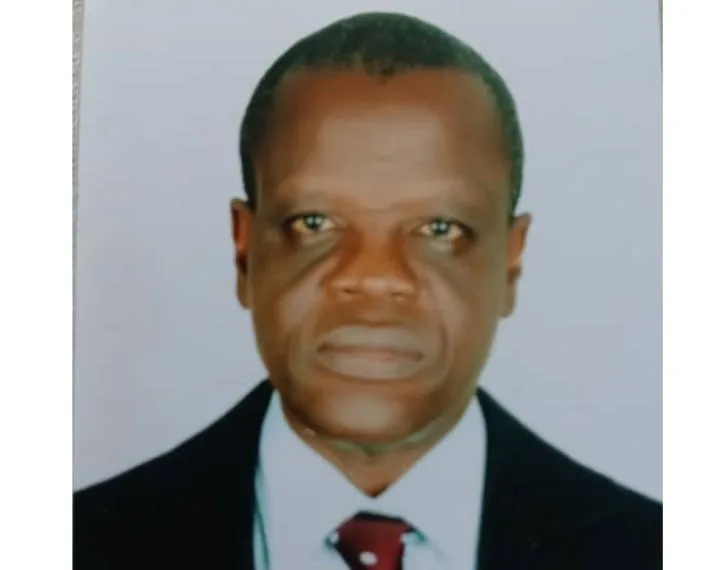
The news that Desmond Elliot, a Lagos lawmaker and Nollywood actor, is facing pressure over his fourth-term ambition has sent shockwaves through Nigeria's political circles. What makes this story even more intriguing is that it allegedly involves President Bola Tinubu, who's been the dominant force in Lagos politics for decades. He's been a key player in shaping the state's political landscape.
Desmond Elliot represents Surulere Constituency I in the Lagos State House of Assembly. His troubles began when frictions linked to his fourth-term ambition and his alleged role in the crisis that shook the Lagos Assembly came to the forefront. The matter reportedly became serious enough for Tinubu to reach out to his Chief of Staff, Femi Gbajabiamila, to call Elliot to order. This episode says a lot about Tinubu's long-tested political method. He delegates power to his disciples, but he hardly allows any disciple to become the only channel of control in any political constituency.
Tinubu's method is designed to prevent any one person from gaining too much power.
For years, Tinubu's Lagos structure has operated through layers of influence. He allows his political disciples to groom their own loyalists, but all layers are expected to ultimately look up to him as the central authority. This arrangement gives him control without requiring daily direct involvement in every ward, constituency, or caucus dispute. Under that system, a figure like Gbajabiamila may have his own loyalists, including Elliot, but Tinubu also maintains alternative channels through which he receives reports from the same political environment. He's able to stay informed about what's happening on the ground.
It was allegedly through one of these alternative channels that reports reached Tinubu accusing Elliot of being among those who masterminded the crisis against one of his own key pointsmen in the Lagos political ecosystem
- Mudashiru Obasa, Speaker of the Lagos State House of Assembly. Obasa's survival in Lagos politics has always fascinated many observers. Despite what critics describe as his difficult personal relationships with several political actors in the state, he remained protected within the Tinubu structure. The reason, according to many insiders, is simple: Obasa served a strategic purpose in Tinubu's Lagos balancing game, especially as a counterweight to Governor Babajide Sanwo-Olu and other emerging power centers. Obasa's role is crucial in maintaining the balance of power in Lagos.
The system is built on competing streams of loyalty. Rival political channels report on one another. Political gossip flows upward. Ambition is encouraged, but only within limits. Tinubu then uses the information available to him to check excesses, balance factions, and prevent any one bloc from becoming dominant.
This method isn't new. In the past, Tinubu effectively used groups such as the Justice Forum, made up largely of political elders, and the Mandate Group, then strongly associated with Rauf Aregbesola, to manage tensions within his Lagos structure. These groups helped him maintain control and stability.
During the internal rebellion associated with the camp of then Governor Babatunde Fashola, the rise of the Mandate Group helped Tinubu contain dissent and reassert control over the Lagos political machine. But the Desmond Elliot episode may also be exposing the limits of that old model. Tinubu's political machinery still exists. It's still formidable. It still inspires fear and loyalty.
However, questions are now being asked about whether he's beginning to lose direct grip over some of the ground troops who once responded almost automatically to signals from Bourdillon. The situation is complex, and it's not clear what the future holds.
The last local government election in Lagos provided a clue. Members of the Justice Forum reportedly secured more than 40 local government positions, underlining the strength of old political structures that have now become too deeply rooted to be casually dismissed. The same reality is playing out in the 2027 governorship succession conversation. The emergence of Femi Hamzat as the APC governorship candidate wasn't simply a command imposed from above. Unlike Babatunde Fashola in 2007 and Akinwunmi Ambode in 2015, Hamzat's emergence wasn't necessarily Tinubu's first instinct.
It wasn't a straightforward decision.
Rather, it was reportedly strengthened by the weight of internal consensus within the Governance Advisory Council, GAC. With many GAC members said to be sympathetic to Hamzat, partly because of his father's historic place within the Lagos political establishment, Tinubu couldn't take a contrary position without risking deeper cracks in his Lagos base. That's the real message from Desmond Elliot's problems. Tinubu remains the ultimate political leader in Lagos. However, the system he built has matured into many layers.
His disciples now have disciples. His old groups now have their own ambitions. Local actors now fight local battles with personal survival instincts. The situation is becoming increasingly complex.
In the past, Tinubu controlled the chessboard because all the pieces waited for his movement. Today, many pieces are still loyal, but they're also calculating for themselves. Elliot's predicament, therefore, isn't just about one lawmaker seeking another term. It's about the changing character of Tinubu's Lagos machine - still powerful, still feared, but increasingly crowded with ambitious loyalists, rival informants, and ground commanders who may no longer be as easy to command as before. Gbajabiamila's reported decision to come down hard on Elliot wasn't merely about pleasing Tinubu.
It also reflects a new reality within the Lagos power structure. The dynamics are shifting, and it's not clear what the outcome will be.
Tinubu's immediate disciples, especially those who've remained close to him, are now seizing the opportunity created by his relocation to Abuja to assert local control within their own jurisdictions. They understand that power abhors a vacuum. They also understand that age, distance, and the burden of presidential office have created gaps in a system once held tightly by one man's word. Desmond Elliot may only be one actor in this drama. But his trouble has exposed something larger: the Tinubu machine is no longer just Tinubu's machine.
It's now an empire of many ambitious men, each loyal to the king, but each quietly preparing for the day the king's grip weakens. The future of the empire is uncertain, and it's not clear what will happen next.
The system is built on competing streams of loyalty, which has been the foundation of Tinubu's power in Lagos. As the story of Desmond Elliot unfolds, it becomes clear that this system, while effective in the past, may be facing new challenges as Tinubu's grip on power evolves. The system is complex, and it's not easy to predict what will happen next. The situation is fluid, and it's changing rapidly.
Key Facts
- Desmond Elliot is a Lagos lawmaker and Nollywood actor facing pressure over his fourth-term ambition.
- President Bola Tinubu's political empire is being tested as his disciples now have their own ambitions.
- The Lagos State House of Assembly has been shaken by a crisis allegedly involving Elliot.
- Tinubu's control is being questioned as he faces challenges from within his own political structure.
- The Justice Forum and Mandate Group have been instrumental in managing tensions within Tinubu's Lagos structure.
The evolution of Tinubu's political machine and its implications for Lagos politics will be closely watched in the coming months. As the 2027 governorship succession conversation heats up, the role of Tinubu and his disciples will be under scrutiny. The situation is complex, and it's not clear what the future holds. The outcome will depend on various factors, including the actions of Tinubu and his disciples. It's likely that the situation will continue to evolve, and it's not clear what the final outcome will be.
The future of Lagos politics is uncertain, and it's not clear what will happen next.